
The complete guide
Choosing a 10-Light Sputnik Chandelier, A Practical Buyer's Guide
The problem with one light in the middle of the ceiling
Most rooms are lit by a single fixture that points straight down. The result is a bright circle under the light and shadows everywhere else. You notice it most at a dining table, where the people at the ends of the table sit in gloom while the centrepiece gets a spotlight. You notice it in a living room too, where lamps have to do all the real work because the ceiling light is only good for finding things.
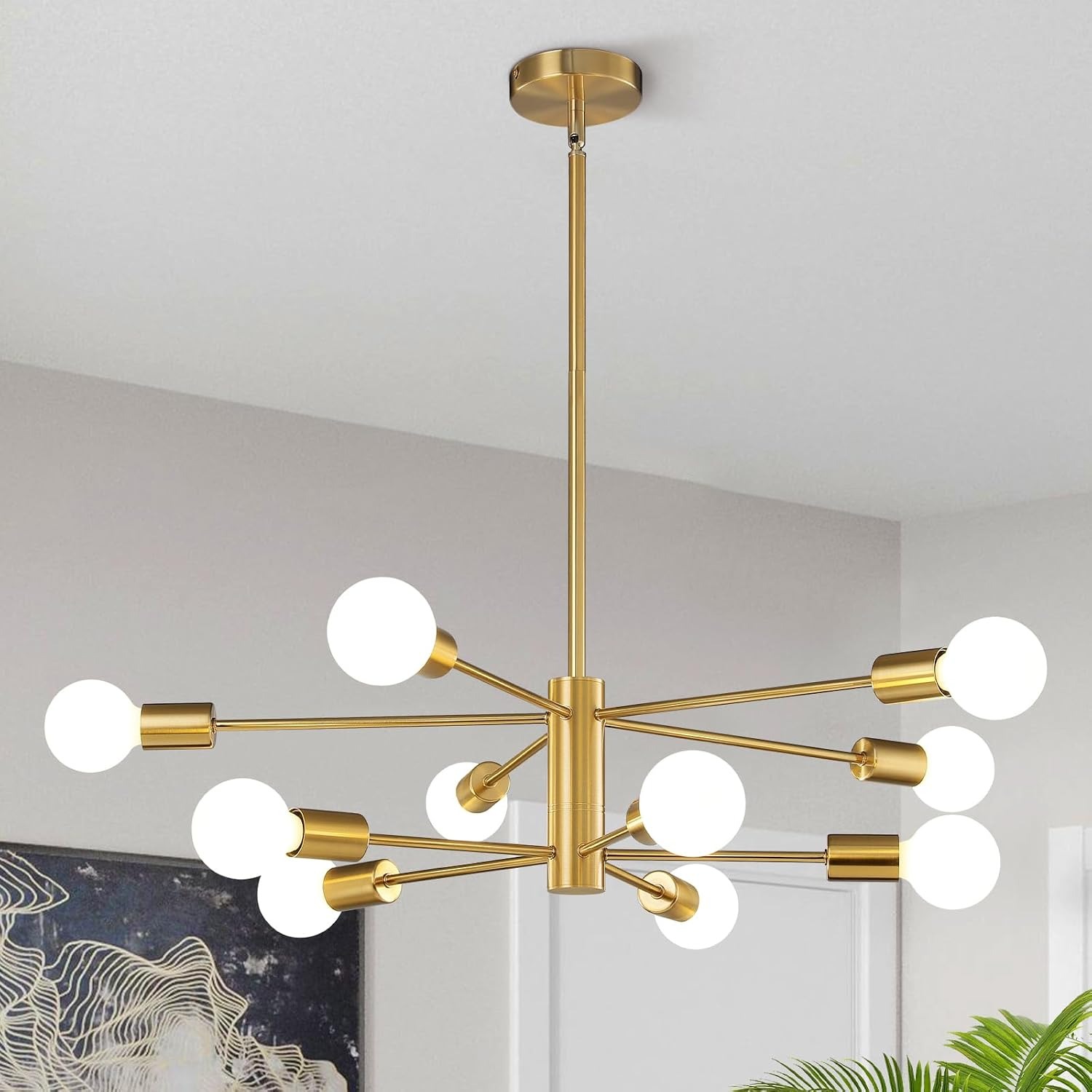
A sputnik chandelier was designed to fix exactly that. Instead of one source aimed down, you get ten arms reaching out in every direction, each with its own bulb. Light leaves the fixture sideways and upward as well as down. It bounces off the ceiling and walls, fills in the corners, and softens the shadows on people's faces. The room reads as lit rather than spotlit.
How the design actually works
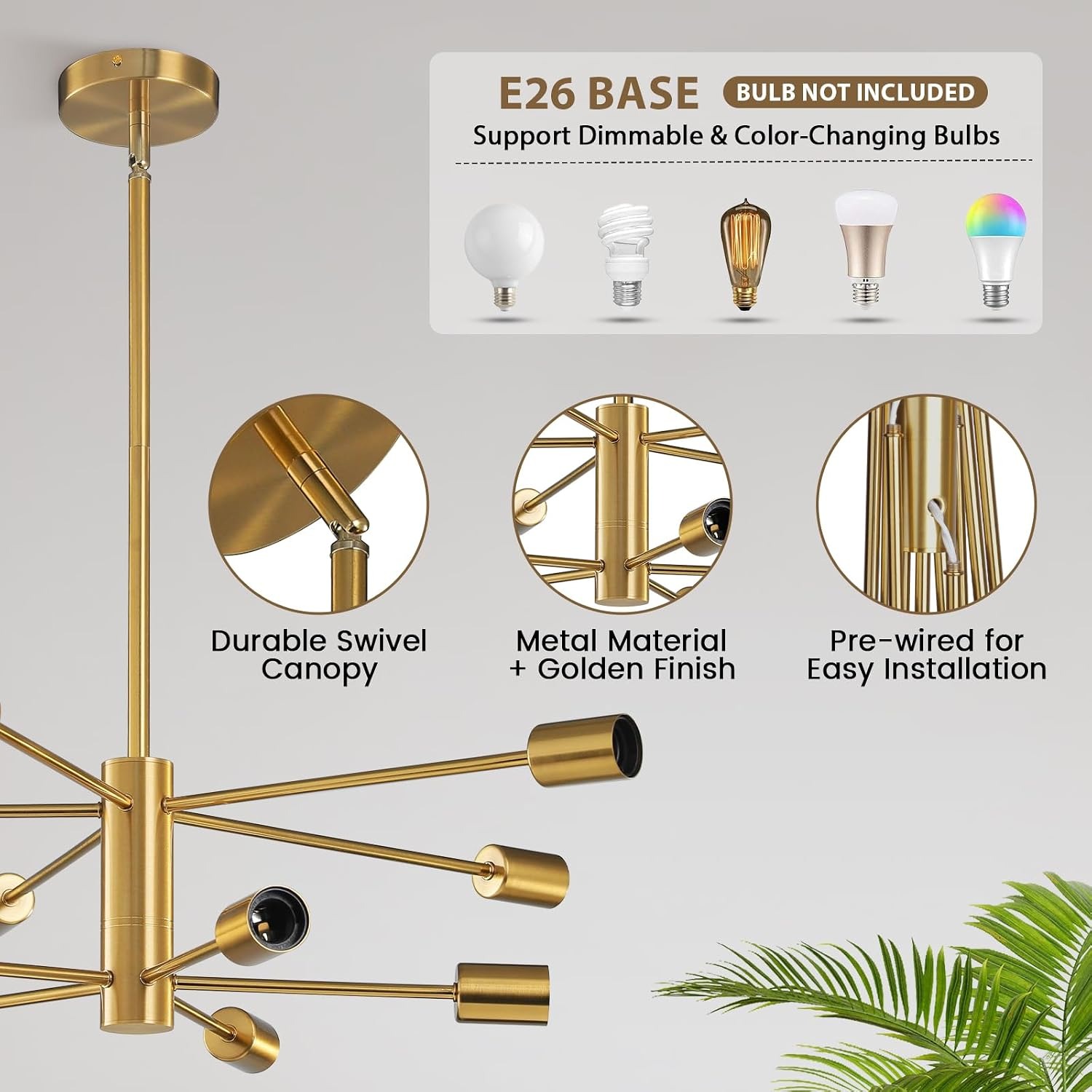
The construction is simple, which is part of the appeal. A central sphere holds the wiring. Ten arms screw or slot into it, each one pre-wired at the factory, each ending in an E26 medium-base socket. Above the sphere sits a rod, then a canopy that covers the ceiling box.
Everything here is aluminum and metal, plated in gold on the outside and polished. Aluminum is the practical choice for a fixture like this. Ten arms made from heavier metal would be a genuine chore to hold overhead during installation. At 2.1 kg this one is manageable for one person on a ladder, though a second pair of hands is always easier.
Because the sockets are exposed, the bulbs are part of the design. There are no shades to hide behind. That sounds like a drawback until you realize it gives you a free hand in how the light looks. Clear filament LEDs give a warm, vintage glow. Frosted globes give something softer and more diffuse. Swap bulbs later and the fixture reads differently without you touching the frame.
Getting the height right
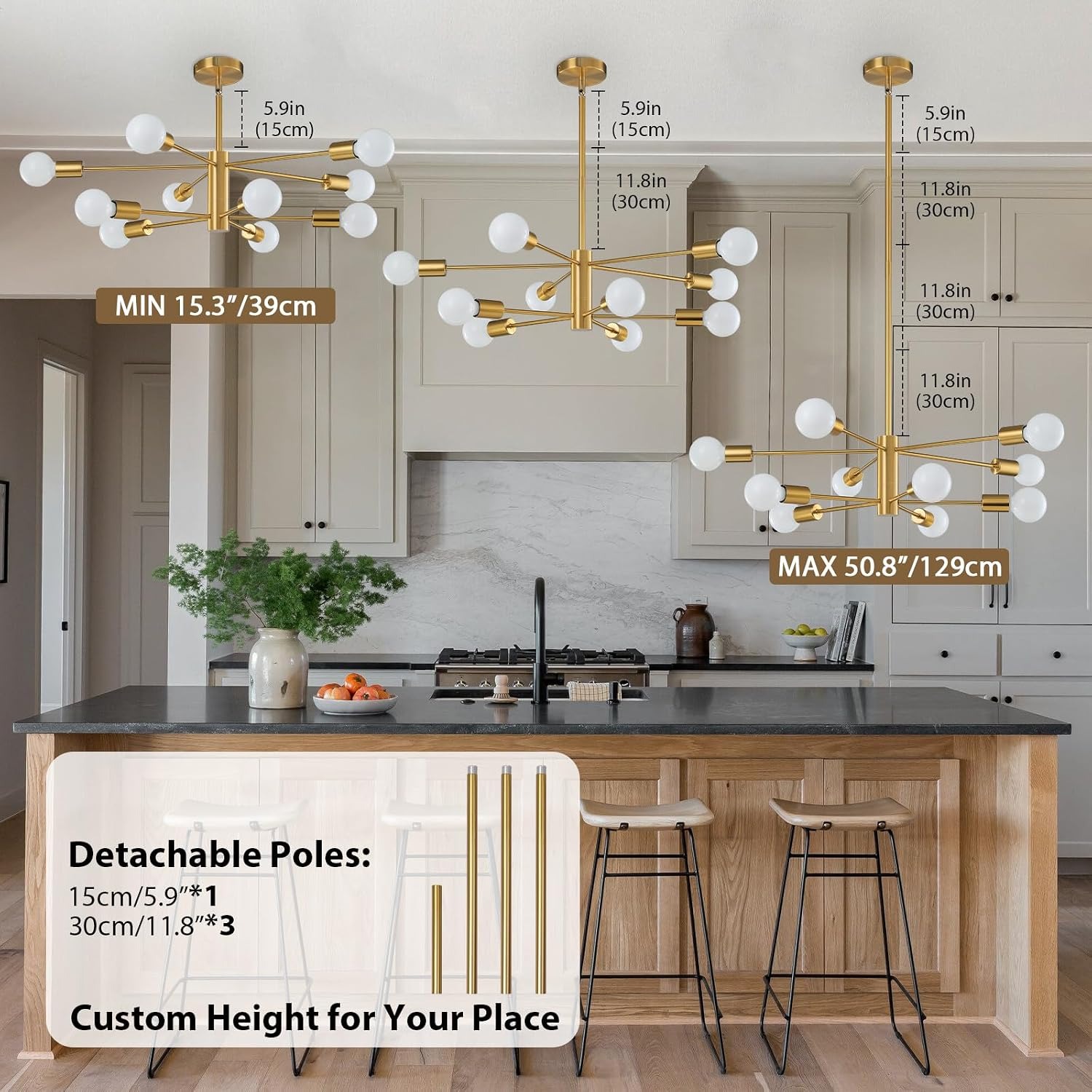
This is the part people underestimate. A chandelier hung too high looks lost. Hung too low it becomes an obstacle course. The fixture ships with four extension poles, three longer ones and one shorter one, and you only fit the ones you need. Stacked fully, the overall length reaches 50.8 inches.
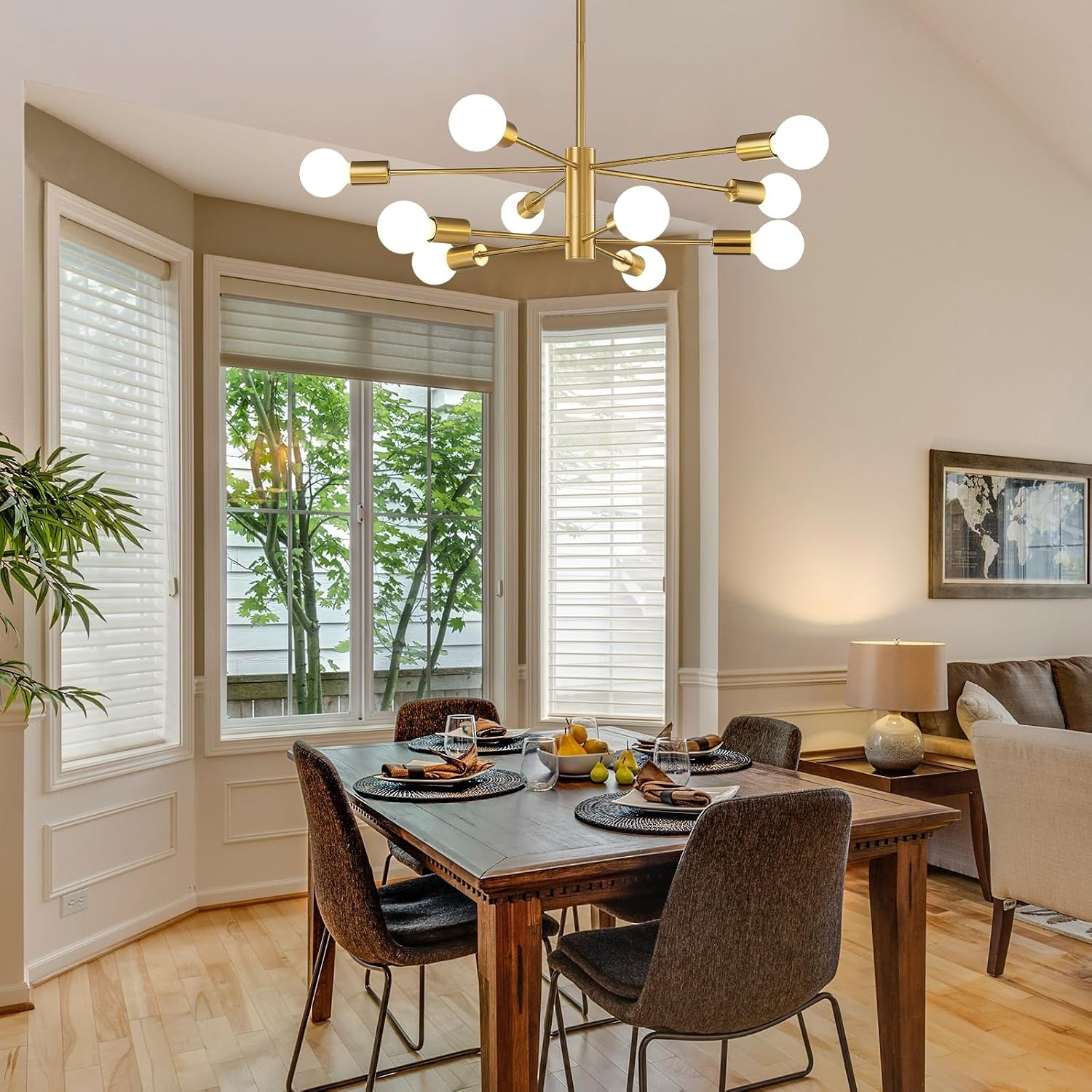
Over a dining table, aim for roughly 75 to 90 cm between the tabletop and the bottom of the fixture. That puts light where the food is without blocking the view across the table. In an entry or stairwell with a tall ceiling, you can go longer and let the fixture fill the vertical space. In a bedroom or an office with a standard ceiling, strip the poles back to the minimum.
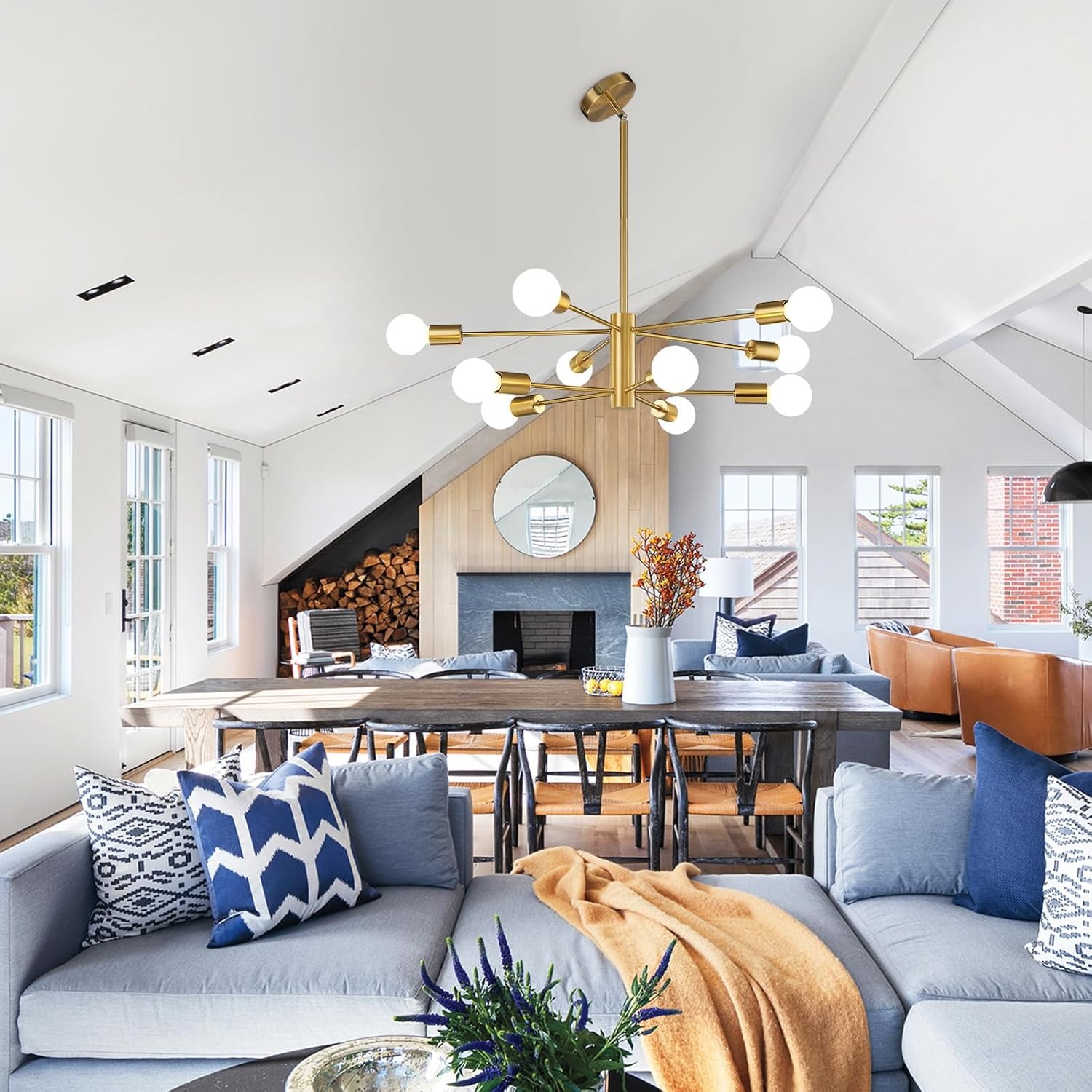
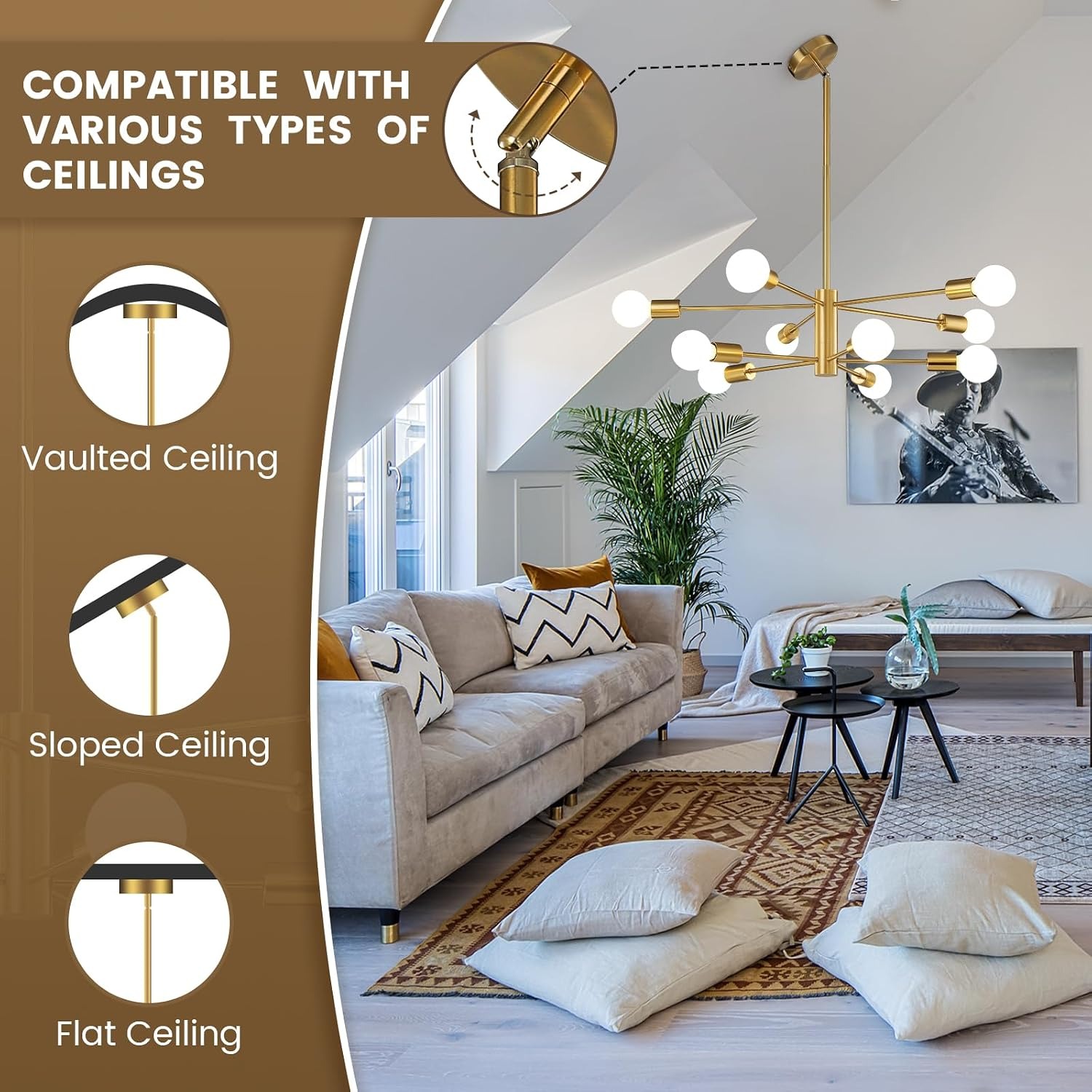
There is also a swivel built into the mount. That matters more than it sounds. Sloped and vaulted ceilings are common in living rooms and loft conversions, and most fixtures need a separate adapter to hang straight on them. This one handles flat, vaulted and angled ceilings as it comes. Set the height before you fix anything permanently, and make sure the base is anchored into something solid.
Who it suits
The obvious home is over a dining table. Six-seaters and eight-seaters pair well with a fixture around 75 cm across, which is what this one measures. The spread of the arms roughly matches the width of the table, so light reaches every seat.
It also works as a living room statement light where you have enough ceiling to carry it. Entries and foyers are a strong fit too, because the adjustable drop lets you use the full height of the space instead of hugging the ceiling. Bedrooms and home offices are listed uses as well, though in a bedroom you will probably want dimmable bulbs so it is not glaring at you from the ceiling.
Where it does not belong is anywhere damp. It is rated for indoor use and is not water resistant, which rules out covered outdoor areas and steamy bathrooms.
Choosing bulbs and dimming
Ten sockets means ten bulbs, and they should match. Mismatched colour temperatures across an open fixture look obvious and slightly odd. Buy a set of ten at once.
Stick to E26 medium base, LED, at 40 watts or less per socket. That keeps the total well within the 400 watt ceiling and keeps heat down around the arms. LED also means you are not climbing a ladder to change bulbs every year, which matters a great deal with ten of them.
For dimming, you need two things: dimmable bulbs and a compatible dimmer switch on the wall. Neither comes with the fixture. If you want the room to shift from bright dinner light to something low and relaxed later in the evening, it is worth doing. Check that the dimmer is rated for LED loads, because older dimmers designed for incandescent bulbs often flicker or buzz with LEDs.
Colour temperature is worth a thought too. Warmer bulbs around 2700K feel cozy and suit dining and living rooms. Cooler light suits a kitchen or an office where you want things to feel crisp. The fixture's light colour is listed as white, but the bulbs you choose have the final say.
Installation in plain terms
The arms arrive pre-wired, so there is no fiddly wiring inside the fixture for you to do. Mounting hardware and a quick install guide are in the box. Assembly is a matter of attaching the arms, choosing your poles, and mounting the canopy.
The connection to your ceiling is a hardwired 120V job. That is the part to be honest with yourself about. If you have done it before and it is permitted where you live, go ahead. If not, an electrician will have it up in well under an hour, and you get the reassurance that the ceiling box is rated for the load and properly earthed. With a 10-arm fixture hanging overhead, that reassurance is worth the call-out.
One practical tip: set the height before the final fixing. It is far easier to add or remove an extension pole with the fixture on a table than it is halfway up a ladder with wires in one hand.
Keeping it looking good
Plated finishes are easy to care for and easy to ruin. The care routine is short. Switch the power off at the wall, let the bulbs cool, and wipe the arms and centre sphere with a soft dry or barely damp microfibre cloth. Dry anything that got damp.
Do not use abrasive pads, solvents, or spray cleaners. They attack the plating and the damage does not come back. Dusting every few weeks is enough to keep the polish bright, and while you are up there, check that the arms and bulbs are still firmly seated.
The short version
A 10-light sputnik chandelier solves the shadow problem that one downward-facing light creates. Ten E26 arms on a polished gold aluminum frame, 75 cm across, 2.1 kg, with four extension poles and a swivel mount for flat, vaulted or angled ceilings. Bulbs and dimmer are not included, so budget for ten matching LEDs at 40W or less.
Measure your ceiling height and your table before you order, plan on an electrician for the hardwired connection unless you are confident, and pick your bulbs with as much care as you picked the fixture. Get those three things right and you have a light that does real work and looks like it was chosen rather than inherited.