
The complete guide
How to Choose and Hang a Kitchen Island Pendant Light
The problem with most island lighting
Walk into a lot of kitchens and the island is the darkest part of the room. The ceiling lights were planned around the floor space, not the bench, so when you stand at the island with your back to the room you are chopping in your own shadow. Recessed downlights make this worse because they sit flat in the ceiling and throw light straight down in narrow cones.
A pendant fixes the geometry. It drops the light source closer to the surface and puts it in front of you rather than behind you. A 3-light farmhouse pendant goes one better by splitting the output across three bulbs spread along the fixture, so the light lands evenly from one end of the bench to the other instead of making one bright circle in the middle.
That is the practical case. The other case is that an island is the visual centre of an open plan kitchen, and right now it probably has nothing happening above it. A black island chandelier gives the room a focal point at eye level, which is where people actually look.
How this fixture works
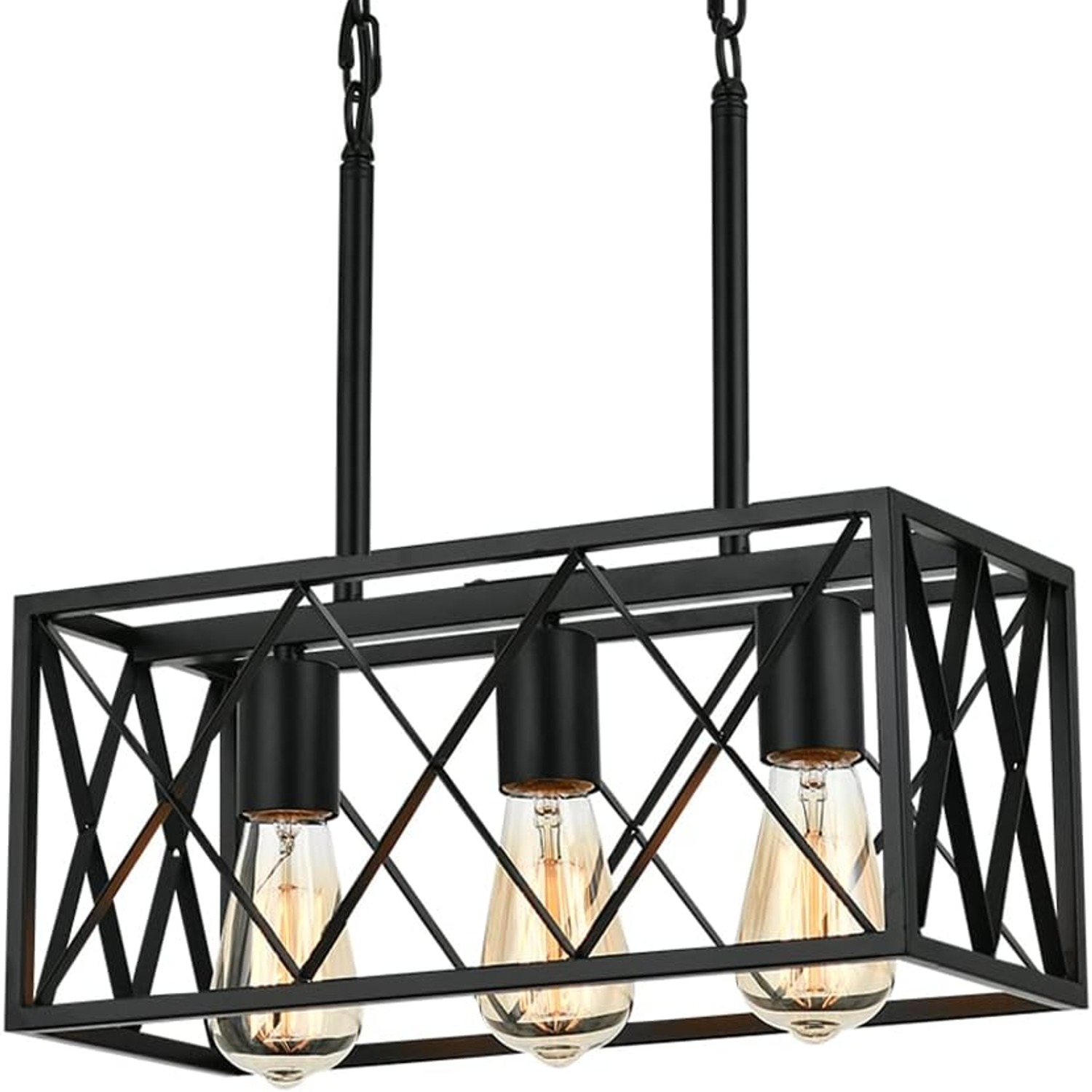
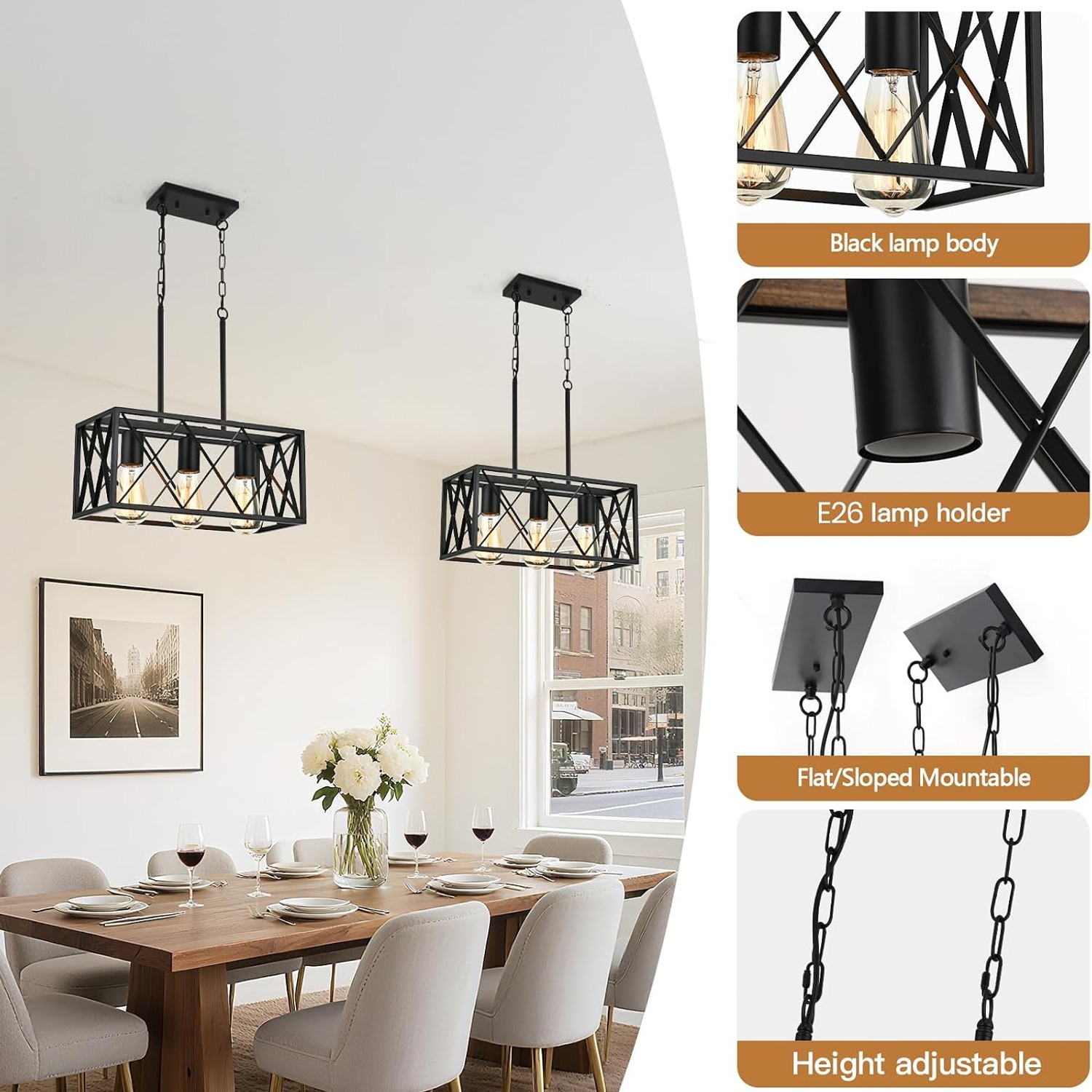
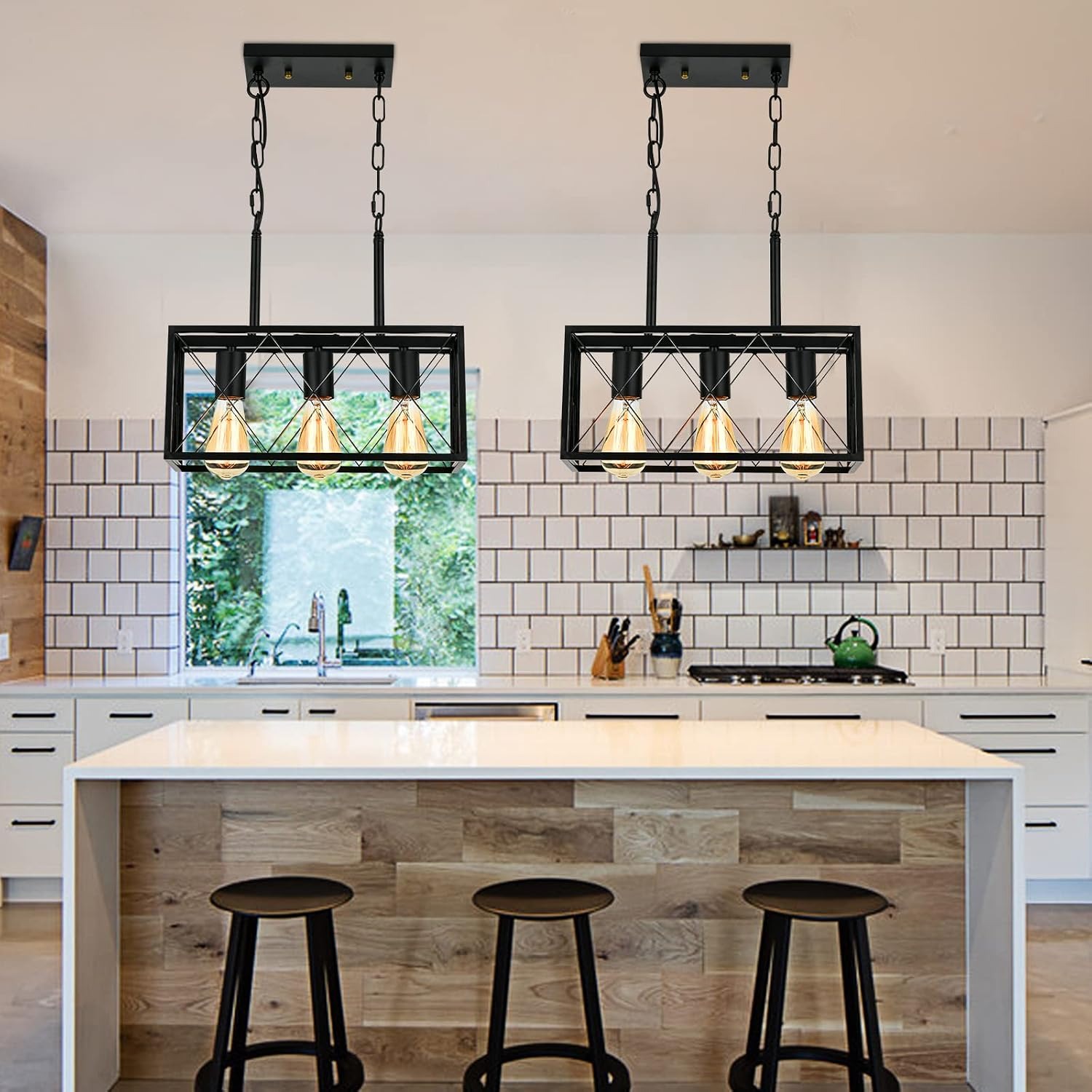
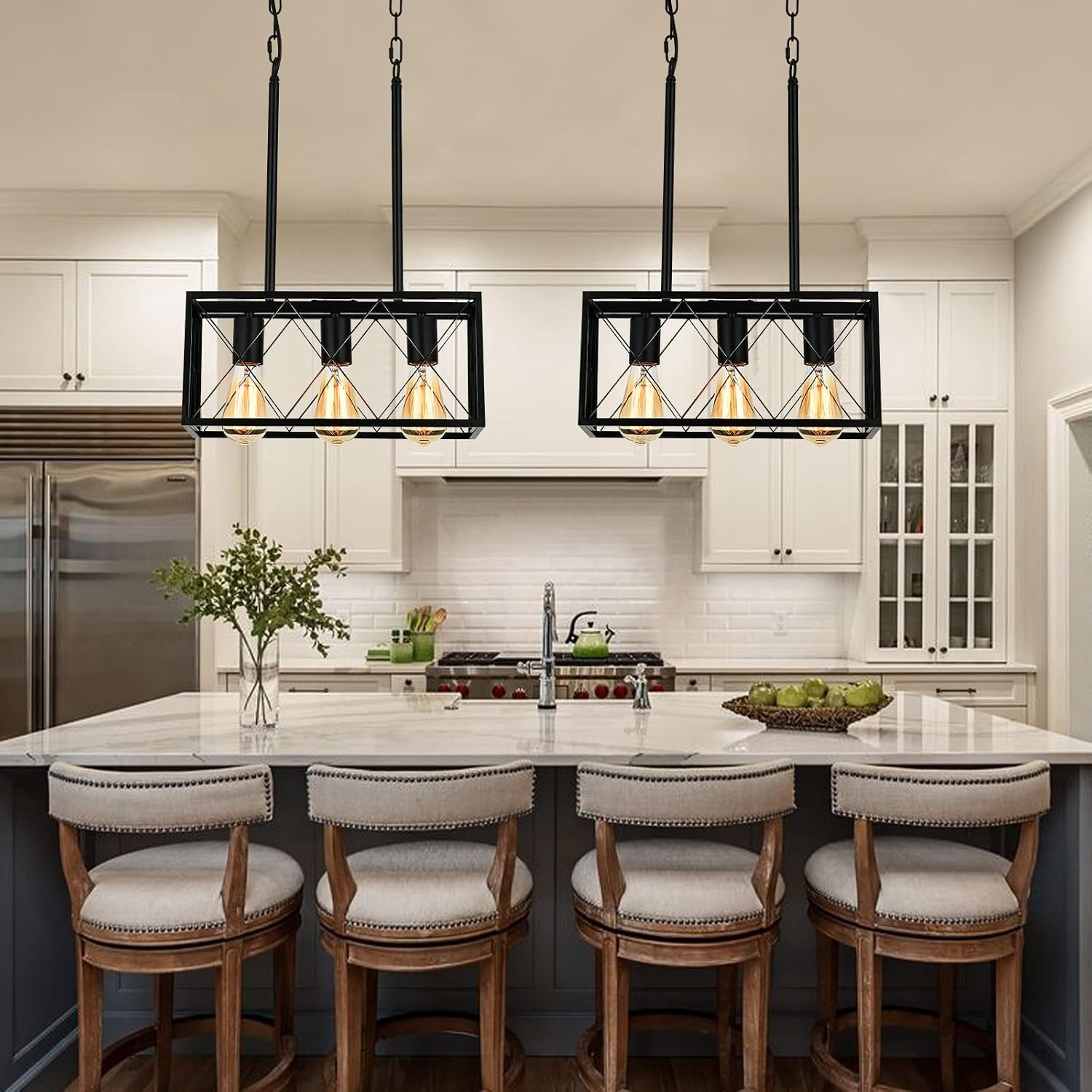
The build is simple on purpose. An open rectangular metal cage holds three E26 sockets in a row. The frame is finished in black, and because the cage is open rather than enclosed, light passes straight through the sides instead of being trapped behind glass or fabric. That is why an open cage pendant light feels brighter than its lumen rating suggests.
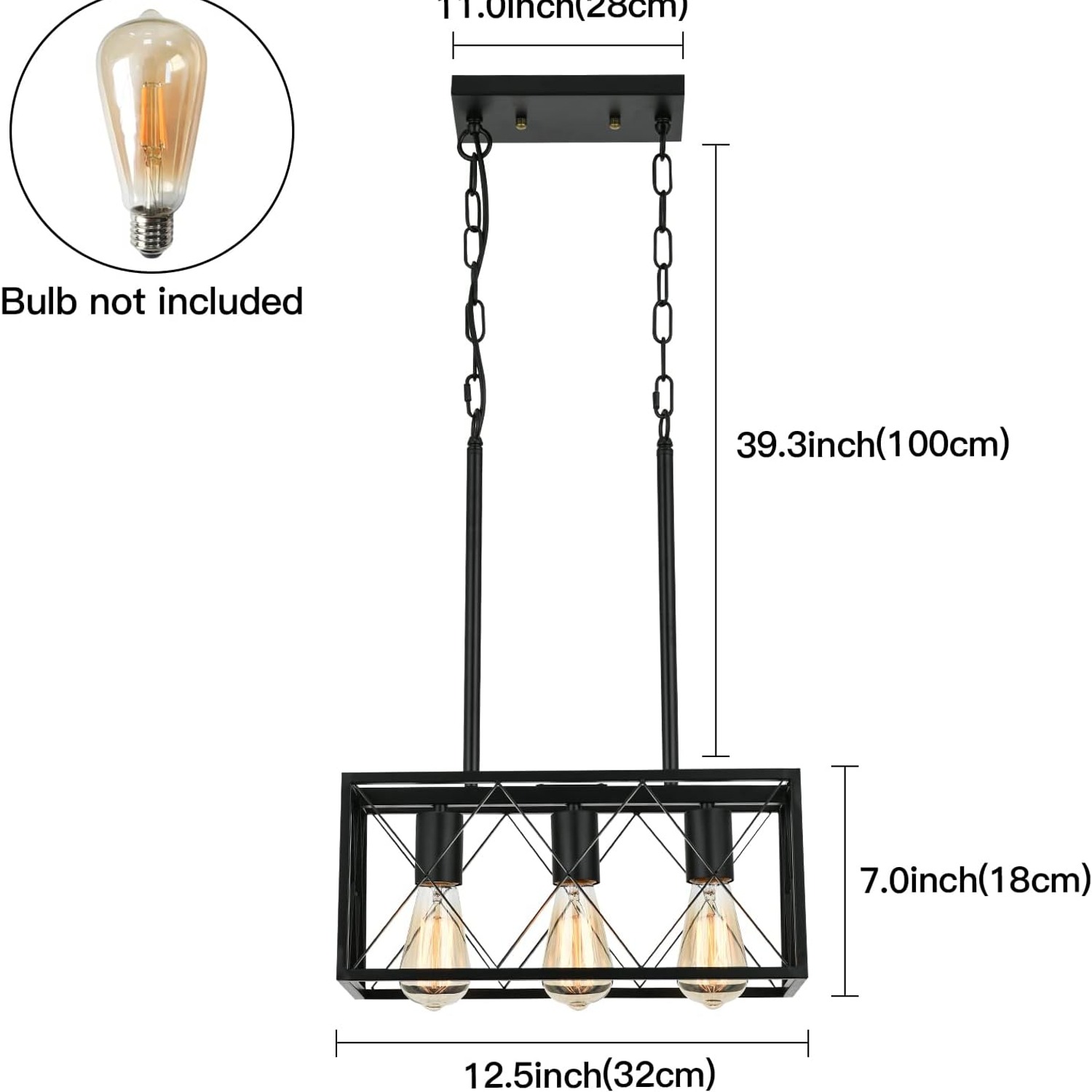
Total listed output is 1500 lumens across the three bulbs, with a maximum of 60 watts per socket. It is an indoor fixture and is not water resistant.
The chain is where most of the flexibility sits. It adjusts up to around 39 inches of drop, and the overall listed height of 48 inches reflects the fixture plus the full chain. Chain suspension is also what lets the same fixture work on a sloped ceiling, since the shade hangs level no matter what the ceiling is doing above it.
Bulbs are not included, which is normal at this price and genuinely useful. You get to decide whether this reads as a warm vintage piece with clear filament bulbs, or something cleaner with frosted LED globes.
Who it suits
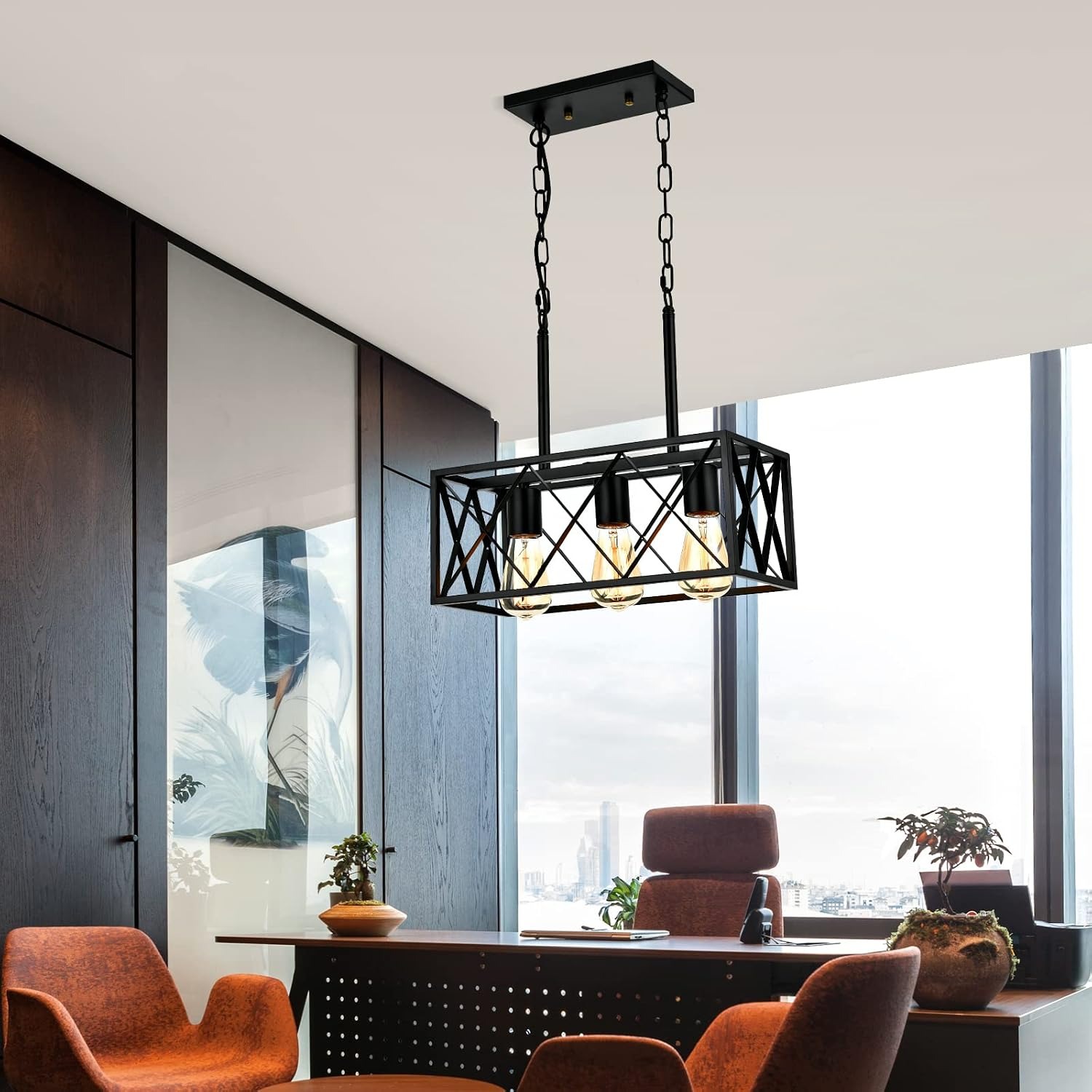
This one is a good match if you have an island or a peninsula between about four and seven feet long and you want a single fixture doing the work. It also sits well over a standard six-seat dining table, in an entry, or above a pool table or bar where a longer rectangular shape looks right.
The style leans industrial modern with farmhouse edges. It plays nicely with shaker fronts, wood or butcher block tops, white or green cabinetry, matte black faucets and concrete. If your kitchen is high gloss and very minimal, a cage frame may read as busier than you want.
It is less suited to very low ceilings where the bottom of the shade would sit in head height, and it is not the fixture for a bathroom, laundry with steam, or any covered outdoor area, since it carries no water resistance rating.
Getting the height right
This is the part people get wrong, and it is easy to get right.
For a kitchen island, aim to have the bottom of the shade sit roughly 30 to 36 inches above the bench top. That is high enough that you can see across the island when you are seated, and low enough that the light actually does something. If you are tall or the island gets used for homework and laptops, drift toward the lower end.
Over a dining table, the same range works, measured from the tabletop. In an entryway with people walking underneath, you need at least seven feet of clearance from the floor, more if the space is grand.
Shortening the chain is a case of removing links, which is simpler than adding them later. Decide the final drop before your electrician leaves, because adjusting afterwards usually means getting the canopy off again.
Choosing bulbs
Three E26 sockets gives you a lot of room to move, so here is the shortlist.
Clear Edison filament bulbs are the classic pick for a metal cage chandelier. They look warm, the exposed filament becomes part of the design, and they suit farmhouse and industrial rooms. The trade-off is that they are usually dimmer and can be glary if the fixture hangs low over seating.
Frosted or opal LED globes are the practical choice for a working kitchen. The diffused surface softens glare, the output is higher per watt, and they run cool. Look for warm white around 2700K to 3000K if you want the kitchen to feel relaxed, or step up toward 4000K if you do a lot of detailed prep and want the light to feel crisp.
If you want dimming, buy bulbs marked dimmable and match them to a dimmer rated for LED. Mixing a non-dimmable bulb with a dimmer is the usual cause of flicker and buzz.
Whatever you pick, buy all three at once from the same batch. Mismatched colour temperatures in a fixture with exposed bulbs are very obvious.
Spacing and scale
One pendant works for a shorter island. For an island longer than about seven feet, two fixtures hung in line usually look more balanced than stretching one across the span.
The easy way to space two is to divide the island length into equal sections. For a ten foot island with two pendants, that means marking at roughly a third and two thirds of the length, which leaves even gaps at both ends and in the middle. Keep at least 24 to 30 inches between fixtures so they read as a pair rather than a cluster.
Also check the fixture against the bench width. A 16 inch long shade over a very narrow 20 inch peninsula can look heavy. Over a standard 36 to 42 inch deep island it is proportionate.
Installation notes
The fixture is hardwired, which in most places means a licensed electrician does the connection. The hardware for mounting is included, and at 5.87 pounds (2.66 kg) it is light enough for a standard ceiling junction box fitted with an approved bracket. Your electrician will confirm the box is rated to carry a hanging fixture, which matters more than the weight figure alone.
Do the obvious things first. Switch off at the breaker, not just the wall switch, and confirm the circuit is dead before anything comes apart. Unbox the fixture and inspect the cage and canopy before you book the appointment, so a transit dent does not cost you a call-out fee.
Leave the bulbs until last. Fitting them before the fixture is hung just gives you something breakable to work around.
Keeping it looking good
Painted black metal is low maintenance, but it shows dust, especially on the top edges of a cage frame. Once a month, switch the power off, let the bulbs cool and run a dry microfibre cloth over the frame.
For cooking splatter near a hob, use a cloth lightly dampened with water and dry the metal straight away. Skip solvents, oven cleaner and abrasive pads, all of which will dull a matte finish fast. Never spray cleaner directly at an open fixture, since it can run into the sockets.
Once or twice a year, check that the canopy screws and the chain links are still tight. Cooking vibration and door slams loosen things slowly, and a two minute check is cheaper than a repair.
The short version
A black kitchen pendant light over the island does two jobs at once. It puts usable light where you actually work, and it gives an open plan room something to look at above bench height.
This one keeps the decisions simple. Three E26 sockets, 60 watts maximum each, 1500 lumens listed, an open metal cage in black, a chain that adjusts to around 39 inches and handles sloped ceilings, and mounting hardware in the box. It is indoor only and not water resistant, so keep it over a bench or table.
Measure your bench, settle on a drop between 30 and 36 inches above the surface, buy three matching bulbs in a warm colour, and have an electrician make the connection. That is the whole project.