
The complete guide
How to Choose a 6 Light Crystal Chandelier for Your Home
The problem with one bulb in the middle of the ceiling
Most rooms are lit by a single fitting in the centre of the ceiling. It does the job, in the sense that you can see. But it gives you one source of light pointing straight down, which flattens faces, drops shadows onto the table and leaves the edges of the room looking dim. You notice it most at dinner, when the food looks grey and nobody can read the wine label.
A chandelier solves this by splitting the light. Six separate bulbs sitting inside layers of clear glass means light leaves the fixture from a lot of directions at once. Some goes down, some bounces off the droplets and scatters sideways, and some catches the crystal and throws small points of brightness across the ceiling and walls. The room stops feeling like a box with a lamp in it.
That is really what a 6 light crystal chandelier is for. It is not just decoration hanging in the air. It changes how the light behaves in the space below.
How this one works
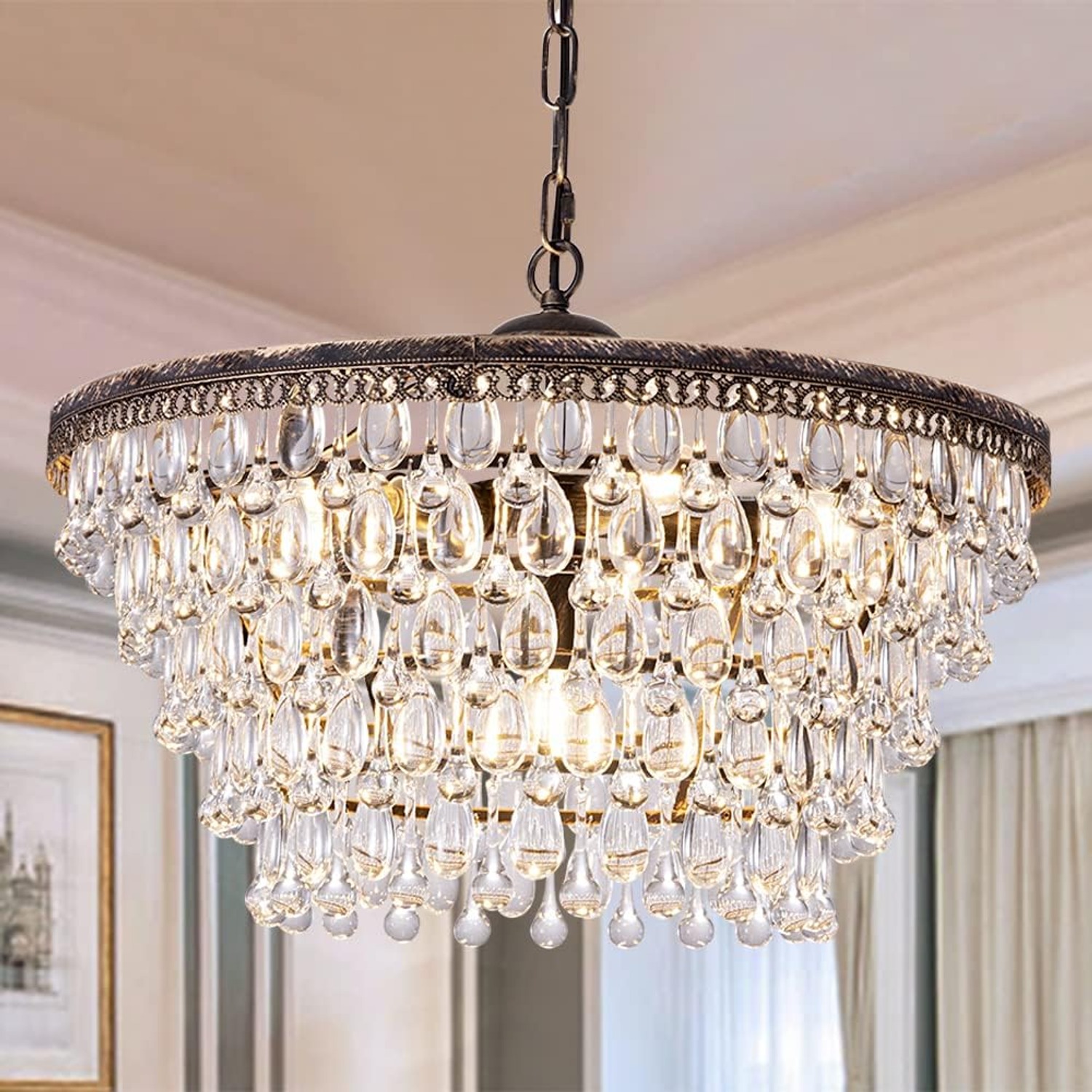
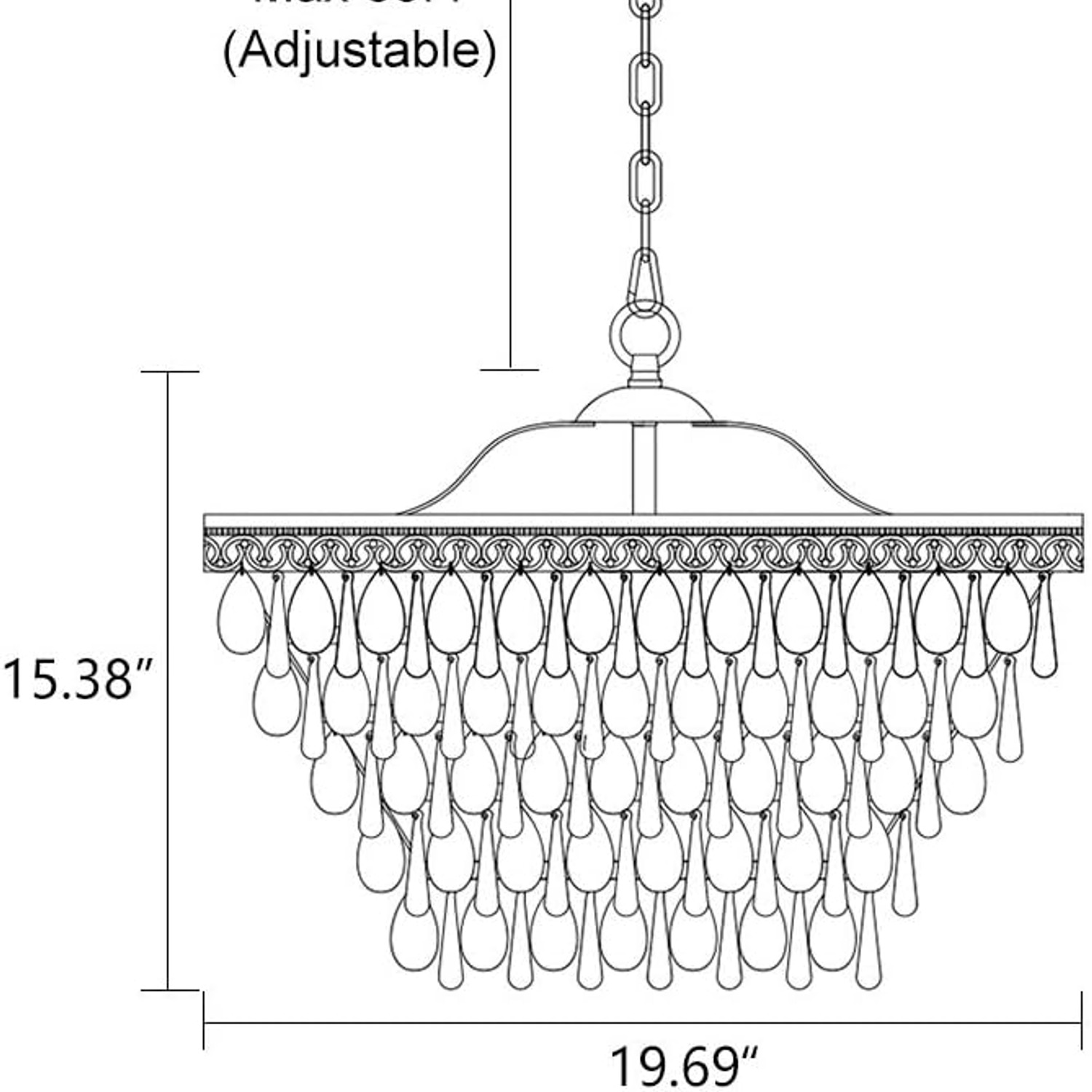
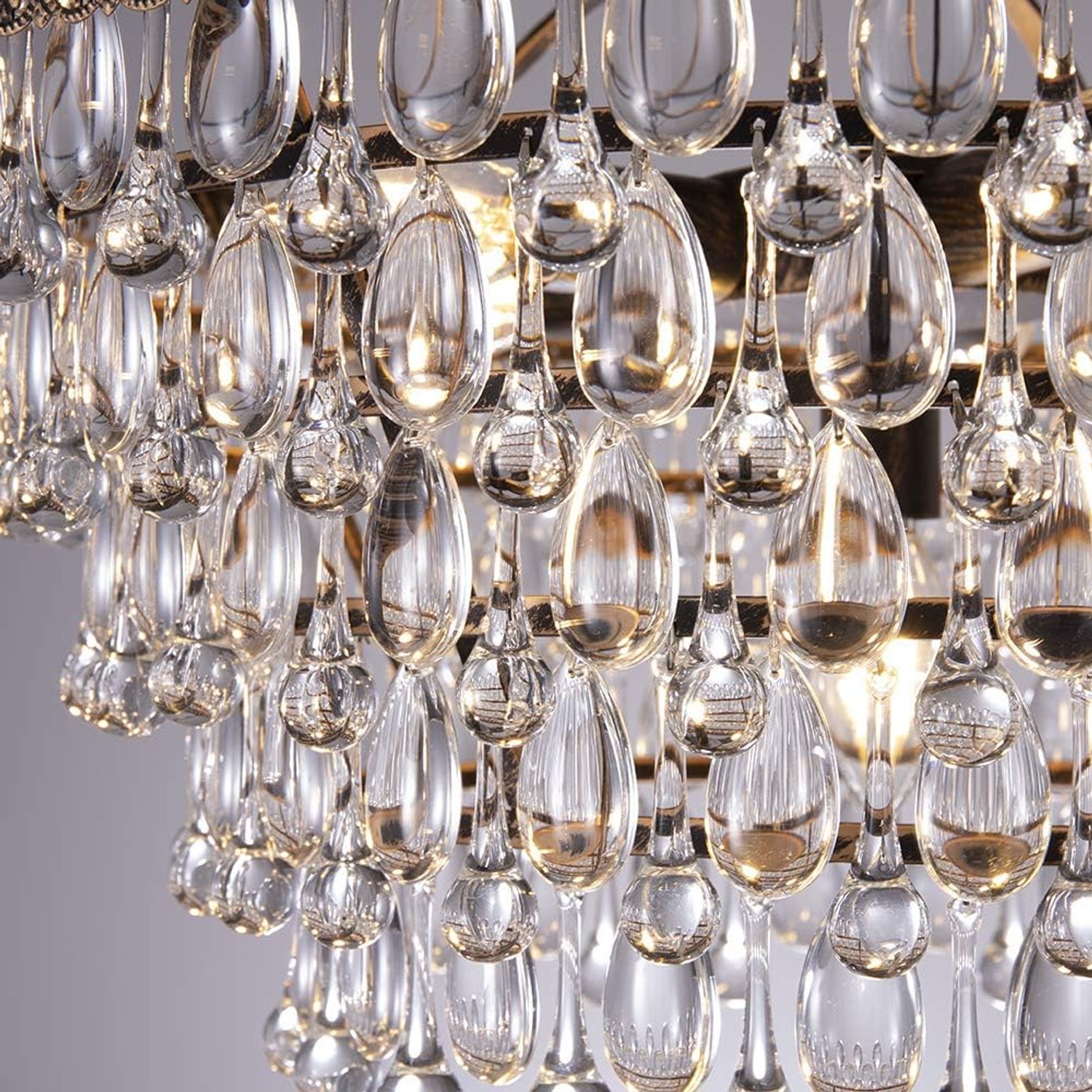
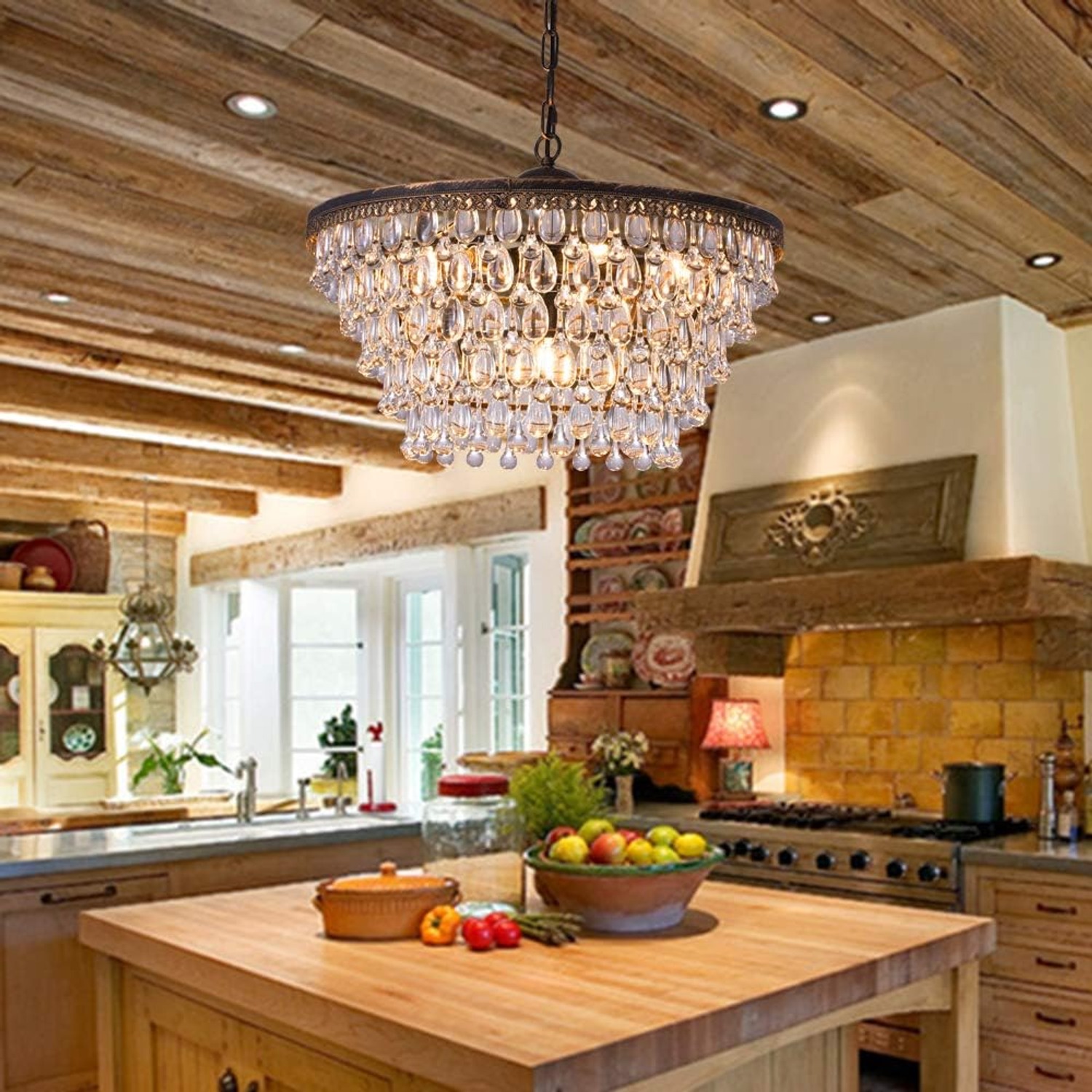
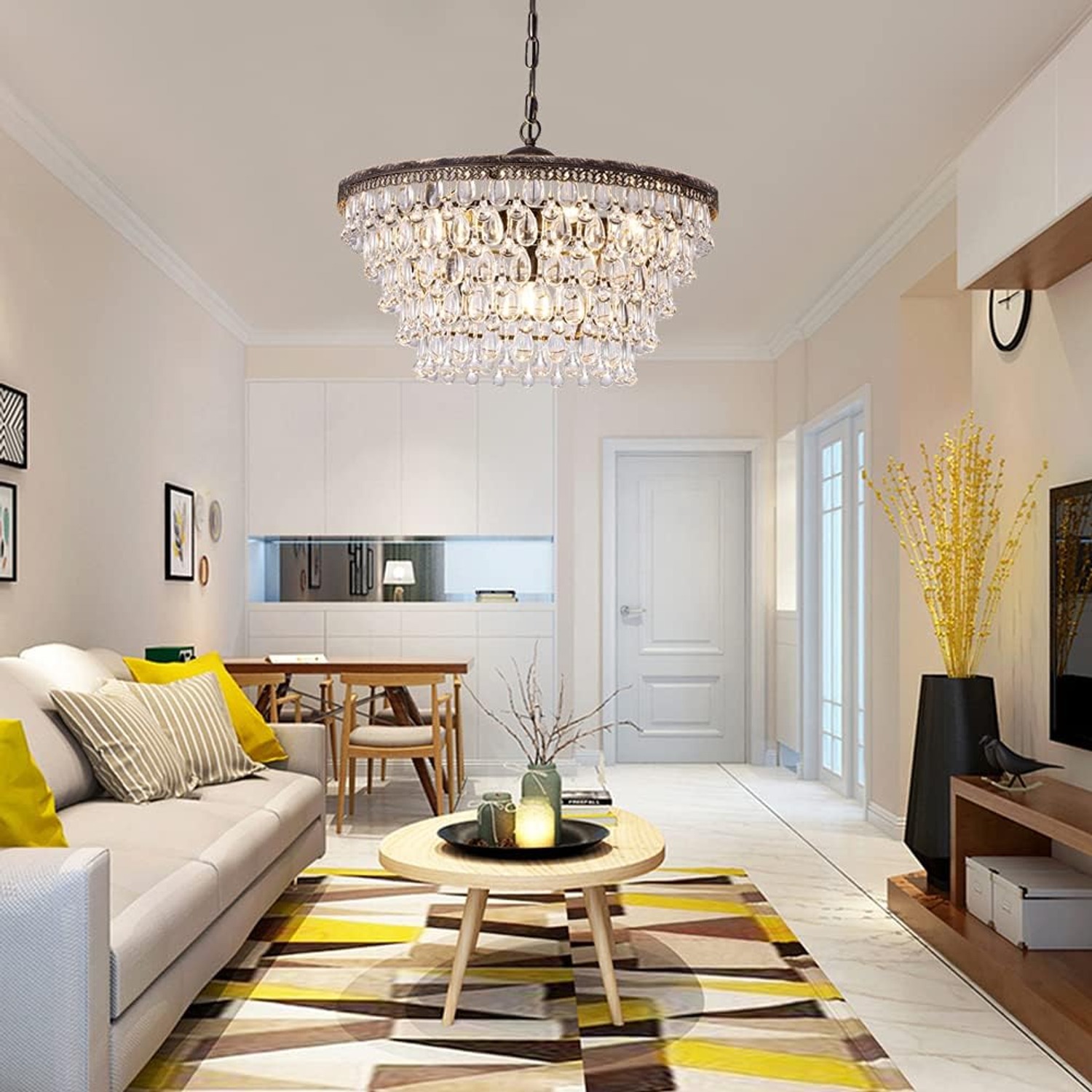
The fixture is built around a metal frame with a bronze finish. Clear crystal droplets are hung across it in tiers, so from most angles you see glass rather than metal. The body measures roughly 50 cm across and about 37 cm tall, and it hangs from a chain that you can shorten or lengthen.
Inside sit six E12 candelabra sockets. These take the small-base bulbs you often see in decorative lighting. The total wattage is listed at 360 watts across the six, which is the ceiling, not a target. With modern LEDs you will use a fraction of that and still get plenty of light.
Bulbs are not given by the maker. That sounds like a gap, but it is actually useful. Bulb choice is the single biggest factor in how a crystal fitting looks once it is switched on, and nobody can pick that for you from a warehouse.
The whole unit weighs 6.5 kg. It is hardwired, meaning it connects straight into the ceiling wiring rather than plugging in, and it is rated for indoor use only with no water resistance.
Who it suits
This fitting lands in a useful middle ground. Chrome and bright gold chandeliers announce themselves loudly, which works in some houses and jars badly in others. Bronze is quieter. It sits well next to wood floors, oak furniture, warm greys and cream paint, and it does not fight with brass taps or black window frames.
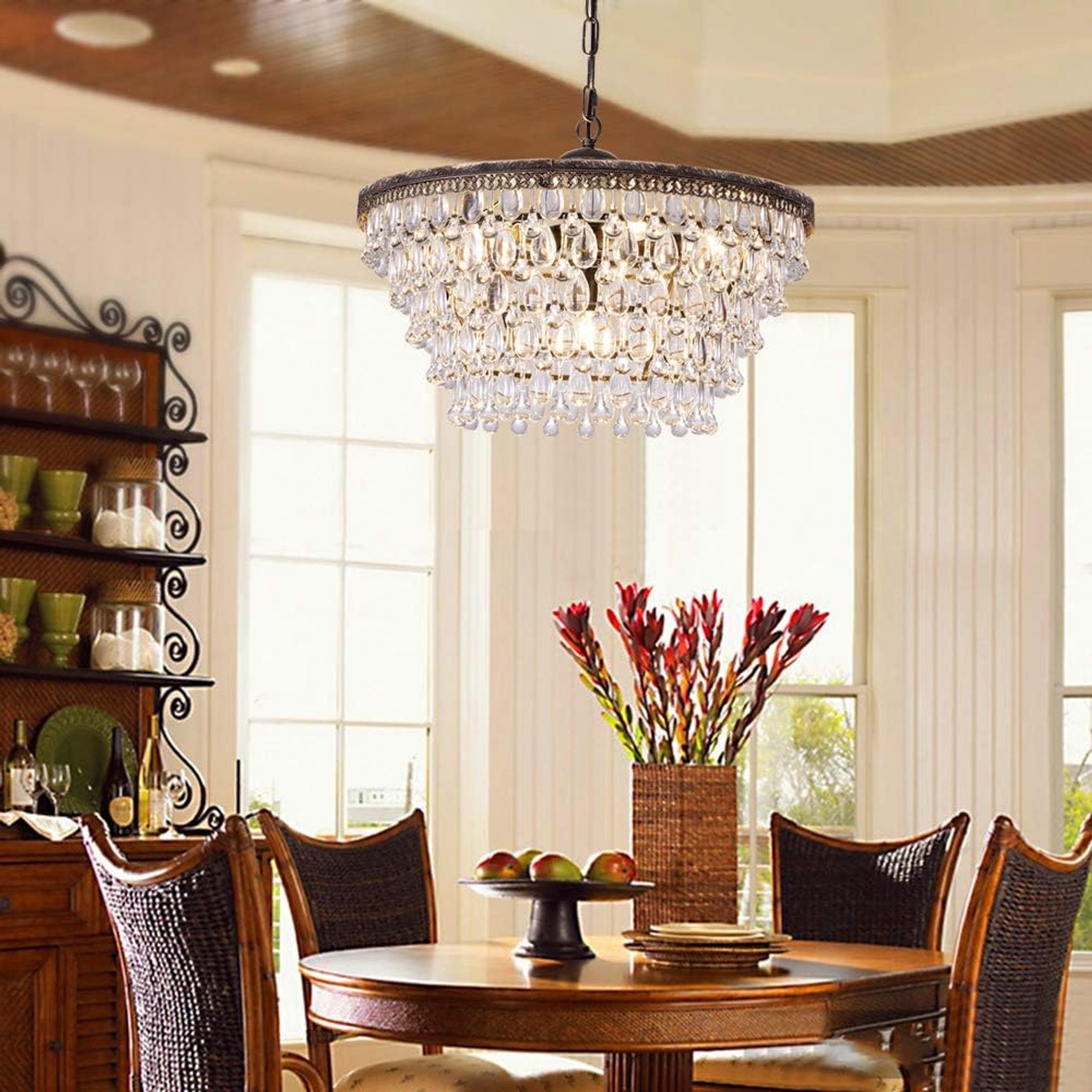
That makes it a sensible pick for a few different situations. Over a dining table it gives you the sparkle without the showroom feel. In an entry or hallway it gives visitors something to look at the moment they walk in. In a stairwell it can be seen from the landing and the hall at once, which is where the layered crystal really earns its keep. Some people use it as a kitchen island chandelier, which works as long as it sits away from the cooktop and the steam.
Where it does not suit is a bathroom, a laundry, or anywhere damp. The fixture has no water resistance rating and the maker's description is clear that it is for indoor use. Steam gets into sockets and corrodes finishes, so that is not a corner to cut.
Getting the size and height right
Two measurements decide whether a chandelier looks right or looks wrong, and neither is complicated.
The first is diameter against the furniture below. Over a dining table, a fixture around half to two thirds the width of the table generally looks balanced. At 50 cm across, this one suits tables roughly 75 cm to 100 cm wide, which covers most standard dining tables and round tables for four to six.
The second is drop height. Over a table, aim for roughly 75 to 90 cm between the tabletop and the lowest point of the fixture. That keeps it out of sightlines without floating awkwardly near the ceiling. In a hallway or walkway, the rule is simpler. It needs to clear the tallest person in the house with room to spare, and then a bit more for anyone carrying a box.
The chain adjusts, so you set this yourself. Work it out before the electrician finishes up, because trimming cable after the canopy is fixed is a nuisance. If your ceiling is very low, consider whether a flush fitting would serve you better. A chandelier that people duck under is a daily annoyance, no matter how good it looks.
Choosing the bulbs
This is where people either make the fixture sing or leave it looking cold. Six E12 bulbs, and the decision comes down to three things.
Colour temperature first. Around 2700K gives warm, golden light that flatters skin tones and makes the crystal glow. Around 3000K is slightly crisper and still comfortable. Anything above 4000K starts to look clinical, which may suit a modern kitchen but rarely suits a dining room.
Brightness second. Six bulbs at 400 to 500 lumens each is a good starting point for a dining area. If you want more control, go brighter and add a dimmer rather than living with one fixed level.
Dimmability third. If there is a dimmer on the circuit, buy bulbs clearly marked dimmable and check they suit your dimmer type. Non-dimmable LEDs on a dimmer flicker, buzz, and fail early. It is the most common complaint with decorative lighting and it is entirely avoidable.
Clear or candle-shaped bulbs tend to look better than frosted ones here, because the visible filament adds to the sparkle through the glass.
Installation, honestly
It is hardwired, so this is electrician territory. In many countries connecting a mains fixture is restricted work anyway, and even where it is not, getting the earth and the fixing right matters when 6.5 kg is hanging over a table.
The practical sequence is simple. The ceiling fixing goes in first, rated for the weight and fixed to solid structure rather than plasterboard alone. The chain gets set to your chosen length. The body is mounted and wired. Then the crystal strands get hooked onto the frame.
That last step is the fiddly part. Each strand hooks on individually, and doing it overhead on a ladder with one hand is tedious. It goes much faster with two people, one holding and one hooking. Set aside an hour and do not rush it, because strands hung unevenly are the main thing that makes an otherwise good adjustable chain chandelier look amateur.
Keeping it looking good
Crystal shows dust. There is no way around it, and it is the only real maintenance this fitting asks for.
Switch it off and let the bulbs cool first, which matters more with halogen than LED but is a good habit either way. Dust the droplets with a soft dry cloth or a microfibre glove, working tier by tier so you do not miss sections. For fingerprints or kitchen film, dampen the cloth slightly with water and dry straight after. Keep water away from the sockets entirely.
The bronze frame wants a dry cloth only. Ammonia cleaners, solvents and abrasive pads will dull the finish, and once that happens it does not come back.
Once or twice a year, give the fixing a check. Make sure the chain links are closed, the canopy screws are snug and the bead hooks are all still sitting where they should. Five minutes of checking saves a lot of bother later.
The short version
This is a bronze-finish crystal chandelier, about 50 cm across, taking six E12 bulbs that you supply yourself. It hangs on an adjustable chain, it is hardwired, and it is for indoor use only.
It suits dining rooms, entries, hallways and living rooms, and the bronze tone makes it an easier match with existing furniture than chrome or bright gold. Get the drop height right, choose warm bulbs, take your time hanging the crystal, and dust it a few times a year. Do that and it will look good for a very long time.