
The complete guide
How to Choose and Hang LED Ring Pendant Lights
The problem with most ceiling lights
Most rooms get one light in the middle of the ceiling, and that light does two things badly. It throws a flat wash over everything, and it puts the brightest point where nobody is standing. Over a kitchen island this is especially frustrating. You end up chopping in your own shadow because the only light source is behind you.
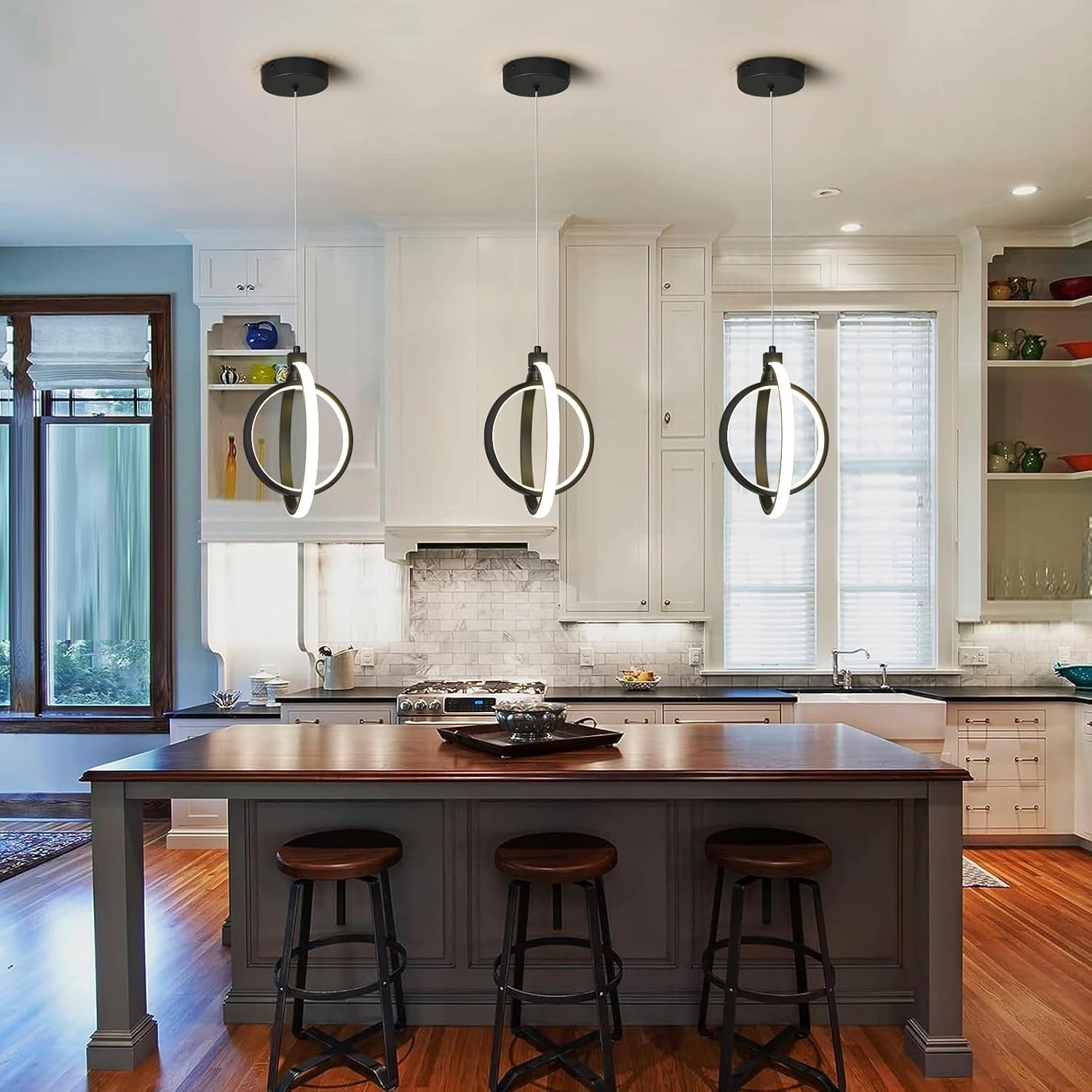
A row of pendants fixes that. Instead of one source overhead, you get several smaller ones placed directly where the work happens, at a height that puts light on the surface rather than on the top of your head. The ring shape adds a second benefit. Because the light sits in the ring rather than in a solid shade, you get a glow that spreads outward as well as down, so the pendants light the space around them, not just a tight circle underneath.
How this set works
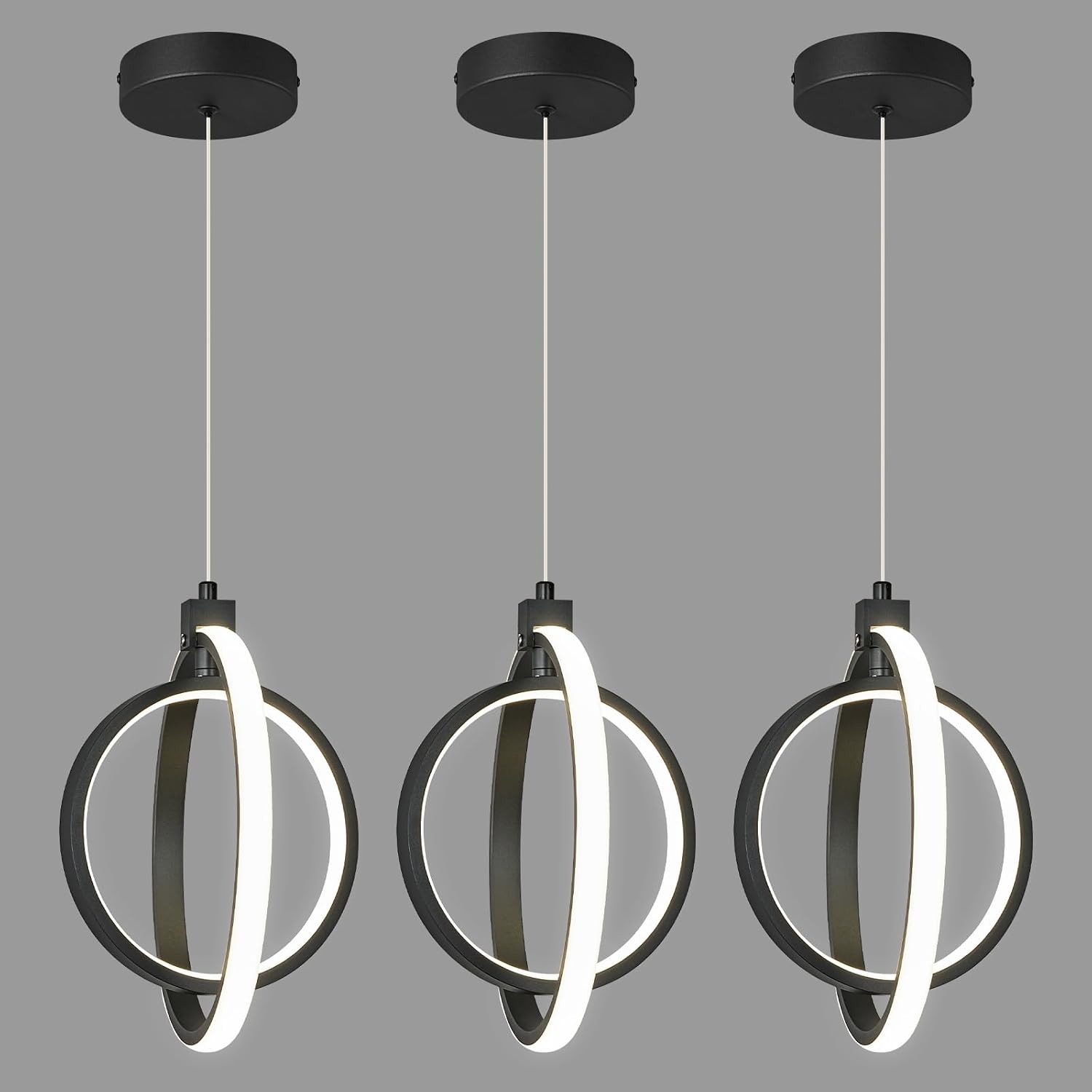
Each of the three fixtures in this pack is a round ring finished in frosted black, built from aluminum and metal with a painted surface. The LED is integrated into the fixture, rated at 16 watts, giving 1000 lumens at a colour temperature of 4000 Kelvin. There is no bulb to buy and nothing to screw in.
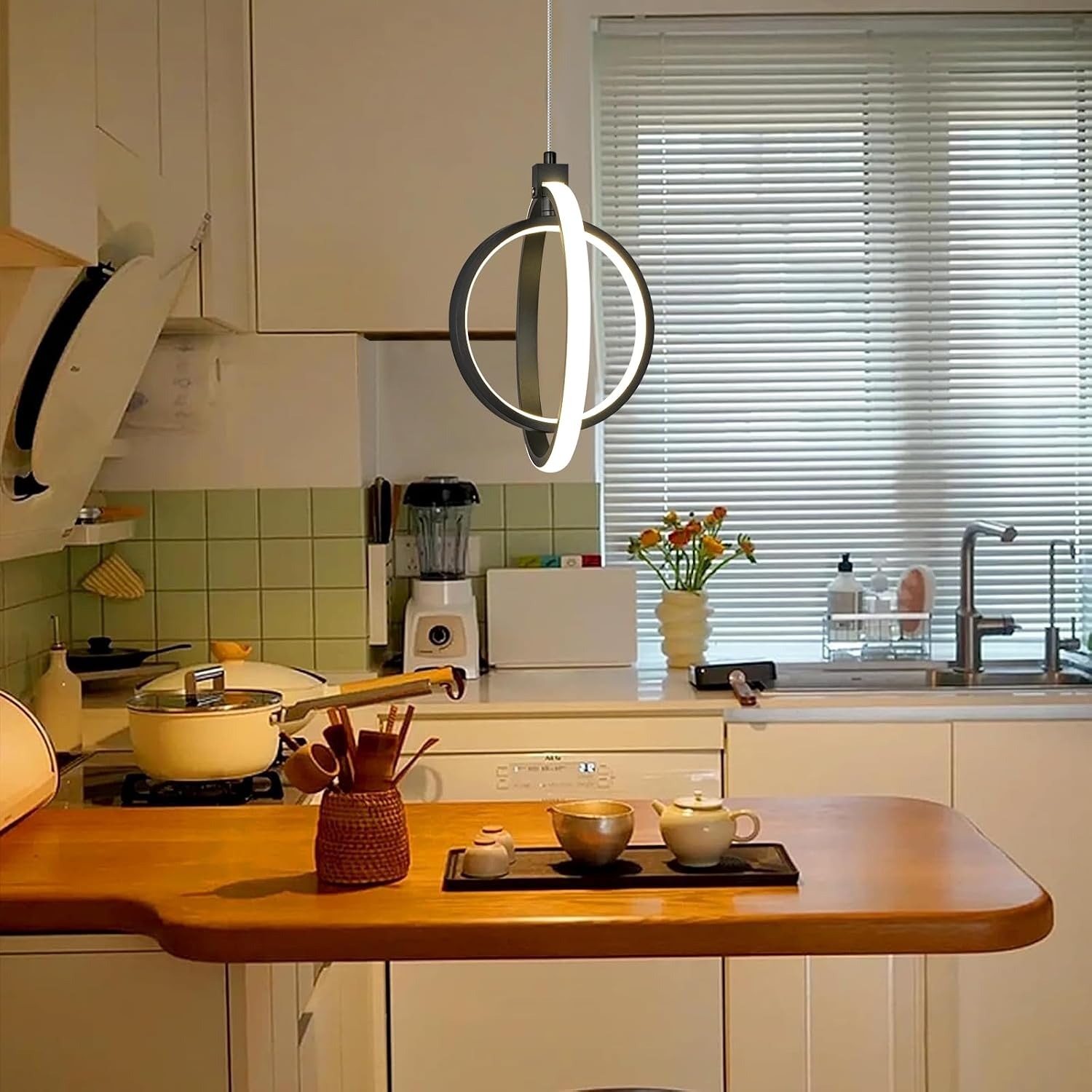
That 4000K figure is worth pausing on, because colour temperature changes the feel of a room more than brightness does. Around 2700K you get the warm amber of an old incandescent bulb, nice in a lounge, muddy over food. Up at 5000K and beyond you get the cool blue-white of a garage or an office. 4000K sits between them. Colours look true, white surfaces look white instead of yellow, and the overall effect is clean without being clinical. For a kitchen it is close to ideal. For a dining room it still works, particularly if you add a dimmer.
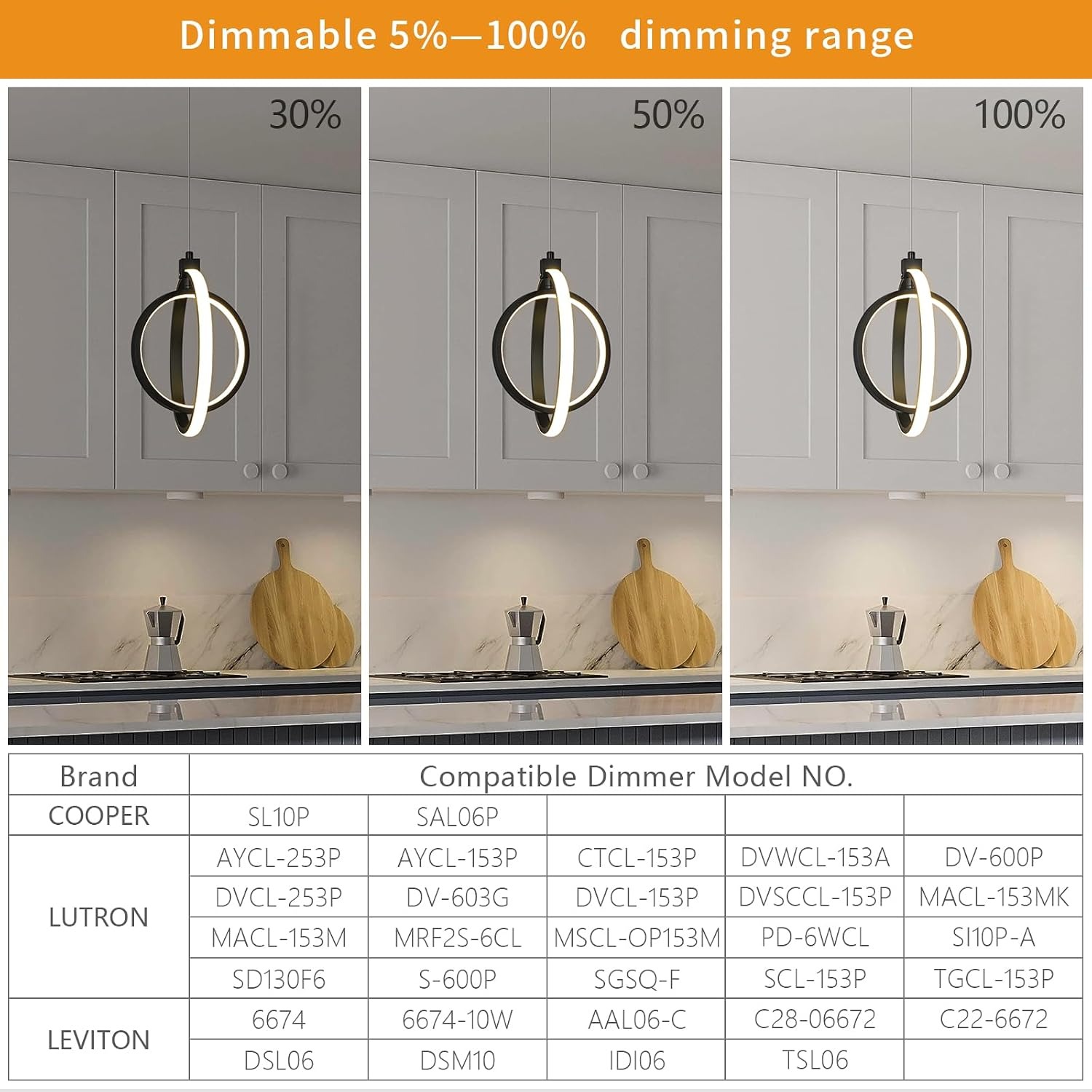
Speaking of which, the fixtures are dimmable, though the dimmer itself is not included. If you only ever run them at full output you will have a bright, practical workspace. With a dimmer you also get a low evening setting, and that one addition makes the difference between a work light and a light you want to sit under. Ask your electrician which dimmer suits an integrated LED load, because older dimmers designed for incandescent bulbs can flicker or buzz with LEDs.
Power is listed at 110 volts AC, corded electric, with a single-circuit ceiling mount. Single circuit means all three pendants run off one switch. That is normal for a set like this and it is what most people want, but if you had imagined switching them individually, it is worth knowing before the electrician arrives.
Who this suits
The obvious candidate is anyone with a kitchen island or a long dining table who wants the ceiling to look finished. Three matched pendants in a line is the standard answer for both, and buying them as a set removes the risk of mismatched finishes or slightly different ring sizes that you get when sourcing singles.
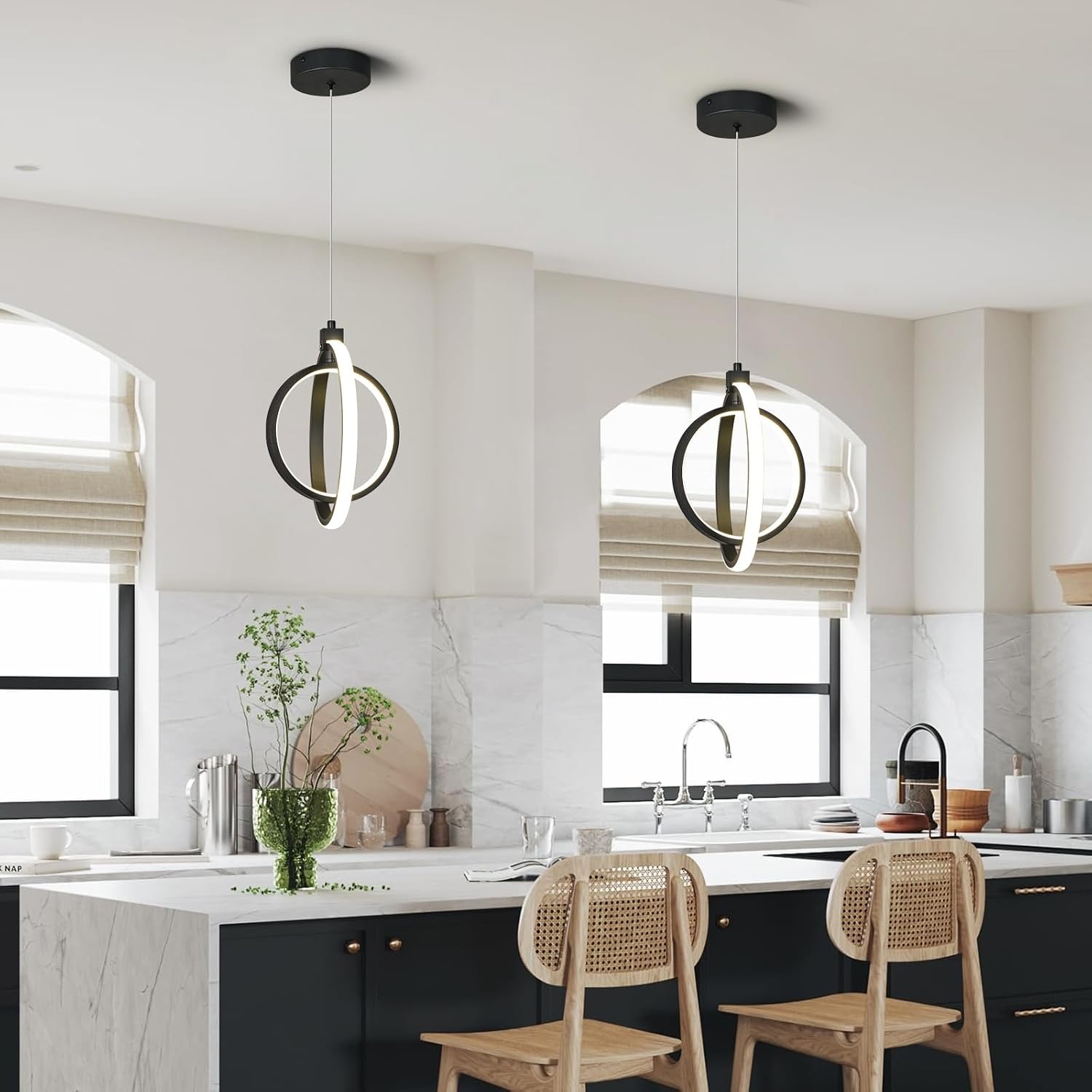
Beyond that, the listed room types cover bedrooms, living rooms, and kids rooms. A pair over a bed works well if you want to free up the bedside tables. A single ring in an entry gives you a focal point in a space that usually has none. You do not have to hang all three in the same room.
Who it does not suit: anyone needing a moisture-rated fixture. The product is listed as not water resistant and recommended for indoor use only. Bathrooms, laundries, covered outdoor areas, and the space directly above a steamy cooktop all need something rated for those conditions. Also, if your supply voltage does not match the 110 volts AC listed, check that with a licensed electrician before you commit.
Getting the height right
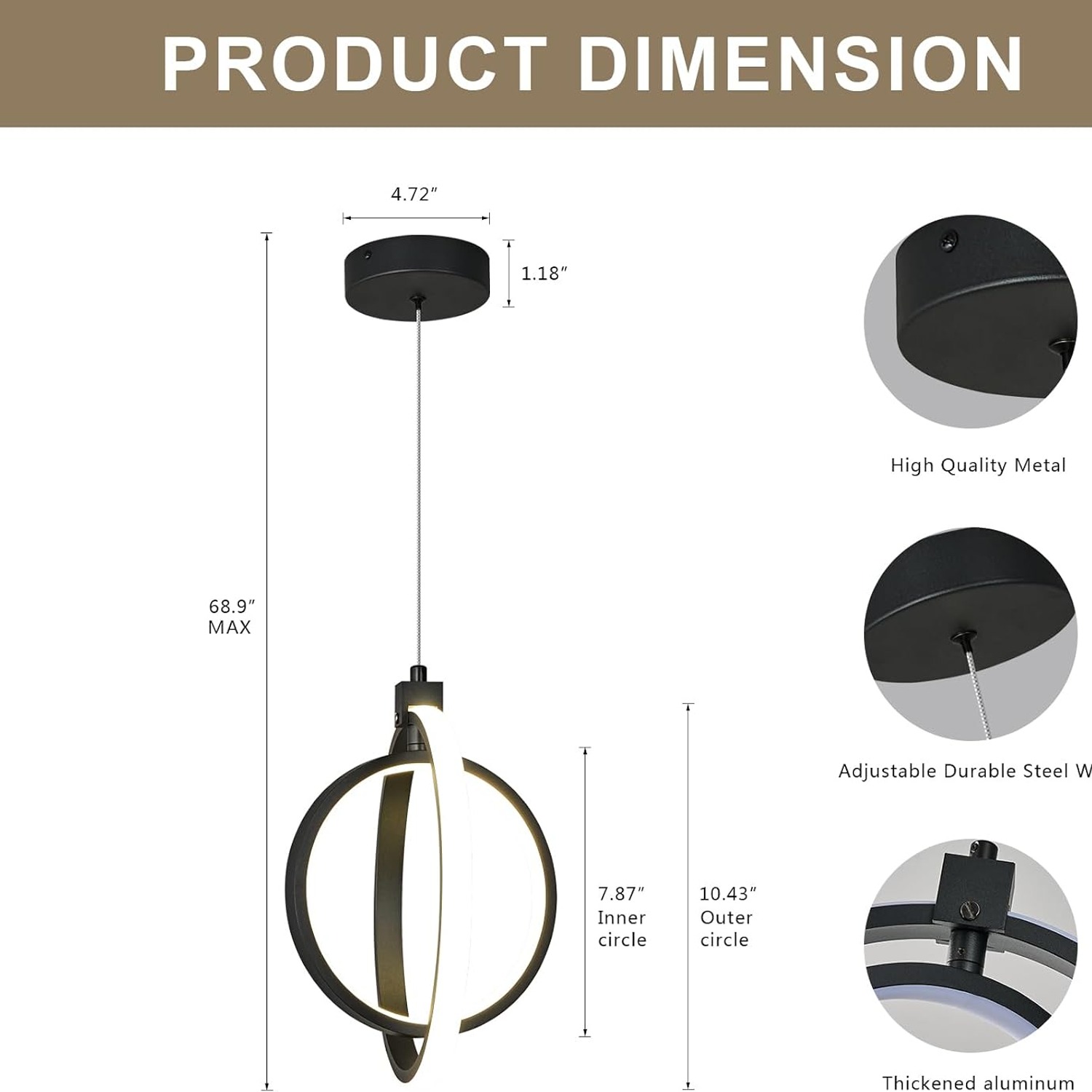
This is where people most often go wrong, and it is the easiest thing to fix before installation rather than after. The maximum overall height of this set is 175 cm, and each pendant is adjusted individually during the install.
Over a kitchen island, the usual guideline is 75 to 90 cm from the counter surface to the bottom of the fixture. Hang higher than that and the light spreads too thin. Hang lower and tall people will be ducking. If your ceiling is above standard height, you will use more of that 175 cm drop. If it is standard, you will shorten the cord considerably.
Over a dining table the same range applies, measured from the tabletop, but sight lines matter more. People sitting opposite each other should be able to see each other's faces without leaning. If in doubt, go slightly higher at the dining table than you would over an island.
There is one more thing worth doing before anybody drills. Cut three circles of paper to roughly 26 cm, tape them to the ceiling at your planned spacing, and live with them for a day. It sounds fussy. It takes ten minutes and it has saved a lot of people from an off-centre run they then look at for years.
Spacing across the run
Each fixture measures about 26.5 cm across, so you are working out spacing for three objects of that width. A reliable method is to divide the length of your island or table into three equal sections and centre a pendant in each. Keep the outer two at least 30 cm in from the ends so the run does not look like it is sliding off.
Centre the line on the surface below, not on the room. If your island sits slightly off-centre in the kitchen, the pendants should follow the island. Your eye reads the relationship between the lights and the bench, not the lights and the walls.
Installation, in plain terms
The set arrives pre-assembled, which is genuinely helpful. The worst part of installing ring fixtures is normally joining the components while balanced on a ladder with both hands busy. That step is already done.
What remains is mounting the ceiling plate, making the electrical connection, and setting the drop. Each fixture weighs 2.27 kg, light enough for a standard ceiling fixing but still a load that needs to be properly anchored. Unless you are confident with mains wiring and your local rules permit it, this is a job for an electrician. They will also tell you within a minute whether your existing ceiling point and switch arrangement will work, which is useful information to have before the plasterboard dust starts.
Living with them
Maintenance on a set like this is minimal. Turn the power off and let the fixture cool, then wipe the metal with a soft dry cloth. In a kitchen, a barely damp cloth handles the light film that builds up from cooking, followed by an immediate dry. Skip solvents and abrasive pads, and never spray cleaner straight at the fixture.
Because the LED is integrated rather than a replaceable bulb, there is no routine bulb change. LED sources typically run for a long time before output begins to drop, though the maker does not state a specific rated lifespan.
Dusting every few weeks is the main job. Black finishes show dust more readily than pale ones, especially in a room with a lot of natural light, so a quick pass with a dry cloth keeps the rings looking sharp.
The short version
This is a three-pack of black ring pendants with integrated 16W LEDs, 1000 lumens each, at a neutral 4000K. They are dimmable with a compatible dimmer, adjustable to an overall height of 175 cm, built from painted aluminum and metal, and supplied pre-assembled. They are for indoor use only and are not water resistant.
Measure your ceiling height and surface length first, work out your drop and spacing on paper, confirm the 110 volt AC supply matches yours, and book an electrician for the connection. Get those four things sorted and the install is straightforward, and the row of lights above your island will look like it was planned rather than added on.