
The complete guide
How To Choose A Rectangle Chandelier For An Island Or Dining Table
The problem with one light in the middle
Kitchen islands and dining tables are long. Most ceiling lights are round. Put a round fixture in the middle of a two metre bench and you get a bright patch under it and two dim ends, which is the part of the bench where the chopping board usually lives. The same thing happens over a dining table. The people at the ends get the worst light and the centrepiece gets the best of it.
A rectangle chandelier fixes the geometry. The light sources sit in a line that runs the same direction as the surface, so the pool of light is a long oval rather than a circle. Five heads across roughly a metre means the spacing between them is small enough that the pools overlap, and you get something closer to even light along the whole run.
That is the whole idea. Everything else, the finish, the shades, the style, is decoration on top of a layout decision.
How this fixture works
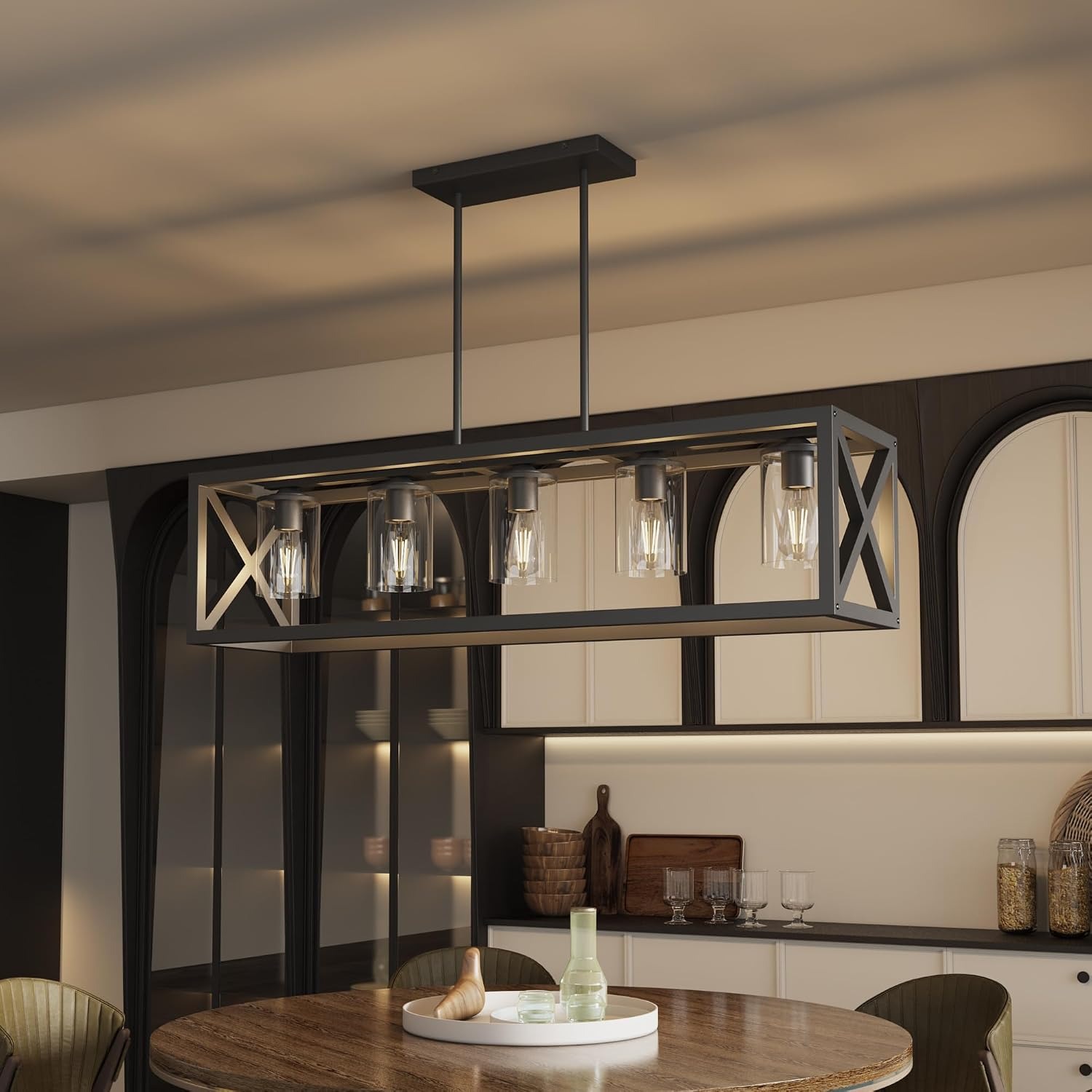
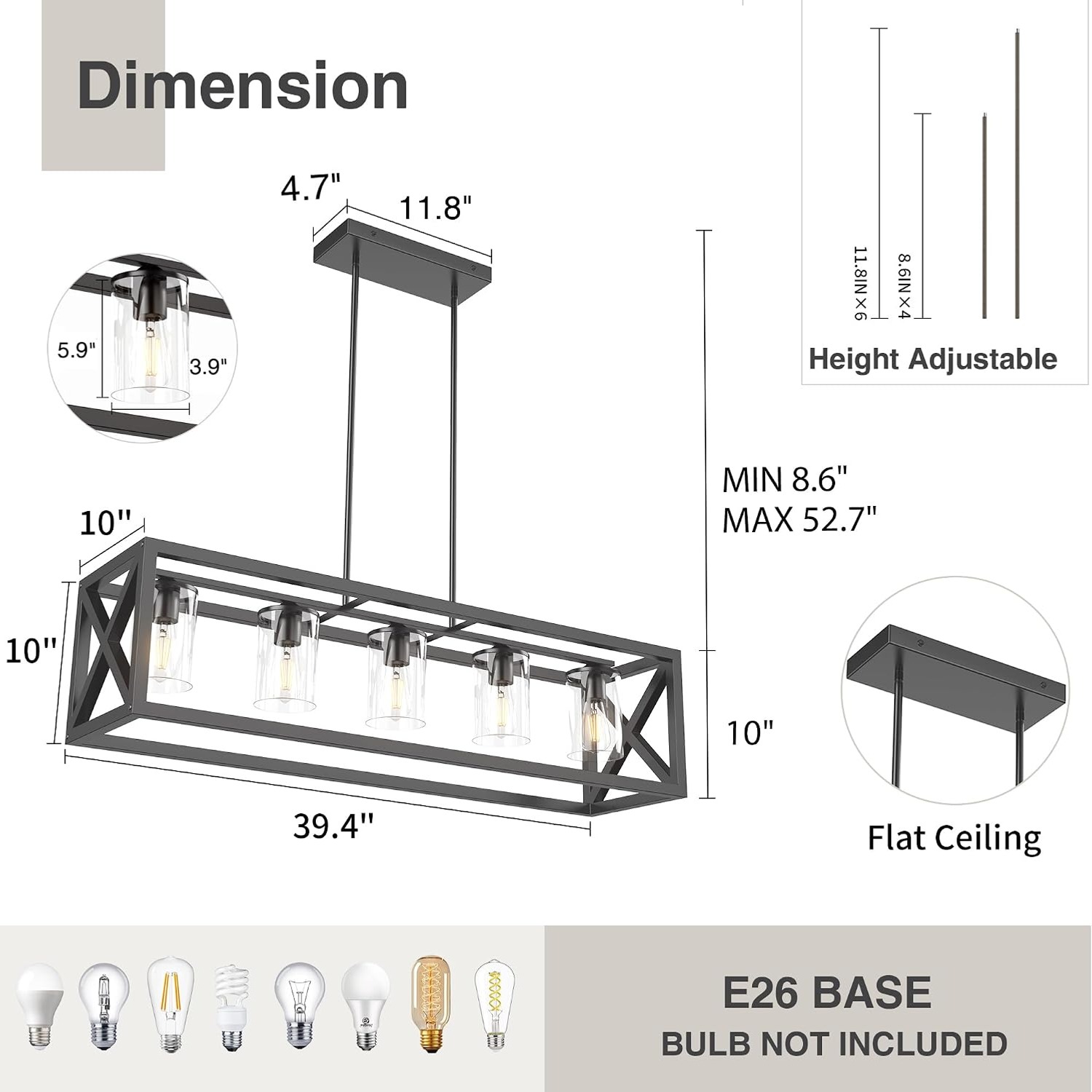
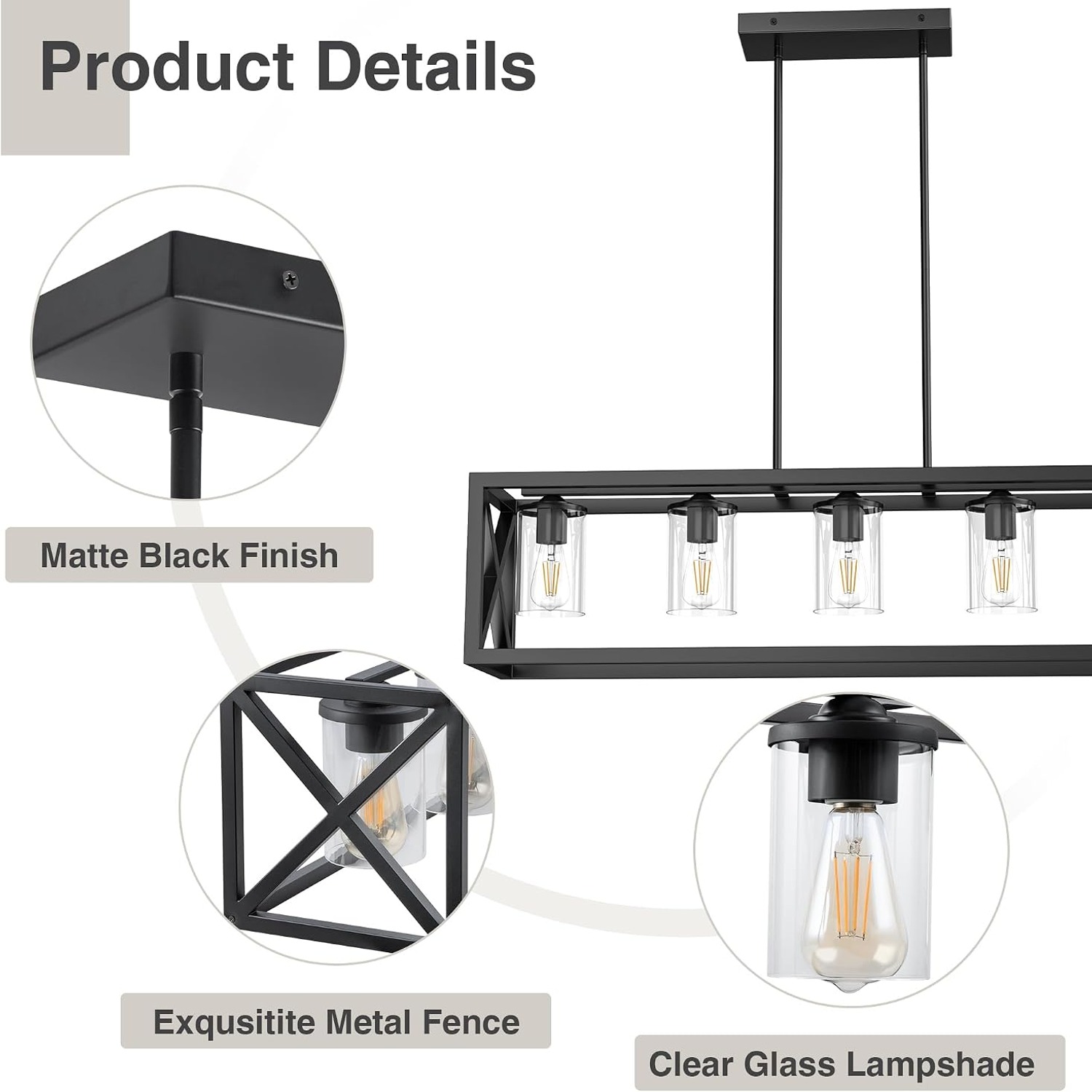
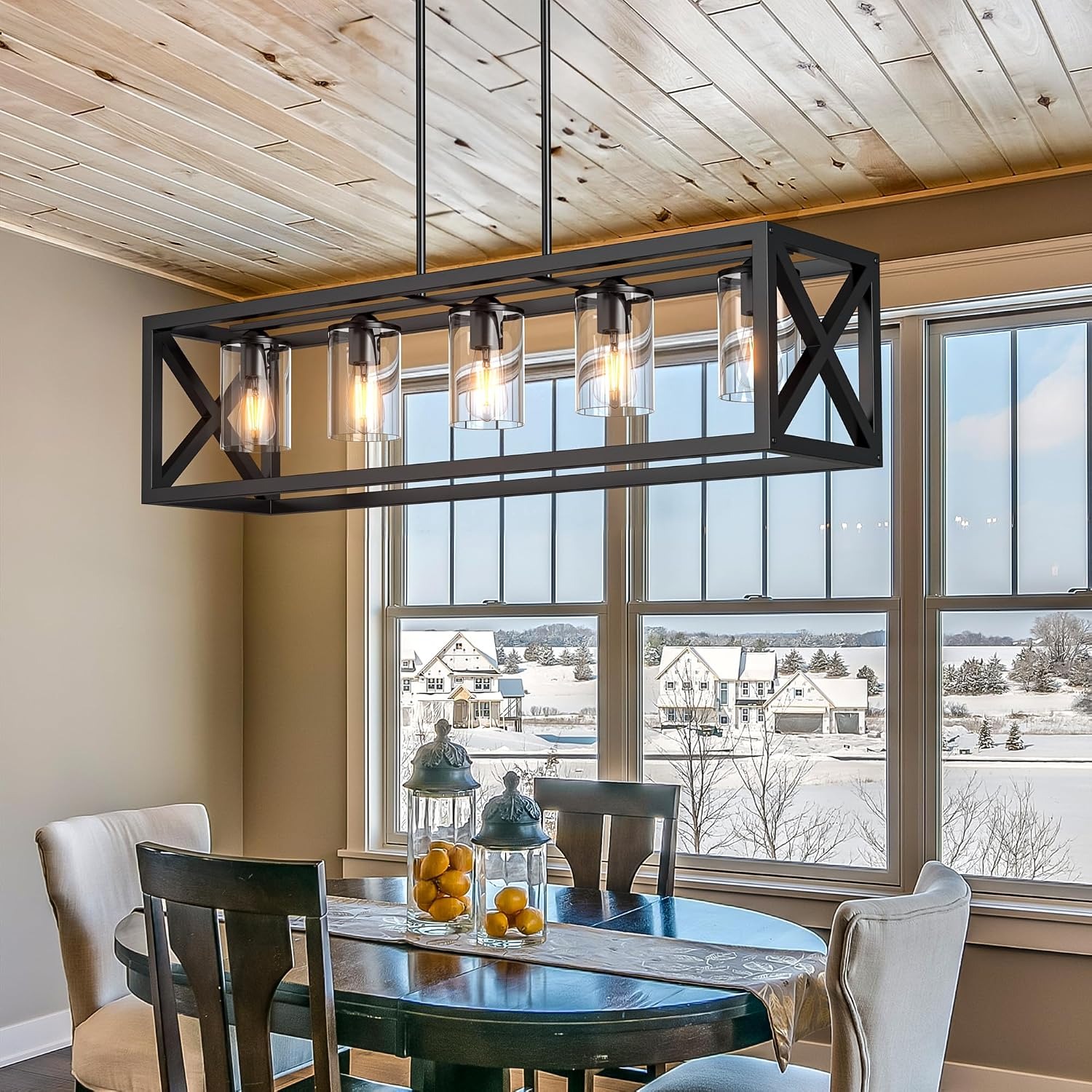
The frame is painted black metal, listed at 39.76 inches long and 11.14 inches wide. It hangs from the ceiling on rods, which is what lets you set the drop. Five clear glass shades point down from the frame, each one covering an E26 socket.
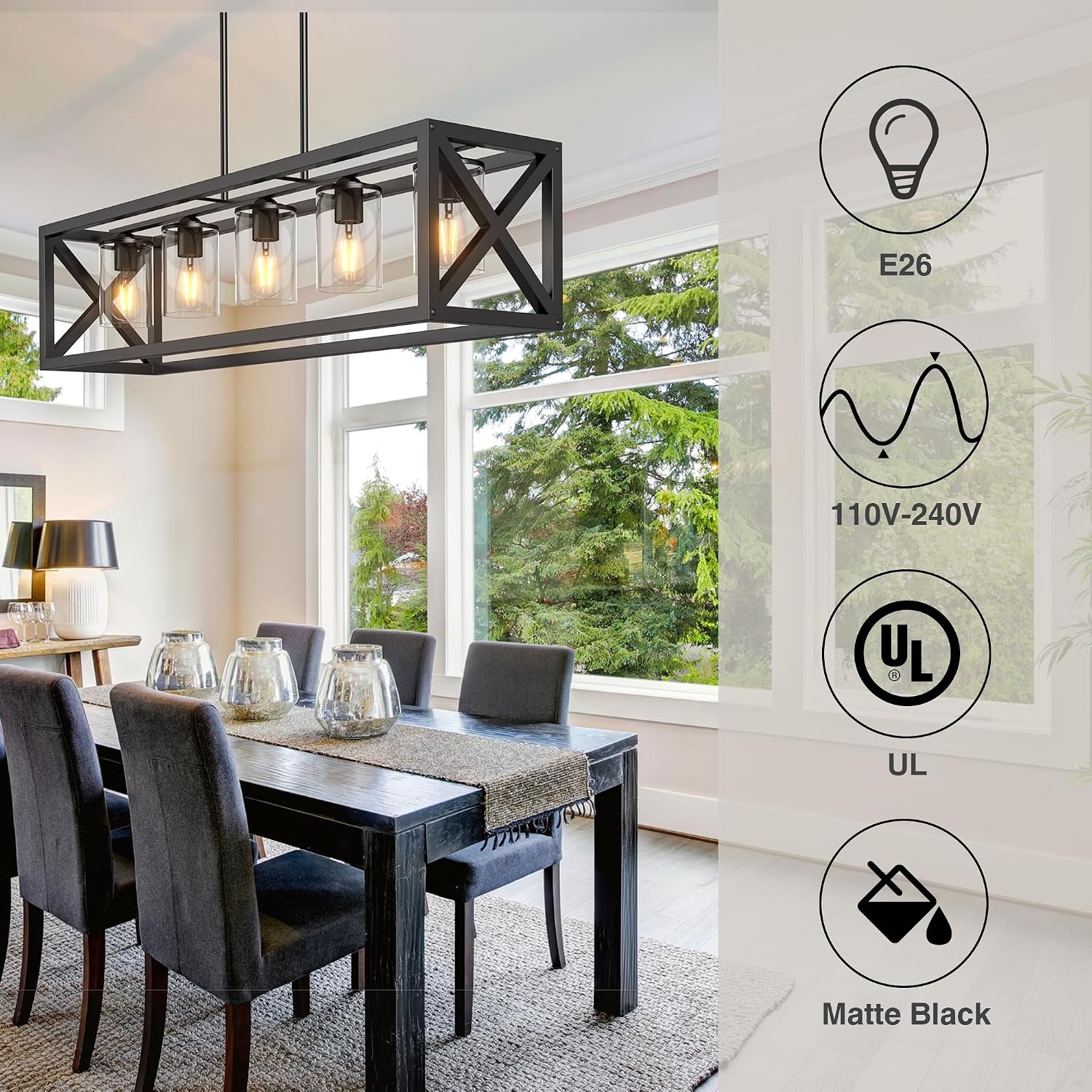
E26 is the standard medium screw base used on most household bulbs in North America. The sockets are rated to a maximum of 60 watts each at 120 volts AC, and the maker shows LED, halogen and fluorescent as compatible light sources. In practice almost everyone fits LEDs now, since five bulbs running through a long dinner adds up.
Because the bulbs are not fixed in place, you control the character of the light. If you want an easy starting point, five bulbs at roughly 800 lumens each gives you a well lit table without glare, and you can dim down from there.
Who it suits
This is a fixture for a long surface. A rectangular dining table, a kitchen island, a narrow console in a hallway, a long desk in a home office. It is listed for bedroom, dining room, kitchen and living room use, indoors only.
Style wise it is described as farmhouse, and black metal with clear glass does sit naturally with shaker doors, wood tops and painted cabinetry. But clear glass is forgiving. Hang the same light in a flat fronted white kitchen and it reads as plain and modern rather than rustic. If your room is already busy with pattern and colour, a black and glass chandelier adds structure without adding noise.
It is not the right light for an outdoor kitchen or a covered patio. Water resistant is not the same as rated for damp or wet locations, and the maker's description is clear that this is for indoor use.
Getting the size right
Measure the surface first, then worry about the fixture.
For a dining table, a reasonable guide is that the light should be somewhere between half and two thirds the length of the table. A chandelier of about a metre looks balanced over a table from roughly 1.6 to 2.4 metres. Shorter than that and the fixture starts to overhang the ends, which looks top heavy and gets in the way when someone leans back.
For an island, people usually centre the fixture on the bench and leave at least 15 to 20 cm clear at each end. If your island is very long, three metres or more, two shorter fixtures spaced evenly can look better than one long one. With a single island of a normal size, one rectangular island light is simpler and cheaper to wire.
Width matters less, but check the 11.14 inch width against a narrow bench. On a very slim island the fixture can look like it is floating past the edges.
Setting the hanging height
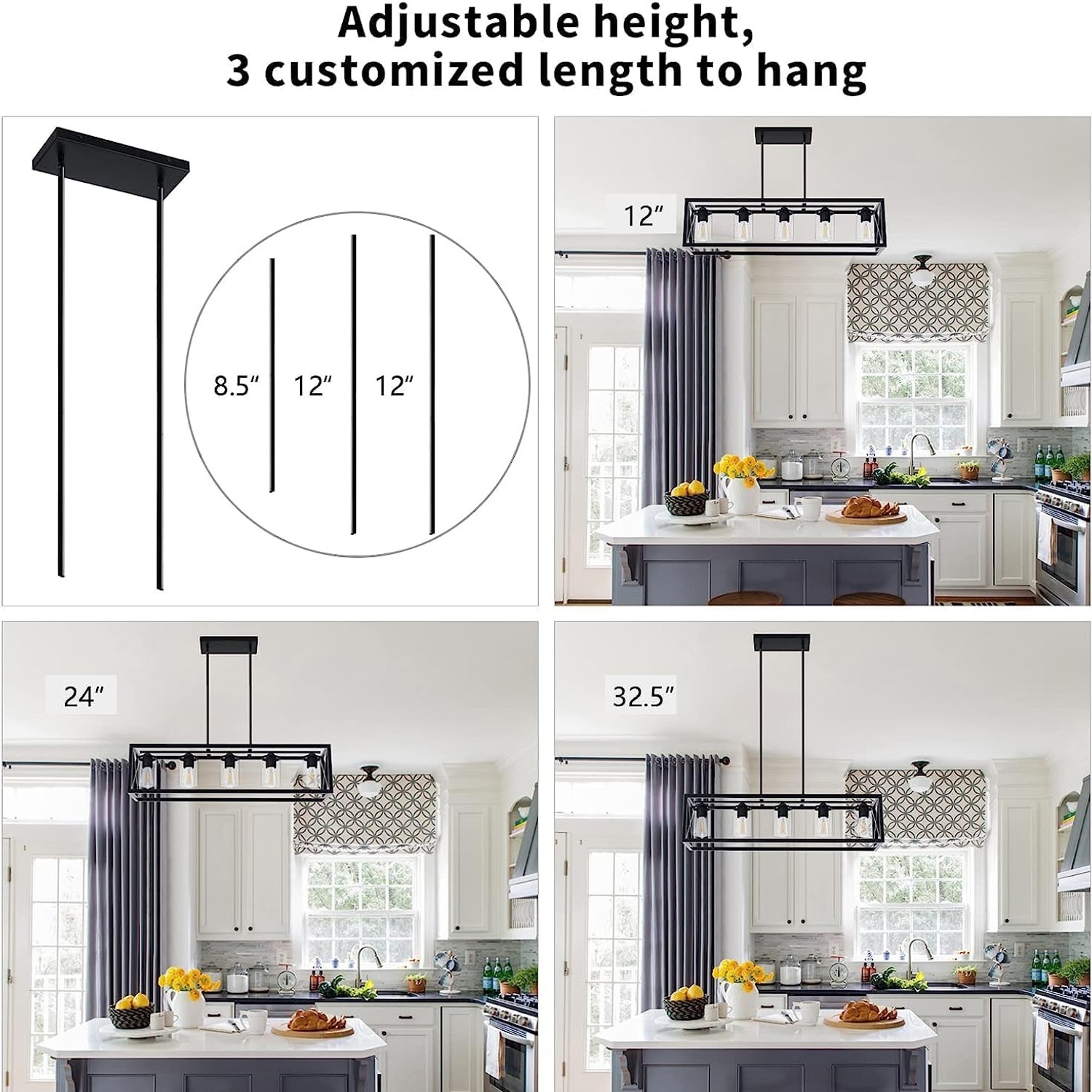
This is the part people get wrong, and it is also the part this fixture makes easy because the rods are adjustable.
Over a dining table, aim for around 75 to 90 cm between the tabletop and the bottom of the shades. The test is simple. Sit down at the table and look across at where someone's face would be. If you are staring into a bare bulb, the light is too low or your shades are too open. Raising it by ten centimetres usually fixes it.
Over a kitchen island, go a bit higher. You are standing at a bench rather than sitting, and you want to see across the room while you work. Around 90 cm above the benchtop is a common starting point. If people walk past the end of the island, make sure nobody tall is going to meet the frame with their forehead.
Ceiling height changes everything. In a room with a standard ceiling you might have very little room to play with, while a high ceiling lets you drop the fixture further and make it a feature. The rods give you the range to adjust once it is up, so do not be afraid to hang it, live with it for an evening, and then tweak.
Choosing bulbs
Since bulbs are not included, this is a real decision rather than an afterthought.
Colour temperature sets the mood. Around 2700K is warm and yellowish, the classic dining room feel. Around 3000K is still warm but a little crisper. Get up near 4000K and the light turns neutral and bright, which is better if you prep food on the island or your kids do homework at the table.
Brightness is about total lumens, not watts. Five bulbs at 600 lumens each is a soft 3000 lumens, nice for a dining room where you want atmosphere. Five at 800 is brighter and better for working. Remember the 60 watt per socket limit applies to actual electrical draw, so an LED rated at 9 watts is well inside it.
If you want to dim, buy bulbs that say dimmable on the box and check your wall dimmer is rated for LED loads. Mixing bulb brands across five sockets is the most common cause of flicker, so buy all five together from the same batch.
Installation and care
Installation is standard pendant work. The fixture assembles from the rods, frame and shades, and the manual covers the sequence. Weight is 16.65 pounds, or 7.55 kg, so the ceiling box needs to be rated for a hanging fixture of that mass. If you are swapping out a light flush mount, get that checked.
All wiring should be done by a licensed electrician to local rules. That is not a formality with a hard wired ceiling fixture.
Once it is up, care is easy. Dust the black frame with a dry soft cloth. Clean the glass with a slightly damp cloth and dry it immediately so you do not get water marks. Skip the spray cleaners and anything abrasive, because painted metal scuffs. Every year or so, check the rod connections and mounting screws and snug up anything loose.
The short version
If your table or island is long, a round pendant will always leave the ends dark. A rectangle chandelier lines the light up with the surface and spreads it out. This one gives you five E26 sockets inside a black metal frame with clear glass shades, rated to 60 watts per bulb at 120 volts AC, with a listed maximum of 4000 lumens and dimmable operation.
Measure the surface, pick a fixture around half to two thirds its length, use the rods to set a drop of roughly 75 to 90 cm above a table or a touch more above a bench, and buy five matching bulbs in the colour temperature that suits how you use the room. Get those four things right and the light will do its job for years without you thinking about it again.