
The complete guide
How to Choose a Mini Crystal Chandelier for Small Rooms
The problem with small-room lighting
Most houses get the same treatment. The living room gets a decent fixture, the bedrooms get something plain, and then the hallway, the closet and the landing get whatever was cheapest on the shelf. A flat plastic dome. It works, in the sense that the light comes on. But those are the spaces you walk through every single day, and they end up being the dullest part of the house.
There is a practical reason for it. Small rooms usually have low ceilings, awkward widths or both. You cannot hang a proper chandelier in a hallway without someone taller than average catching it with their head. So people default to the dome and move on.
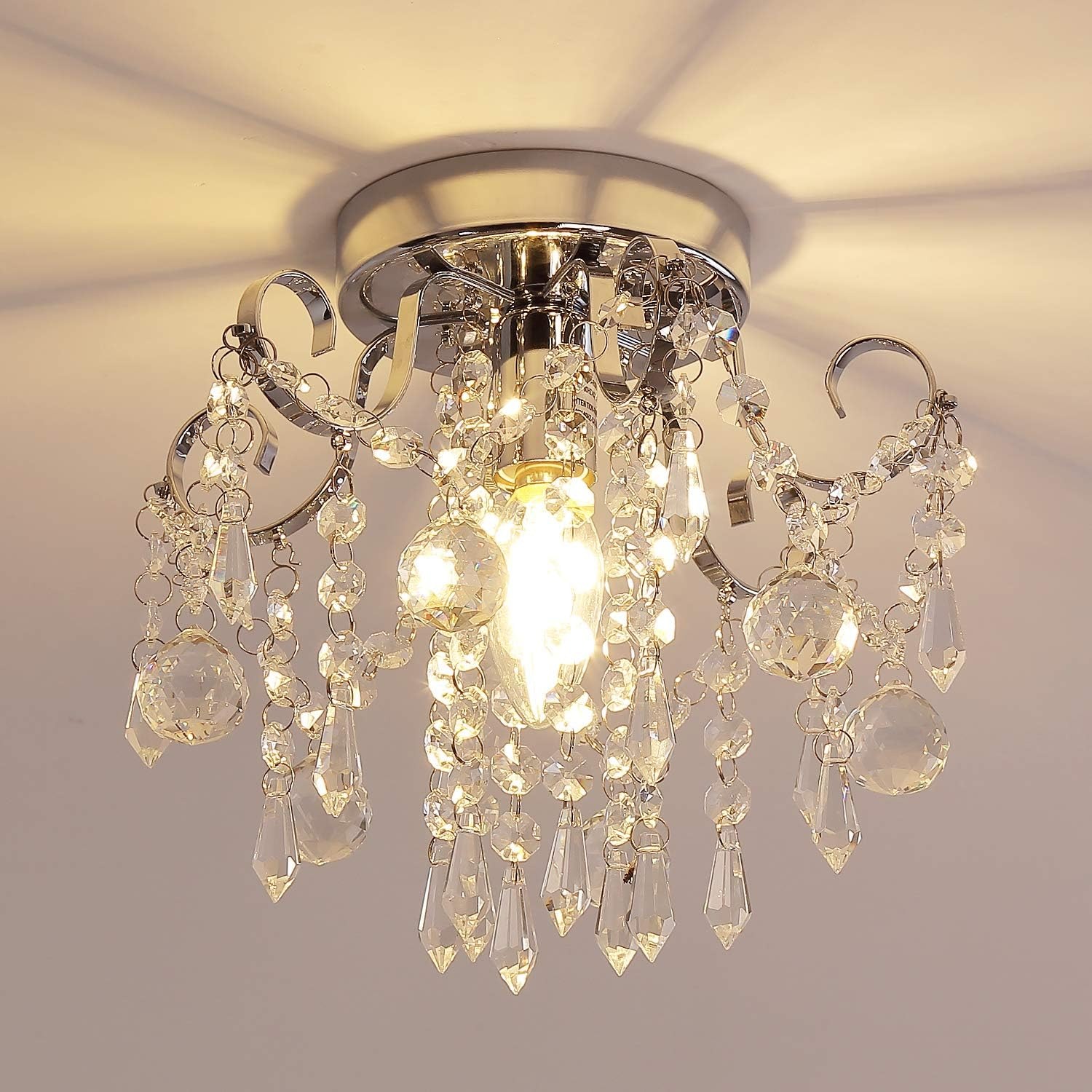
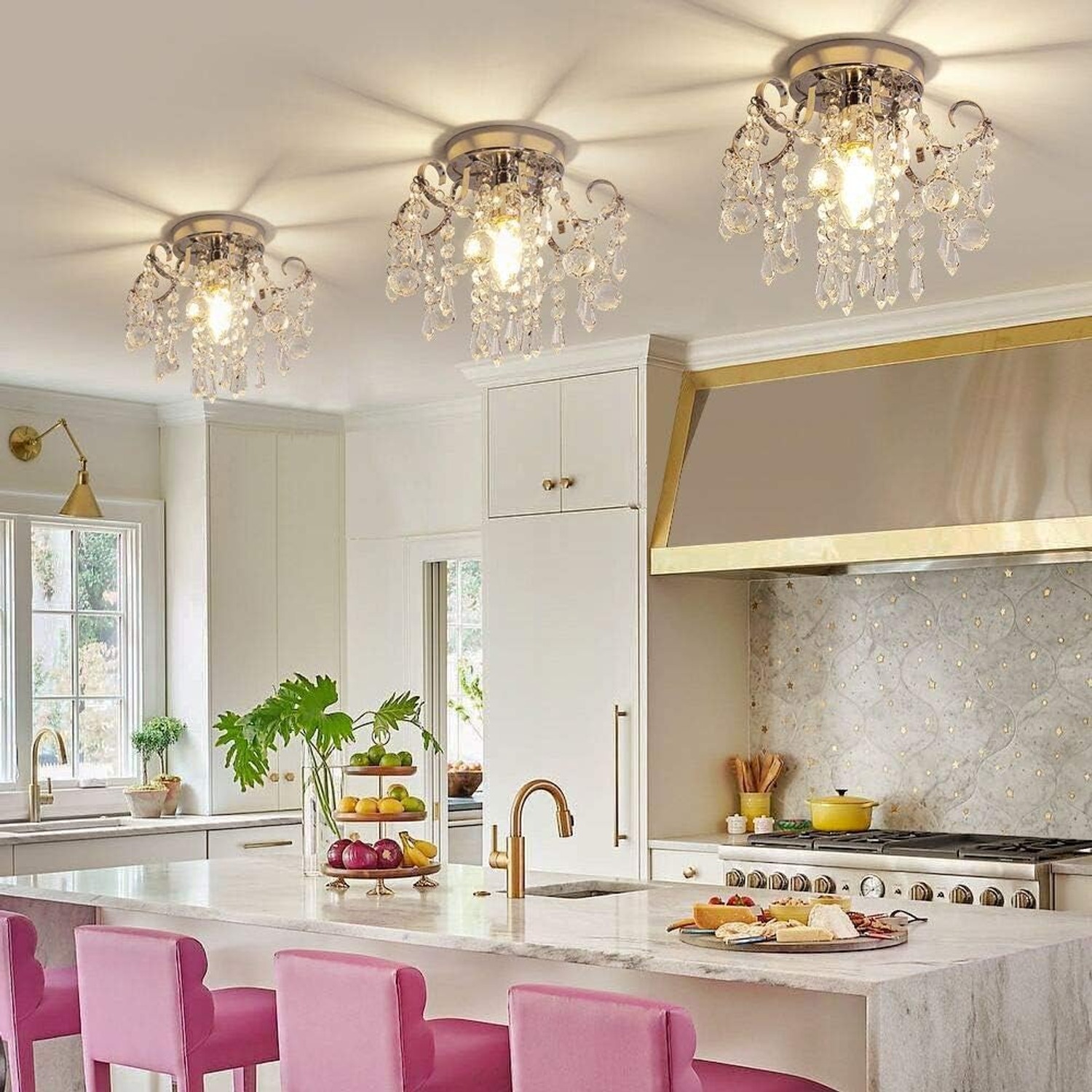
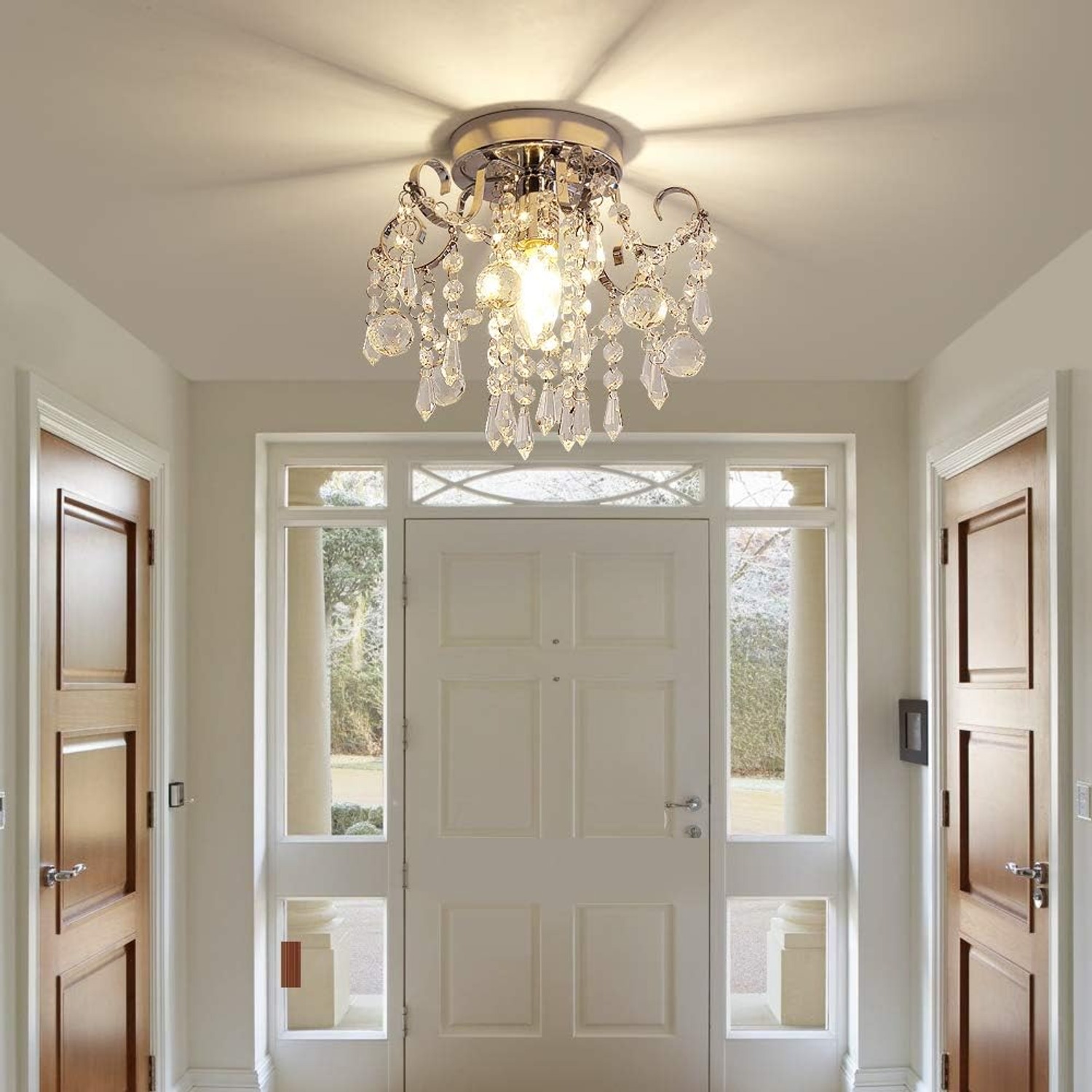
A mini crystal chandelier solves the shape problem without giving up the look. It keeps the flush mount body that low ceilings demand, then replaces the plain cover with a chrome frame and clear crystal. You get sparkle at the height of a dome.
How a flush mount crystal light actually works
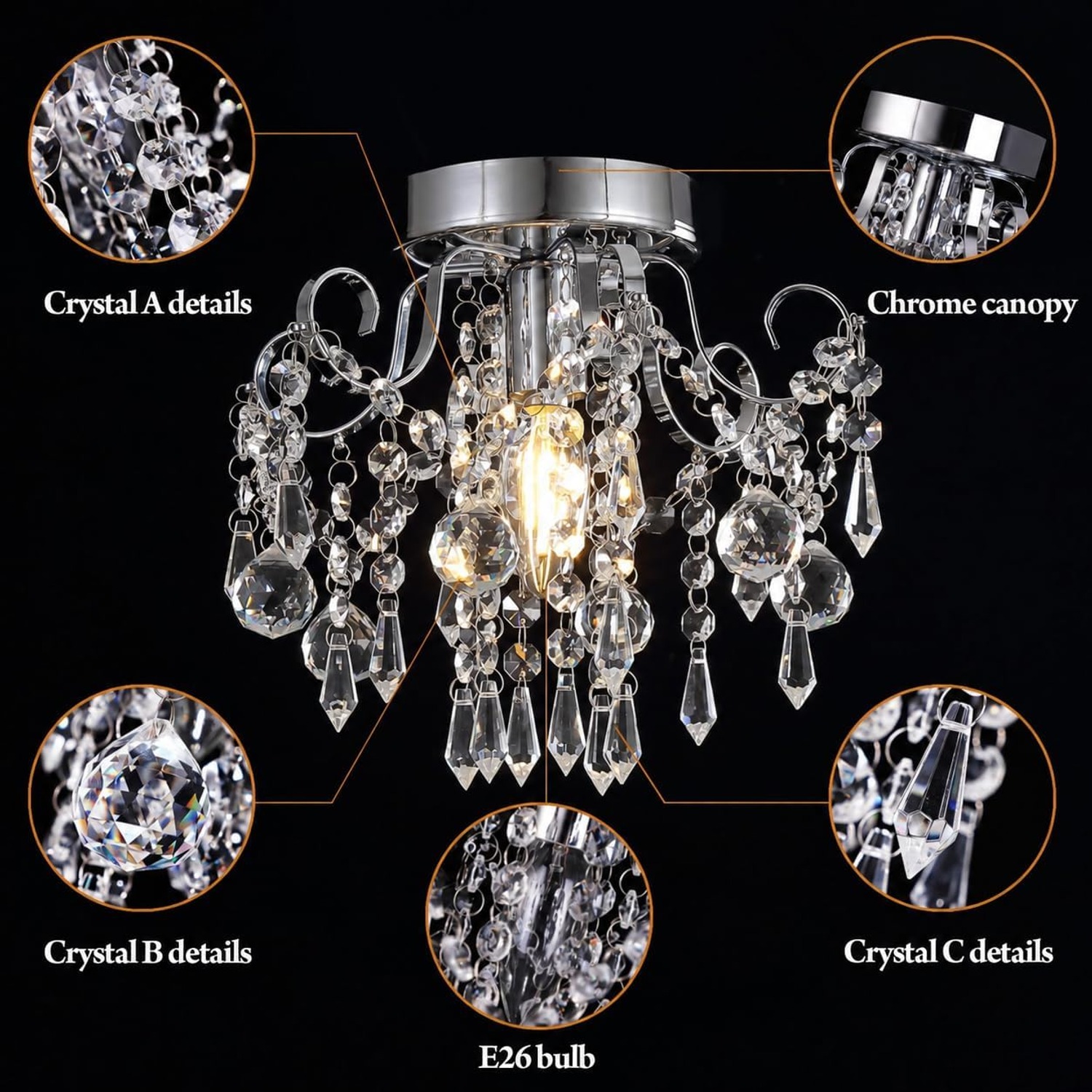
There is nothing complicated going on. A single bulb sits inside the frame, and crystal pieces hang around it. Light passes through the crystal, bends, and comes back out in different directions. Chrome plating on the frame reflects some of that again.
The result is different from a diffused dome. A dome gives you one smooth, even wash of light. A crystal fixture gives you that plus small bright points scattered across the ceiling and the nearby walls. In a narrow space, those reflections give your eye something to follow, and the room feels wider than it is.
This particular fixture takes one E26 bulb rated to 60 watts, running on 110 volt AC. The maker describes an LED source at 600 lumens and 3000 Kelvin, which is warm white. That is enough light for a hallway, a closet, a small bedroom or a landing. For a dining room or a larger living space, treat it as one layer rather than the only light.
Who it suits
Think about where you keep bumping into the limits of your ceiling. Flats and apartments with standard 2.4 metre ceilings. Attic conversions with a sloped roofline. Older cottages. RVs and park homes. Entryways where a pendant would swing into the door.
It also suits people who want a bit of detail without a renovation. Swapping a ceiling light is one of the cheapest changes you can make to a room, and the difference is immediate. If you have just moved into a place with builder-grade fittings everywhere, replacing the hallway and closet lights first gives you the most visible return for the least money and mess.
Finish matters too. Chrome is cool and bright, so it sits naturally alongside brushed nickel taps, chrome door handles, grey or white paint and glass. If everything else in your home is warm brass or oil-rubbed bronze, a chrome fixture will stand out rather than blend in. That can be deliberate, but go in knowing it.
Getting the size right
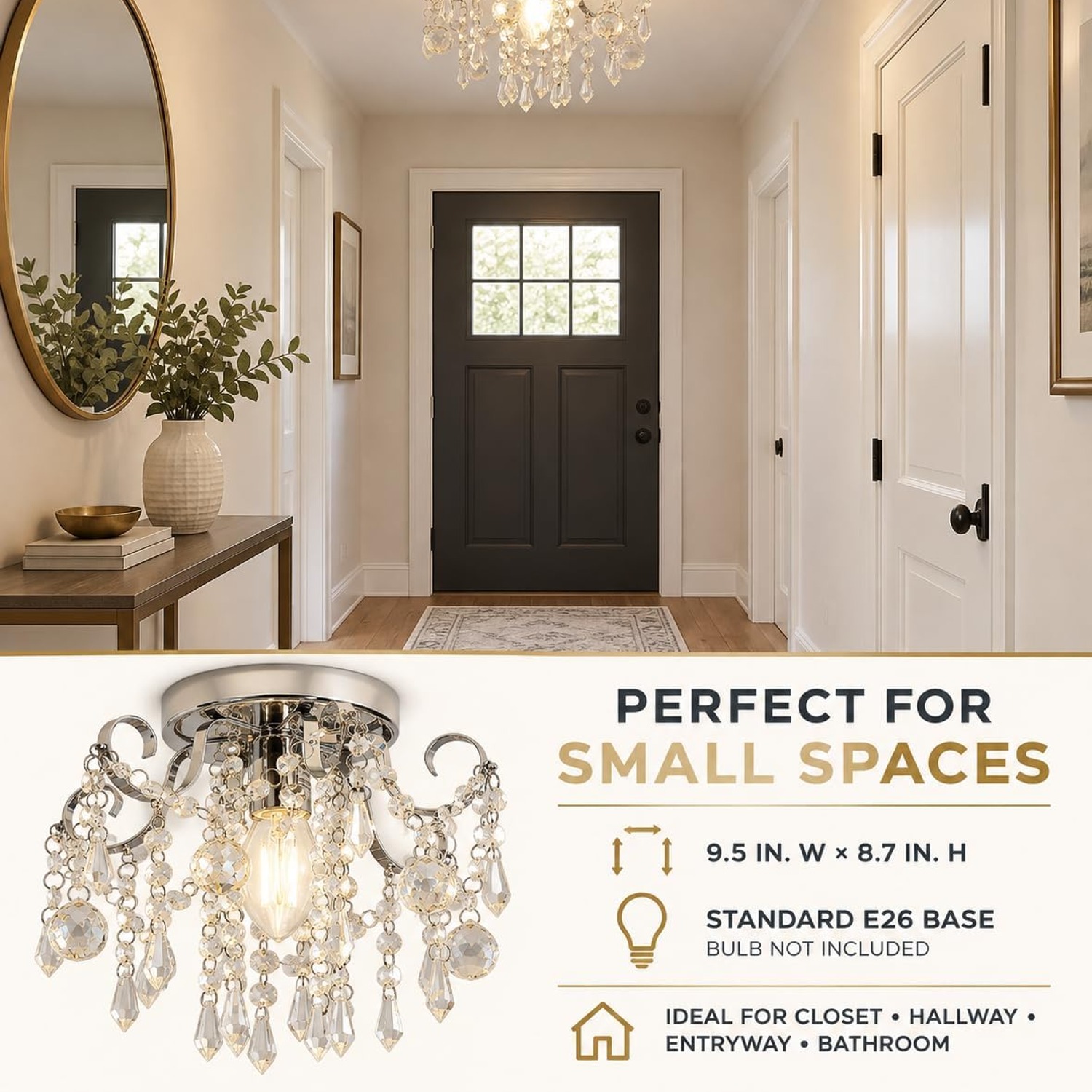
The fixture measures 24.13 by 24.13 by 22.1 cm. Before you order, do two quick checks.
First, the ceiling height. Measure from the floor to the ceiling where the fixture will go. With a drop of around 22 cm, you still have clear headroom in a standard room. In a very low space under about 2.2 metres, hold your hand at that height and see how it feels when you walk under it.
Second, the width of the space. A good rule for small rooms is that the fixture should not look lost or crowded. In a hallway about a metre wide, a 24 cm fixture reads as neat and proportional. In a 4 metre square living room, it will look undersized on its own, so plan for lamps alongside it or step up to a larger piece.
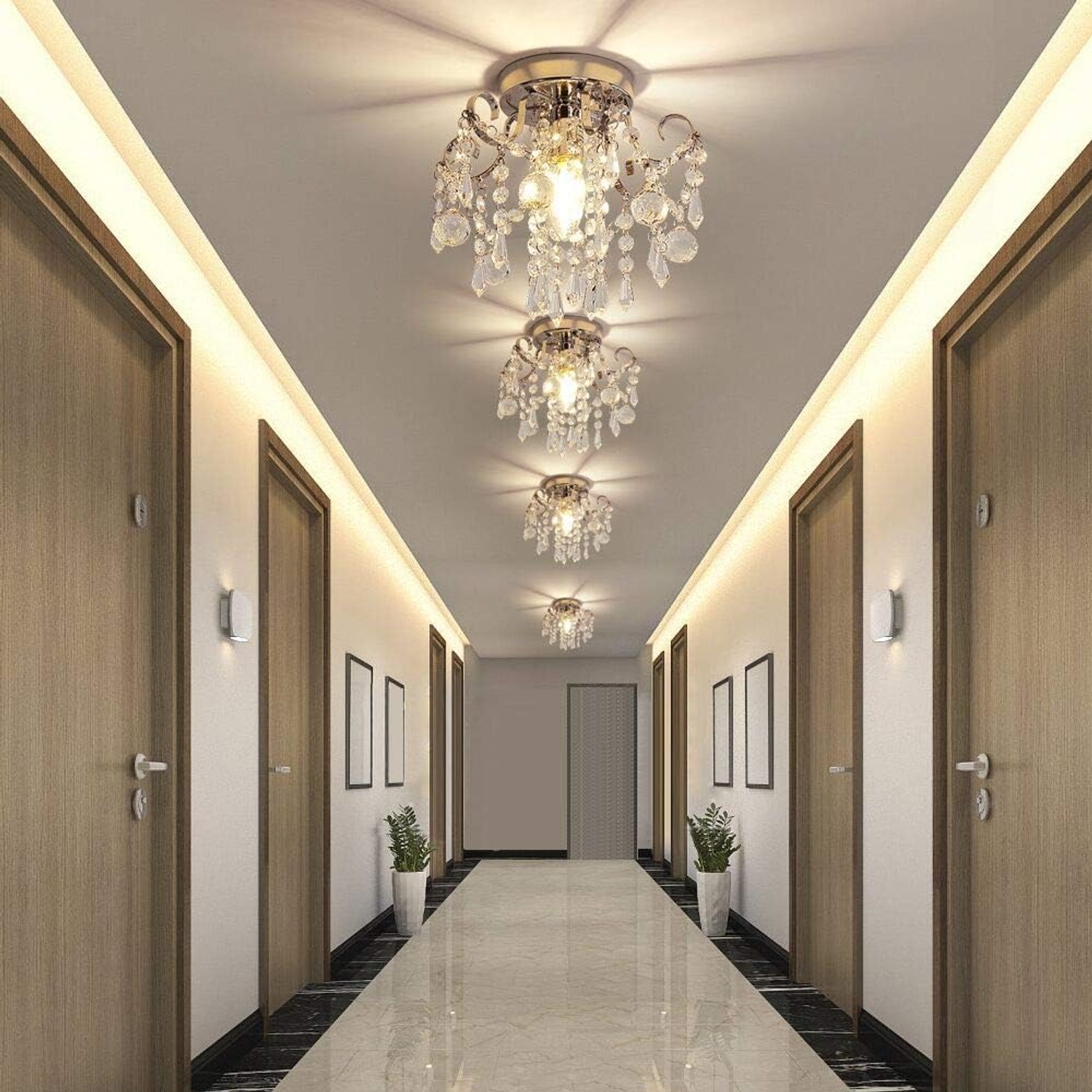
For long hallways, think in terms of spacing rather than a single light. Two or three small fixtures spread along the run give more even light than one in the middle, and they look deliberate rather than sparse.
Bulbs, dimming and light quality
Because this takes a standard E26 bulb, you control the light. That is more useful than it sounds.
If you want the softest result, pick a warm white LED around 2700 to 3000 Kelvin. Warm light looks good through crystal and it suits bedrooms and halls where you are winding down. A cooler bulb around 4000 Kelvin makes the crystal look sharper and brighter, which some people prefer in a closet where you are judging colours of clothes.
Brightness is your call too. Around 600 to 800 lumens works for most small rooms. In a closet, you might want more. In a bedroom, less.
Dimming needs two things: a dimmable bulb and a compatible dimmer switch. Neither comes with the fixture. If you do fit a dimmer, check that the bulb and dimmer are listed as working together. LED dimming is fussier than old incandescent dimming, and a mismatch shows up as flicker or a narrow dimming range. Get that pairing right and the same fixture covers bright morning light and a low glow at night.
Installation notes
This is a mains fixture and the rules differ by country. In many places, only a licensed electrician can legally connect a ceiling light. Even where DIY is permitted, you need to switch off at the breaker, confirm the circuit is dead with a tester, and check that the ceiling box is securely fixed.
At 1.09 kg, weight is not the issue. A standard box handles it easily. What matters more is that the box is properly anchored to a joist or brace rather than hanging on plasterboard alone.
Assembly is mostly crystal work. The maker ships the crystal partly assembled, so you attach the remaining pieces and mount the base. Lay everything out on a towel first and count the parts against the list. It is much easier to notice a missing piece on the table than halfway up a ladder.
One more thing: the fixture is indoor use only and not water resistant. Keep it away from shower spray and direct steam. If you want it in a bathroom, ask an electrician which zone your chosen position falls into.
Keeping it looking good
Crystal collects dust, and dusty crystal stops sparkling. That is the whole maintenance story.
Turn the light off and let the bulb cool. Run a soft dry cloth or a clean microfibre over the crystal and the chrome. Every so often, use a cloth barely damp with water for fingerprints, then dry straight away so you do not leave water spots. Skip glass cleaner, furniture polish and anything abrasive. Chrome plating is thin, and harsh products dull it permanently.
Once a year, check the mounting screws are still snug and that the bulb is seated properly. If you want to deep clean, you can usually unhook the crystal pieces and wash them in lukewarm water with a drop of mild detergent. Take a photo before you start so you know where each piece goes back.
The short version
If you have a hallway, closet, landing or small bedroom stuck with a plain ceiling dome, this is a straightforward upgrade. The flush mount shape keeps your headroom. The chrome and crystal add light movement that a flat cover cannot. The standard E26 socket means you choose the bulb, the brightness and the warmth, and you can dim it later if you add the right bulb and switch.
Check your ceiling height, check the room width, and check that chrome suits the rest of your fittings. If those three line up, it is a small change that you will notice every day.