
The complete guide
How to Choose a Sputnik Chandelier That Actually Fits Your Room
The problem with the light you already have
Most rooms get one light in the middle of the ceiling. It was put there by a builder who had never seen your furniture, and it throws a cone of light straight down onto an empty patch of floor. The corners stay dim. The dining table gets lit on one half. At night you end up switching on three lamps to make the room feel liveable.
That is the gap a sputnik chandelier fills. Instead of one source pointing one way, it has multiple arms fanning out from a central hub, each with its own bulb. The light leaves in several directions at once and lands across a wider area. The room reads as evenly lit rather than spotlit, and you stop needing the backup lamps just to see what you are doing.
The second problem is that the standard builder's fixture looks like nothing. A sputnik chandelier is a shape people recognize. It gives a plain ceiling something to say.
How this one works
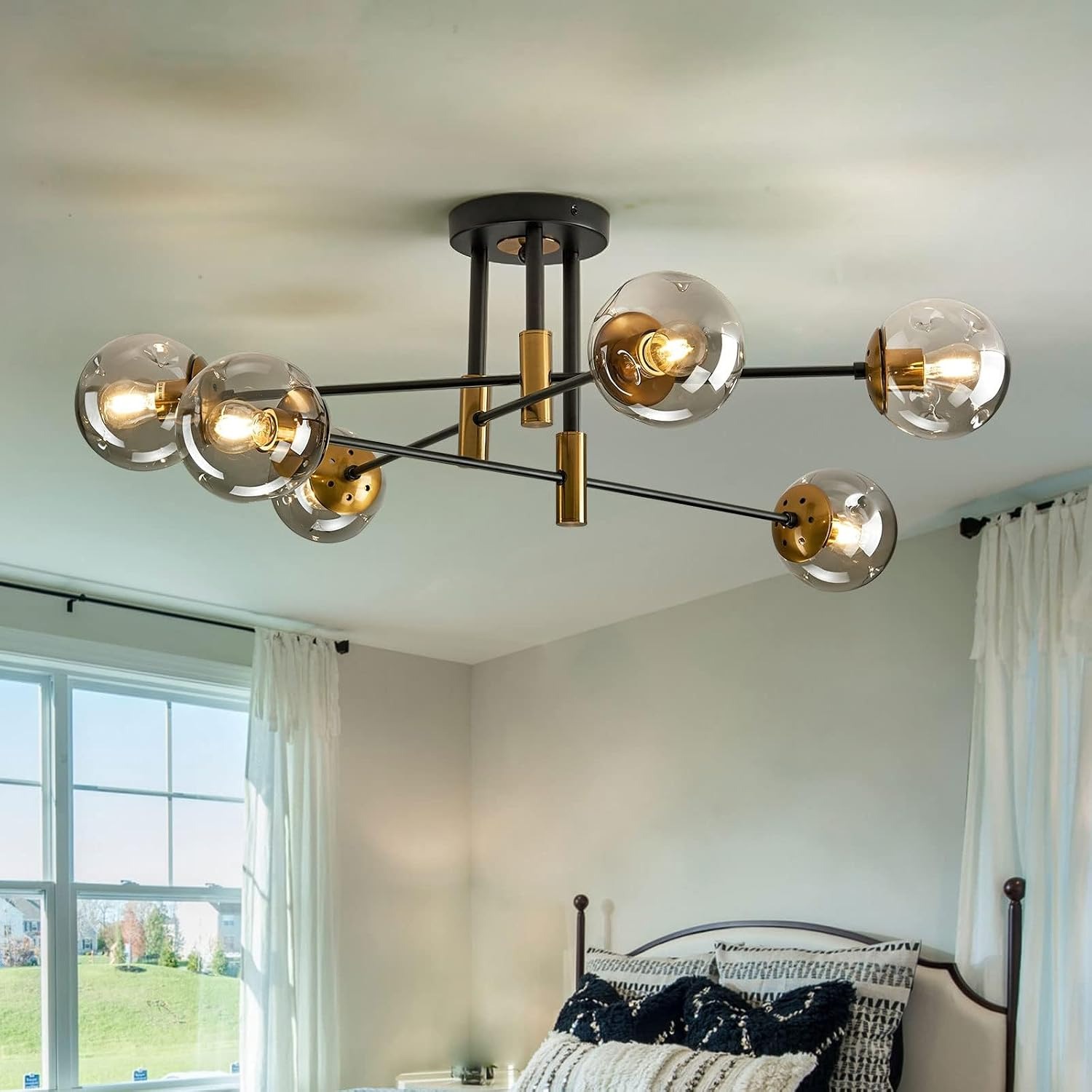
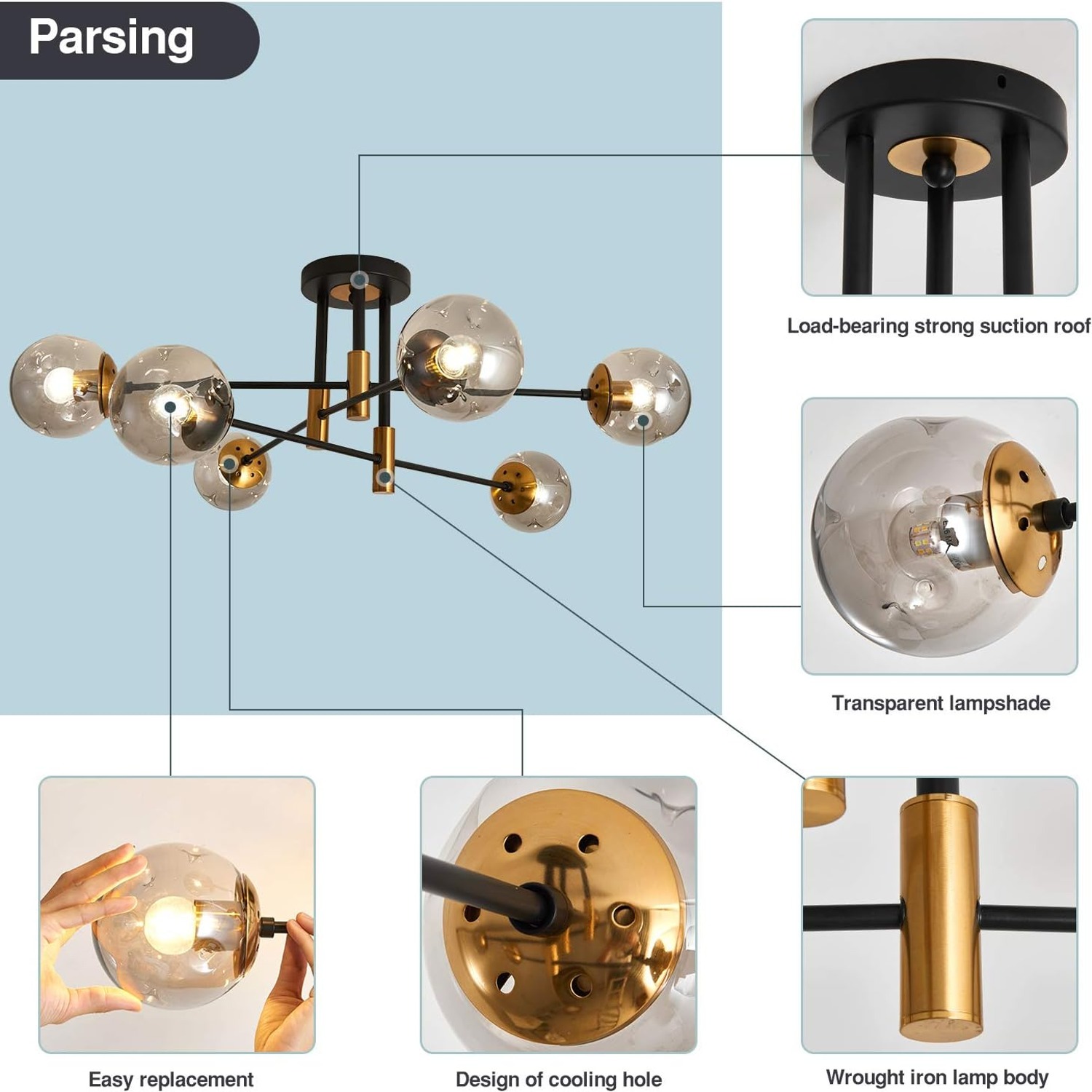
This is a six-light version. Six arms, six sockets, six smoke grey glass globes. The frame is matte black metal with gold accenting and a lacquered finish, which is the classic combination for this style.
The glass matters more than it sounds. A lot of sputnik fixtures use bare bulbs on exposed arms, which looks sharp in photos and feels like staring into a headlight when you are sitting under it at dinner. Tinted glass globes diffuse the light. You still see the glow and the shape of each bulb, but the harsh point of glare is softened. Smoke grey also means the fixture looks like something even when it is switched off, which counts in daylight hours.
Each socket takes a standard E26 medium base bulb, rated up to 60 watts. Bulbs are not included. That sounds like a downside, and some people treat it that way, but it is genuinely useful. Bulb choice is where you control the whole mood of the fixture. The specification lists warm white at 2700 Kelvin, which is the soft, slightly golden end of the scale. If you want something crisper for a kitchen, you buy crisper bulbs. If you want dimmable, you buy dimmable bulbs and pair them with a compatible dimmer. The fixture does not lock you in.
Why semi flush mount is the quiet advantage
Here is where a lot of chandelier purchases go wrong. People fall for a photo of a dramatic hanging fixture shot in a room with a four metre ceiling, order it, and then discover it hangs at forehead height in their own home.
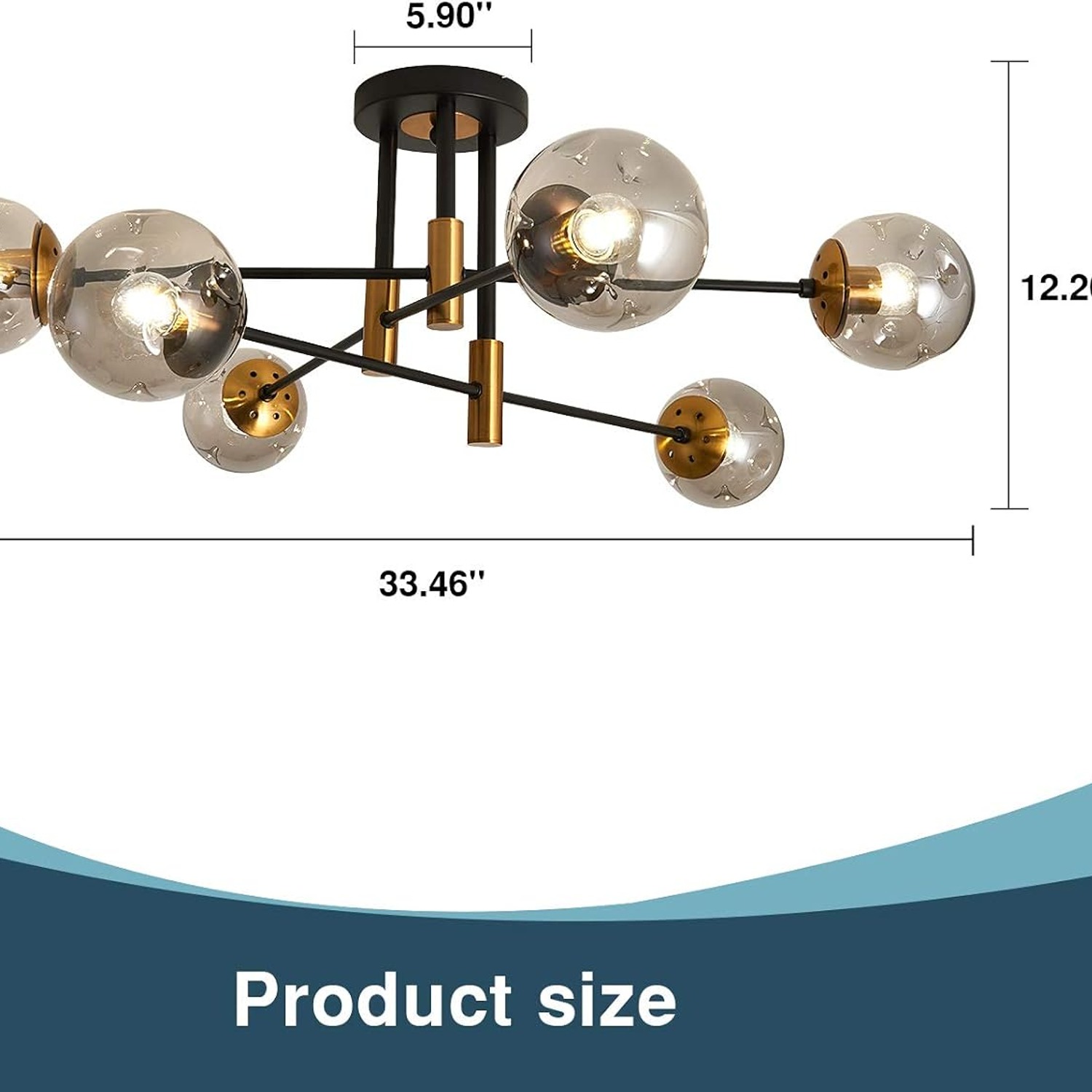
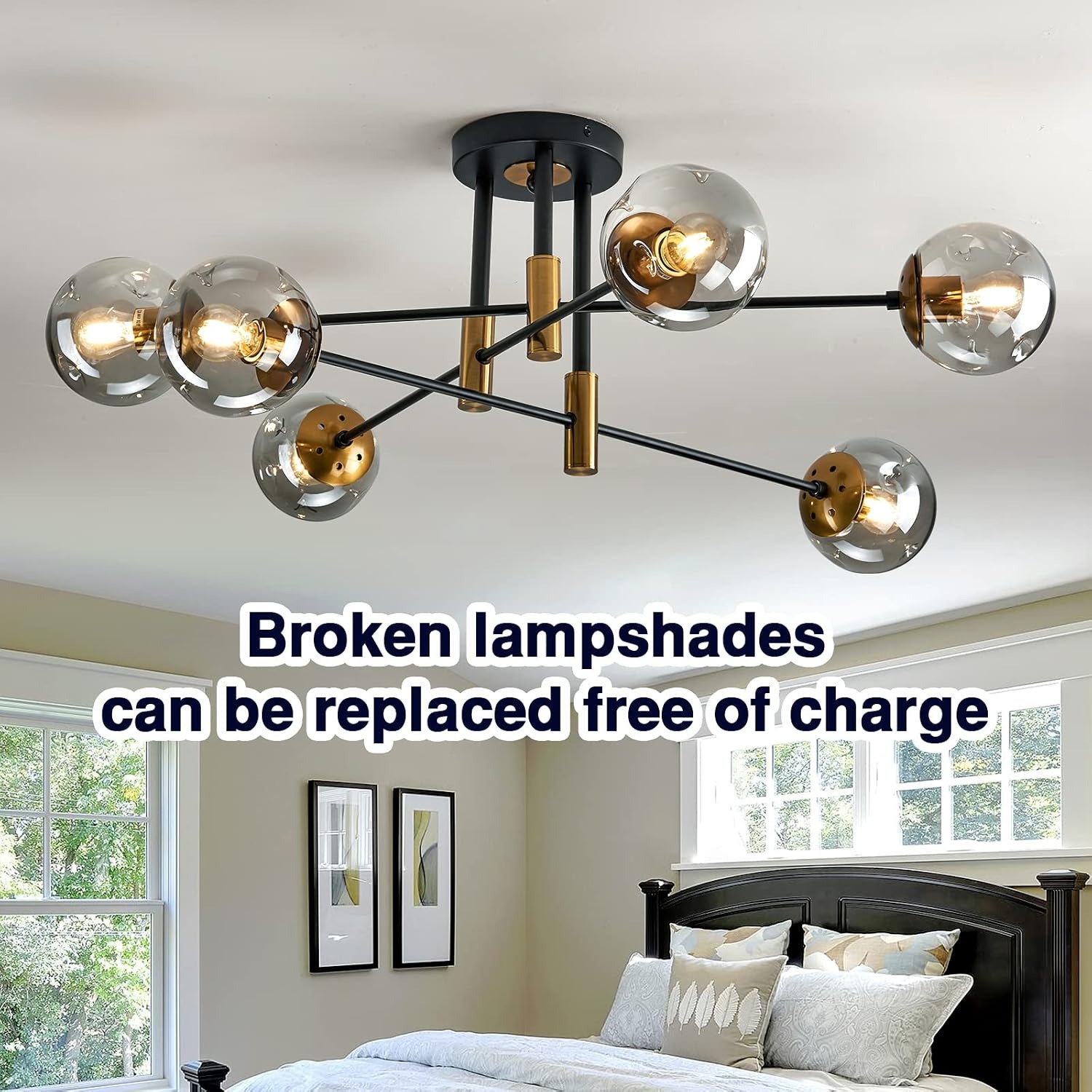
This one is a semi flush mount. The body sits close to the ceiling rather than dropping down on a long rod or chain. It is roughly 31 cm deep. In a room with a standard ceiling, that is the difference between a fixture you walk under without thinking and one you duck around.
The trade-off is that you lose some of the floating, sculptural effect of a long-drop chandelier. What you keep is the full width and the spread of light. At about 85 cm across, this is not a small fixture. It still makes a statement, just horizontally instead of vertically. For anyone hunting for the best chandelier for low ceilings, that is usually the right trade.
Who it suits
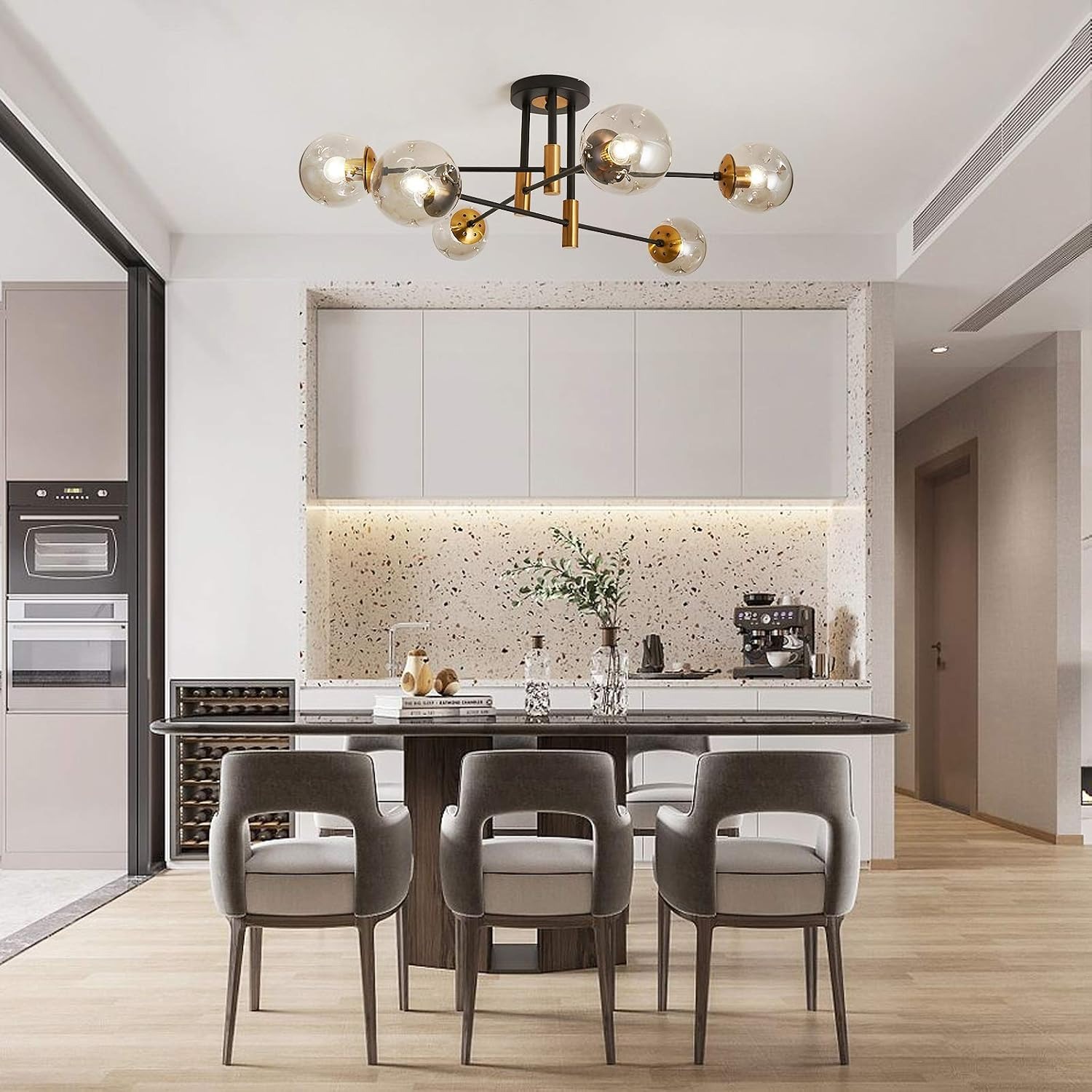
The maker's description names dining room as the primary room type, and that is the obvious fit. Centre it over a table and the six shades cover the length of the table rather than lighting one place setting.
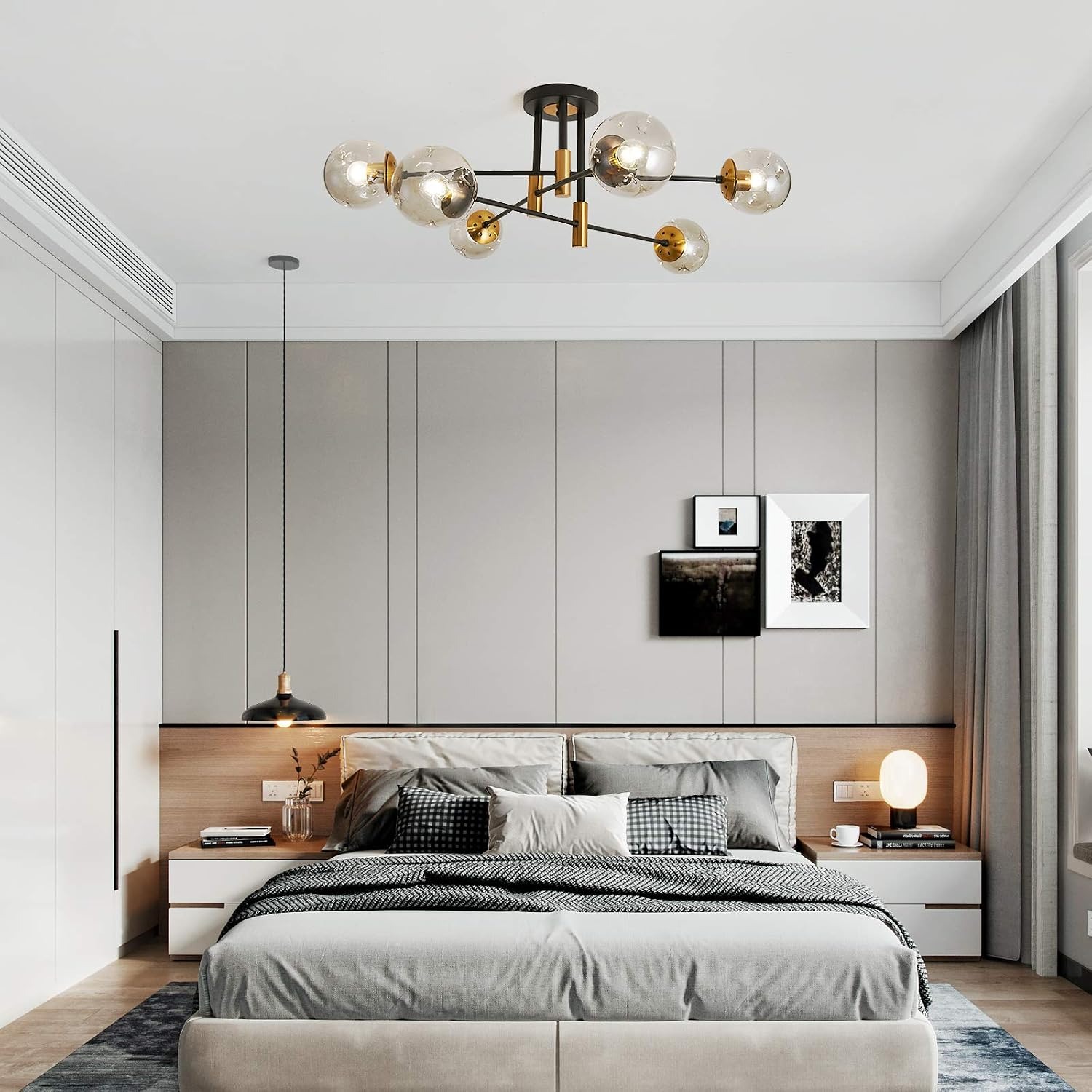
Beyond that, it is flexible. Over a kitchen island it gives working light without a row of pendants getting in your sightline. In a living room it replaces the sad central dome and lifts the whole space. In an entry or hallway it does the job of a welcome without hanging low enough to be a hazard. Some people use it in a bedroom, where the semi flush height keeps walking space clear around the bed.
What it is not for is anywhere wet. The specification is clear that this is indoor use only and not water resistant. That rules out bathrooms, laundries, open porches and anywhere steam or rain reaches. Lighting in those spaces needs a fixture rated for it, and this is not one.
How to choose the right size and placement
Start with width. The fixture is about 85 cm across. Stand in the room and picture a circle that size on the ceiling. Does it clear the walls, the cornice, a ceiling fan, a doorway swing? If you are putting it over a dining table, a common rule of thumb is that the fixture should be noticeably narrower than the table so it does not visually overhang the edges.
Then check depth. At roughly 31 cm, you need to know your ceiling height and what sits beneath. Over a table, there is plenty of clearance. In a walkway, make sure tall members of the household are not going to meet it.
Then think about finish. Black and gold is a confident combination. It plays well with wood, with white walls, with brass hardware in a kitchen. If every other metal in the room is brushed nickel or chrome, the gold will stand out, which may be exactly what you want or may feel like an odd note. There is no wrong answer here, just a decision worth making on purpose.
Finally, plan your bulbs before the fixture arrives. Six matching E26 bulbs, same wattage, same colour temperature. Mixing them looks careless. If there is any chance you will want a dimmer later, buy dimmable bulbs now and save yourself a second trip.
Installation, briefly
The fixture weighs 2.27 kg and mounting hardware is included with instructions. That is a light fixture by chandelier standards, and the semi flush design means you are not wrestling a long chain while balanced on a ladder.
Even so, this is a hard-wired ceiling fixture running at 110 volts. If you are confident with household wiring, your local rules permit DIY work, and you know how to isolate the circuit properly, it is a straightforward job. If any part of that sentence made you hesitate, book an electrician. It is typically a short visit, it costs less than most people assume, and it means the connection is done once and done right.
Handle the glass shades carefully during fitting. Seat each one properly and do not overtighten. Glass and metal threads do not forgive force.
Keeping it looking good
Dust is the main enemy. It settles on the top curve of each globe and on the arms, and because the fixture is high up you tend not to notice until it is thick.
Switch the power off at the wall and let the bulbs cool before you touch anything. Then wipe the glass with a soft microfibre cloth, dry or very slightly damp, and dry it immediately so you do not leave streaks. The metal frame gets a dry cloth only. Skip the solvents, the bleach and the abrasive pads entirely, and never spray cleaner straight at the fixture, because liquid running into a socket is a problem you do not want.
Every few months, give the shades and bulbs a quick check to make sure nothing has worked loose. If the fixture moves on the ceiling plate or a bulb flickers, switch it off and get it looked at rather than guessing.
The short version
A six-light glass globe sputnik chandelier does two jobs at once. It spreads light more evenly than a single pendant, and it gives a plain ceiling a shape worth looking at. The smoke grey glass takes the glare off, the black and gold frame suits more rooms than you would expect, and the semi flush mount means you do not need a cathedral ceiling to pull it off.
Measure the width, check the clearance below, buy six matching E26 bulbs in a colour temperature you like, and get the wiring done properly. Do those four things and it will look like it was always meant to be there.