
The complete guide
How to Choose a Sputnik Chandelier That Fits Your Room
The problem with most ceiling lights
Most rooms get one light in the middle of the ceiling, and that light is usually a flat dome. It works, in the sense that the room is no longer dark. But it pushes everything downward in a single cone, leaves the corners dim, and does nothing for the way the room looks when it is switched off during the day.
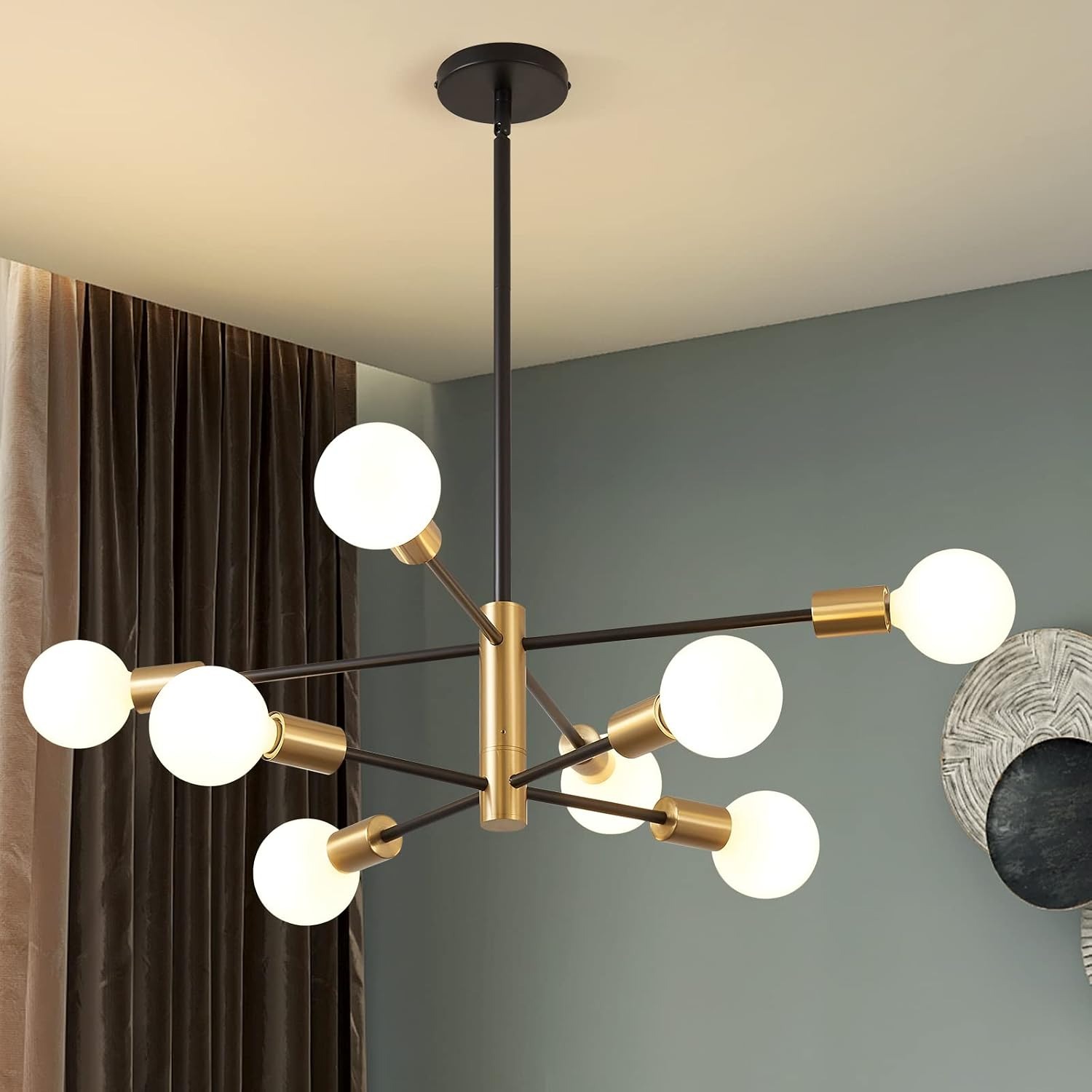
A sputnik chandelier solves both halves of that problem. Because the bulbs sit on arms pointing outward, light travels sideways as well as down. Corners get something. Walls get something. And because the arms form a clear geometric shape, the fixture is still doing work for the room at noon when nothing is switched on.
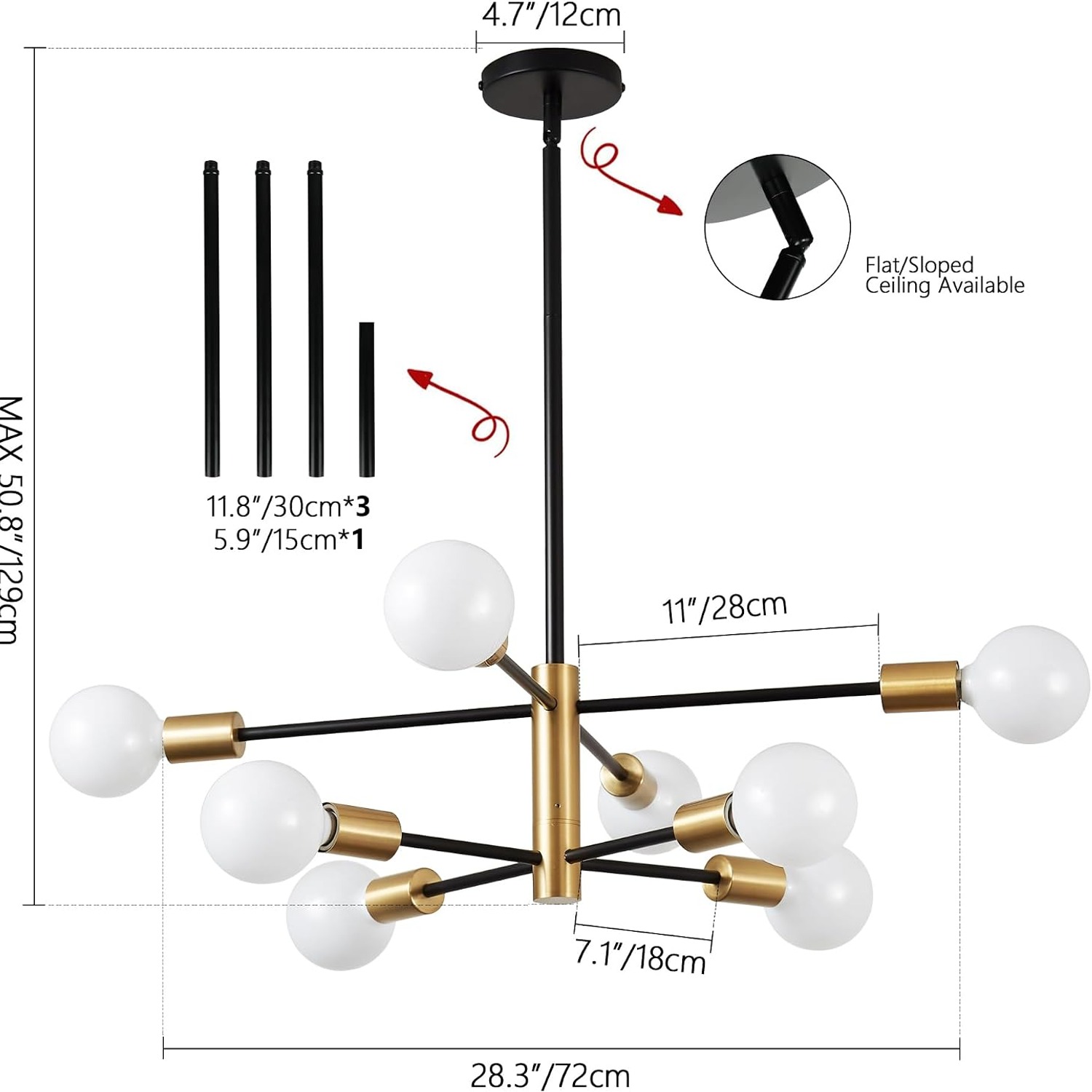
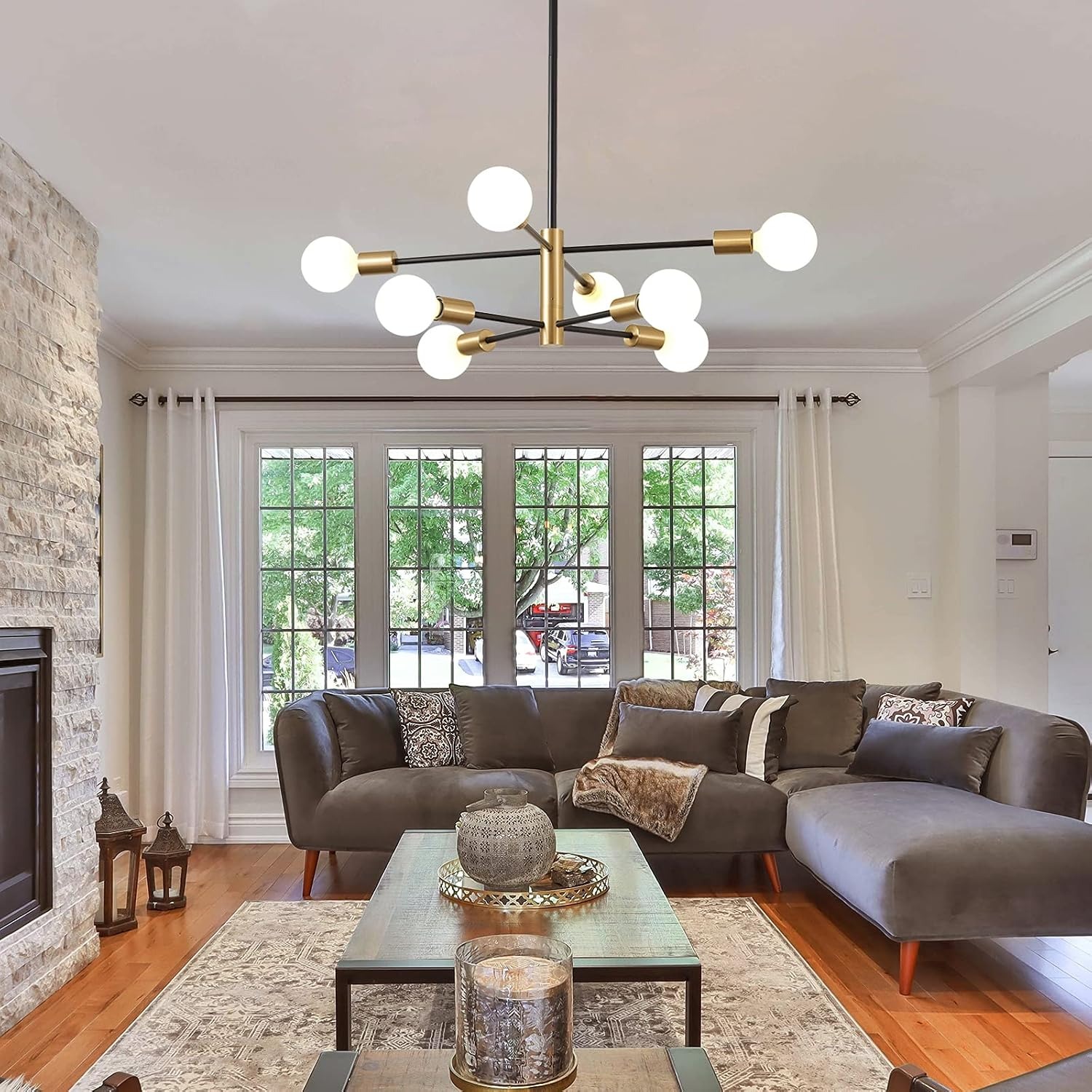
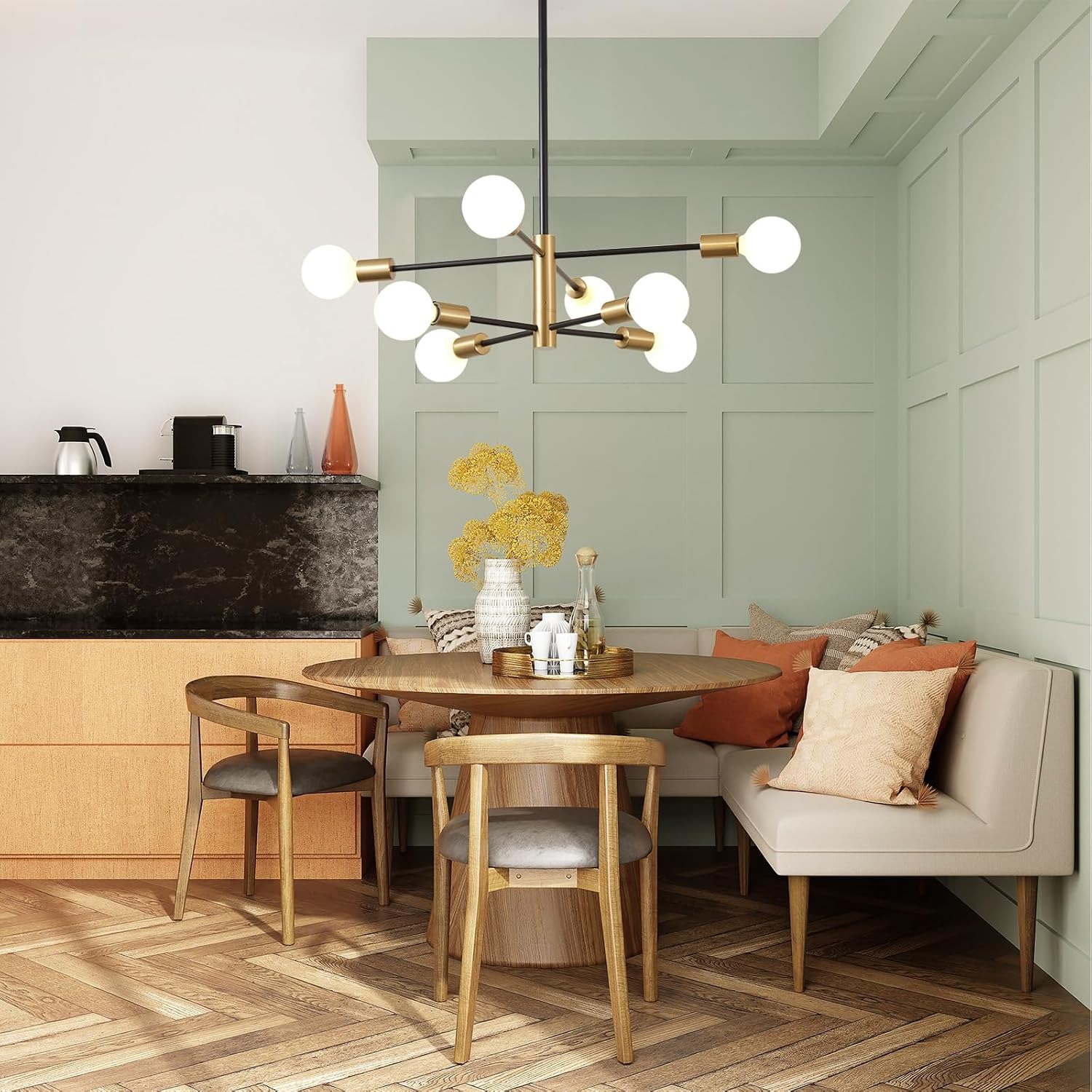
This one uses eight arms in black and brushed gold. It is 29.5 cm across and 31.5 cm tall for the body itself, which puts it in normal-room territory rather than grand-foyer territory.
How the sputnik shape actually works
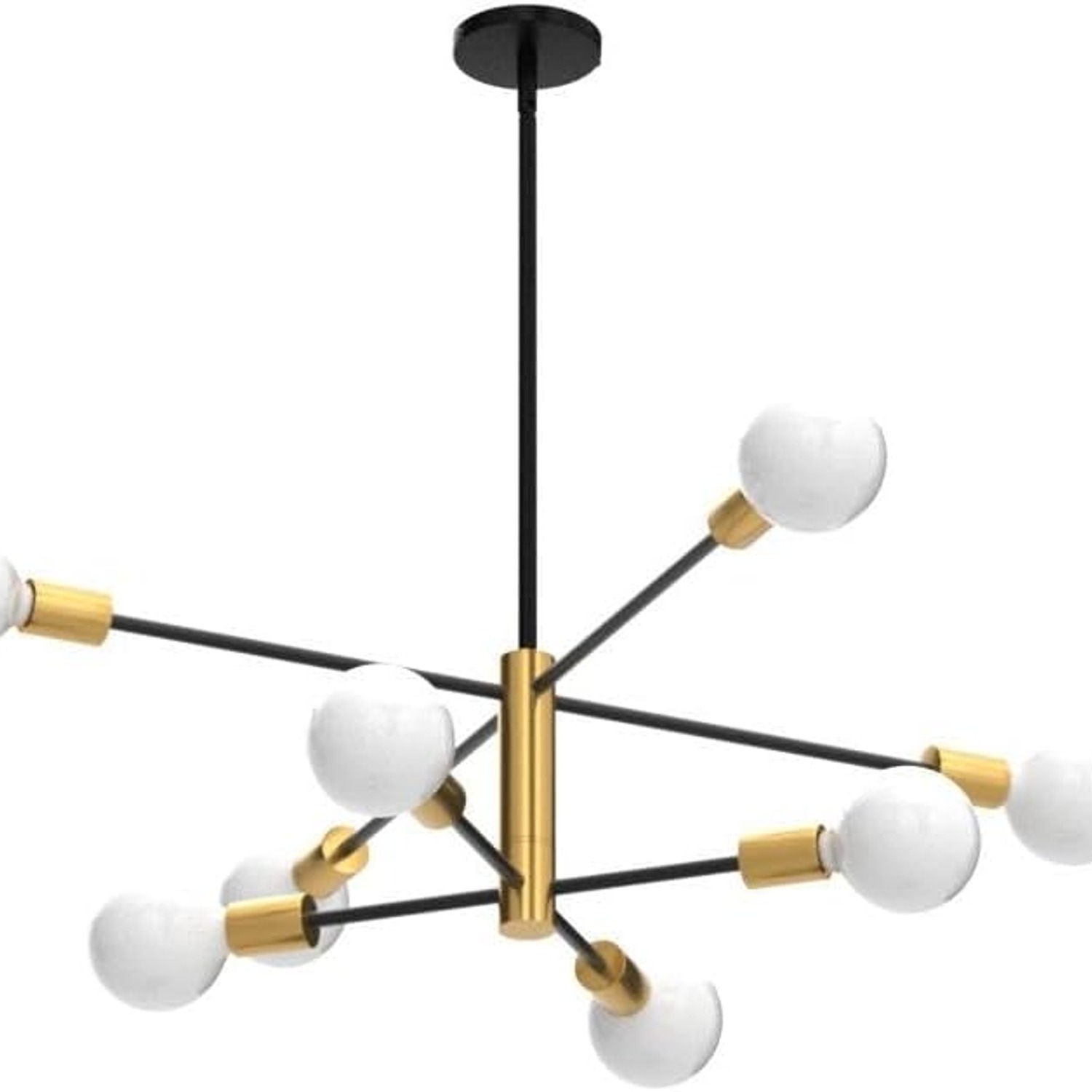
The hub is the centre point, and every arm radiates from it at a fixed angle. There is no shade over the bulbs, which is deliberate. The bulb is part of the look, and it is also why the light spreads so widely.
That has a practical consequence worth knowing before you buy. Exposed bulbs are visible from every seat in the room, so the bulbs you choose matter more than they would in a shaded fixture. Clear glass bulbs with visible filaments lean retro. Frosted bulbs are softer on the eye and better if anyone will be sitting under it for long stretches. Either works, but it changes the result.
The fixture takes eight E26 medium-base bulbs and is rated at 320 watts in total. The manufacturer recommends LED bulbs up to 40W per socket. Bulbs are not given by the maker.
Getting the height right
This is the part people get wrong, and it is the part this fixture handles best. Four extension rods come in the box. You fit as many as the room needs and leave the rest out.
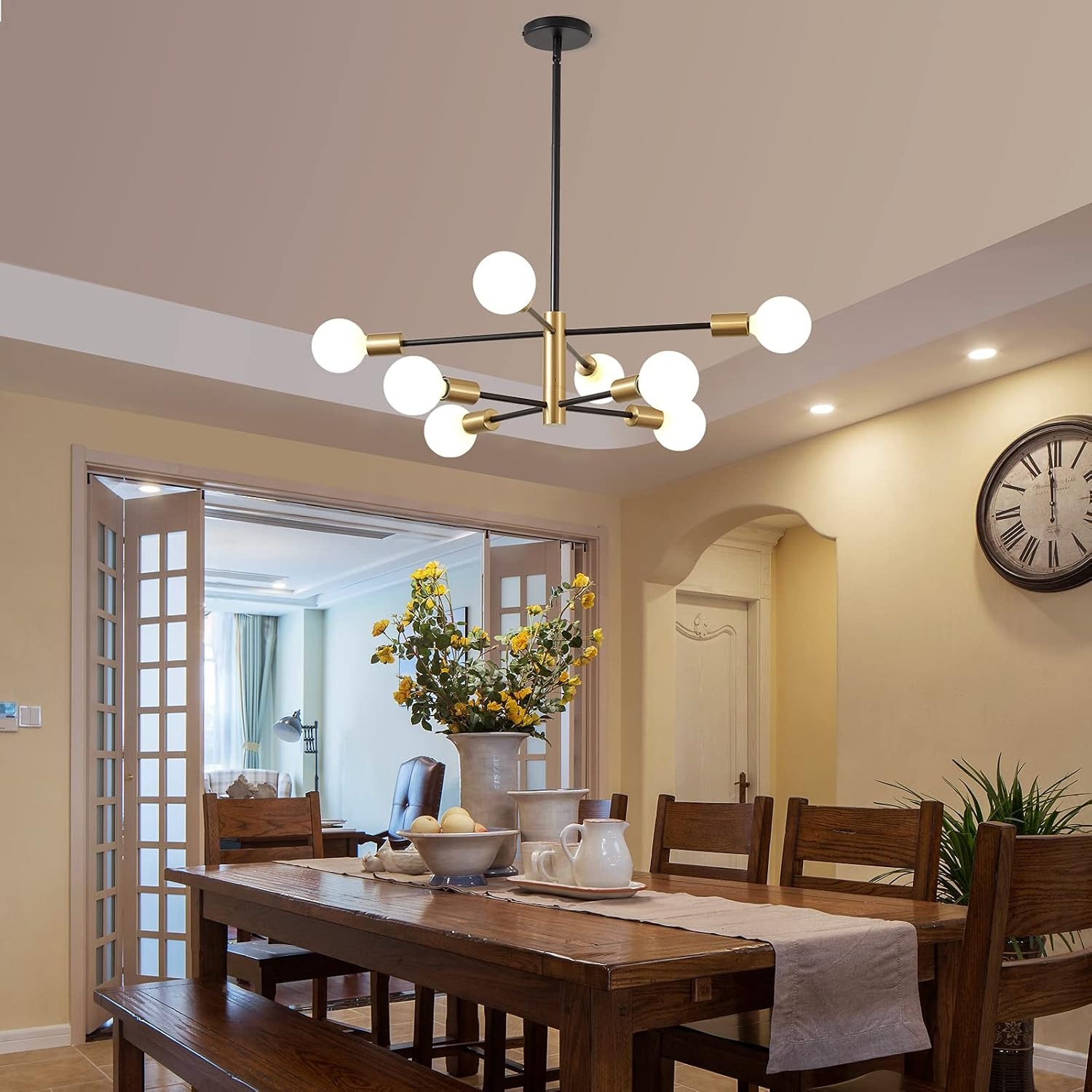
Over a dining table, the usual target is roughly 75 to 90 cm between the tabletop and the bottom of the fixture. That lands the light where food and faces are without blocking the view across the table. Adjust up if your ceiling is low and down if it is unusually high.
In a hallway or an entry where people walk underneath, go short. The clearance you want is head height plus a comfortable margin, and most people regret going lower the first time someone tall visits.
In a stairwell or a double-height entry, the opposite applies. Add rods until the chandelier sits at a height where it can actually be seen and appreciated from both floors.
Whatever the room, decide on the drop before you make the final electrical connection. Changing it later means taking the whole fixture down again.
Sloped ceilings
Angled ceilings defeat a lot of light fixtures. Mount a rigid pendant on a slope and the body hangs at the same angle as the ceiling, which looks like a mistake from every direction.
This fixture has a swivel at the top. The canopy sits flat against the sloped surface while the body of the chandelier hangs vertically, the way it should. That makes it a workable choice for vaulted living rooms, attic conversions, and the angled ceilings you get above stairs.
One caution from the manufacturer, and it is a sensible one. Set the height and make sure the base is fixed firmly before you complete the install. Working on a slope is harder than working on a flat ceiling, so get the mechanical side solid first.
Who this suits
It suits people who want a modern ceiling light with some personality but do not want something enormous. At 1.8 kg and under 30 cm wide, it reads as a feature without dominating a standard room.
It works well in living rooms, dining rooms, bedrooms, entries, and home offices. The maker's description also mentions office and retail use, which fits the shape, since a sputnik gives good general coverage without needing a second fixture.
It does not suit damp spaces. The fixture is indoor only and is not water resistant. Open showers, steamy laundries, and covered outdoor areas are all out. Local codes are strict about bathroom zones in particular, so check with an electrician before considering anything near water.
Voltage matters too. The maker's description specifies 110 volts. If you are in a region on a different supply, confirm suitability with a licensed electrician before you buy.
Choosing bulbs
Since the bulbs are not included, think of them as part of the purchase rather than an afterthought.
Start with colour temperature. Something in the 2700K to 3000K range gives warm, relaxed light that suits a living room or dining room. Higher numbers push toward daylight white, which is better for a work space but can feel cold over a dinner table. The fixture is listed with warm white as its light colour, which supports the lower end of that range.
Then think about dimming. This fixture can be dimmed, but only if two things are true. The bulbs need to be marked dimmable, and the wall switch needs to be a compatible dimmer. Neither the bulbs nor the dimmer switch is included. Putting non-dimmable LEDs on a dimmer causes flicker and buzzing, which is annoying rather than dangerous, but it is easy to avoid.
Finally, buy all eight bulbs from the same batch if you can. Mixed brands and mixed colour temperatures are very obvious on an exposed-bulb fixture.
Installation notes
The arms arrive pre-wired, which removes the fiddliest part of assembling a multi-arm chandelier. The mounting hardware and a quick guide are included.
What you still need is a sound ceiling junction box, isolated power, and ideally a second pair of hands. The fixture is light at 1.8 kg, so weight is not the issue. Holding it steady while you make connections overhead is.
Many regions legally require a licensed electrician for mains work. Even where they do not, this is a good job to hand over if you are not confident. The cost of a call-out is small compared to the cost of getting it wrong.
Care over time
Exposed bulbs collect dust, and dust on a bulb is visible in a way dust on a shade is not. A quick pass with a dry duster every few weeks keeps it looking sharp.
For anything more, switch the fixture off and let the bulbs cool completely. Use a soft cloth, barely damp if needed, and dry straight away. Keep solvents and abrasive pads away from the brushed finish, and never spray cleaner near the sockets.
If a bulb fails, replace it promptly. One dark arm on an eight-arm sputnik is noticeable.
The short version
This is an eight-arm mid century sputnik light in black and brushed gold, built from metal, weighing 1.8 kg, with a body around 29.5 cm wide and 31.5 cm tall. It takes eight E26 bulbs, rated to 320 watts in total, and bulbs are not given by the maker. It can dim with the right bulbs and a compatible dimmer.
The two features that make it genuinely flexible are the four extension rods and the swivel base. Together they let you set the drop you need and hang it straight on a sloped ceiling, which covers most of the awkward installs people run into.
It is indoor only, not water resistant, listed at 110 volts, meets a UL specification, and comes with a 2 year manufacturer warranty. Work out your drop first, pick warm dimmable bulbs, and get it wired in properly. After that it mostly just needs dusting.