
The complete guide
How To Choose A Black Crystal Chandelier For Your Dining Room
The problem with one light in the middle of the ceiling
Most dining rooms were wired with a single fitting dead centre of the ceiling, and that one fitting has to do everything. The result is familiar. The middle of the table is bright, the two ends sit in shadow, and anyone with their back to the light casts a shadow over their own plate. Add a pendant with an opaque shade and it gets worse, because the light goes straight down in a narrow cone and nothing reaches the walls.
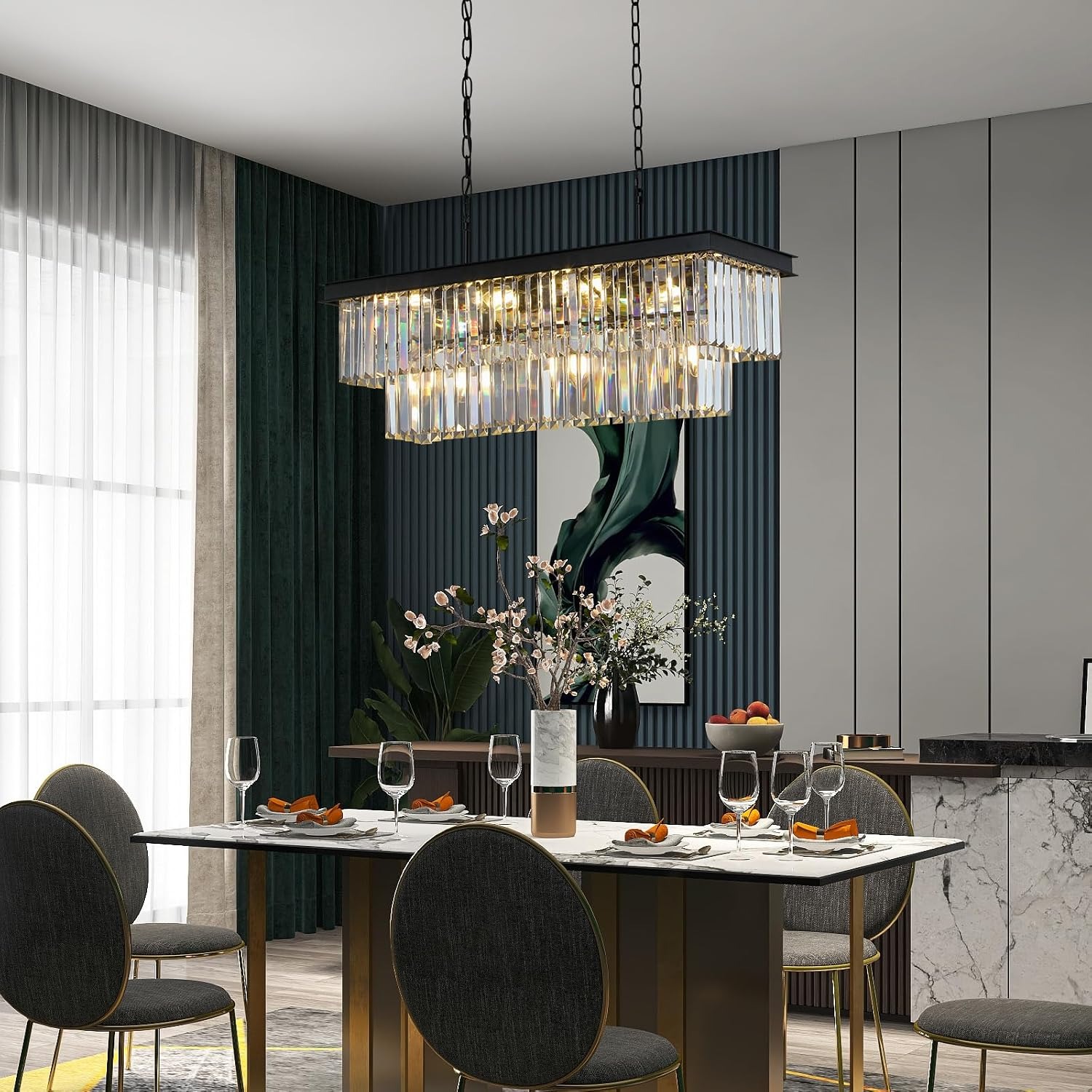
A rectangular chandelier fixes the geometry. Instead of a single point of light, you get a line of lamps running the same direction as the table. Light lands along the whole surface, and because crystal scatters rather than absorbs, some of it bounces outward onto the walls and ceiling. The room feels bigger and softer, even though you have not added a single extra fitting.
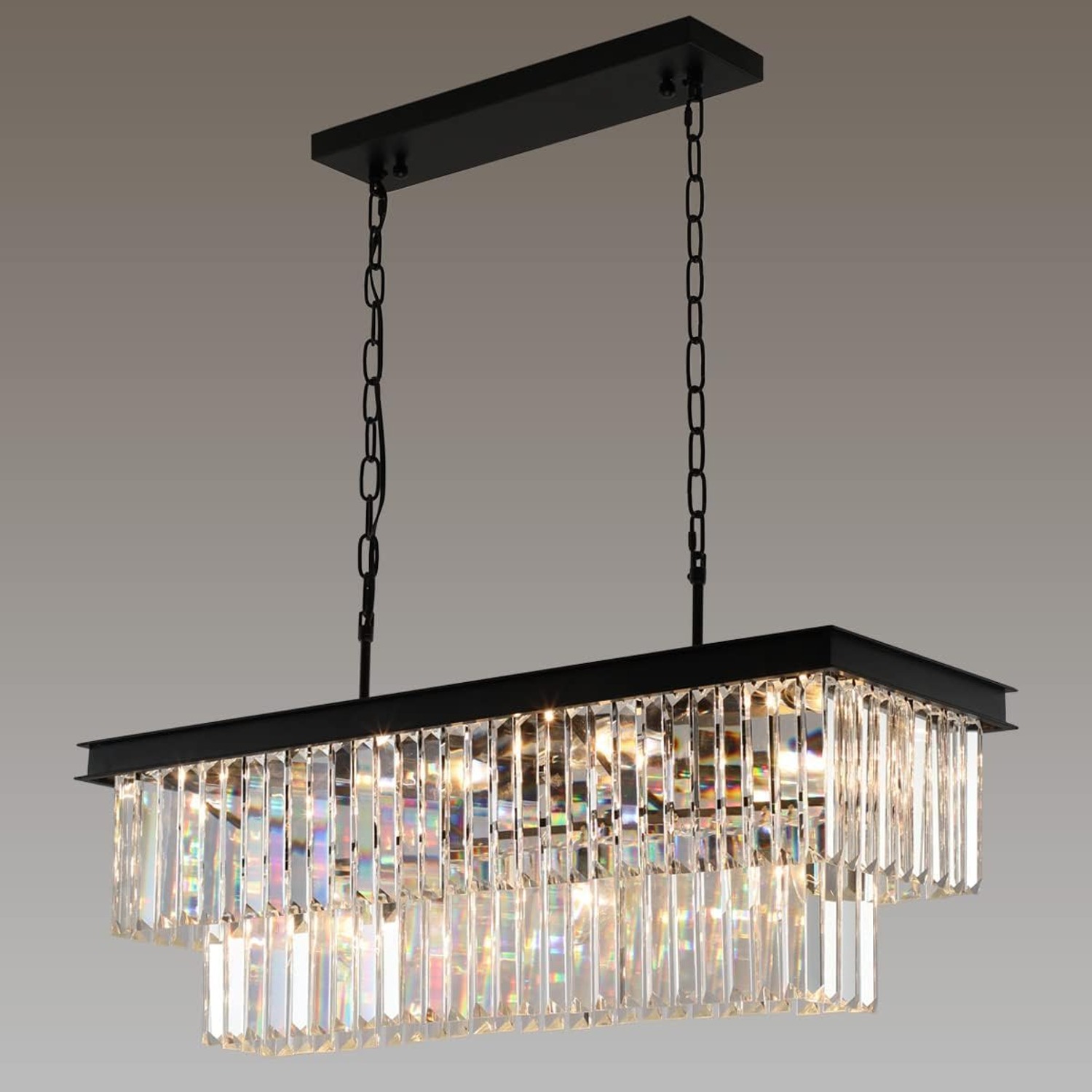
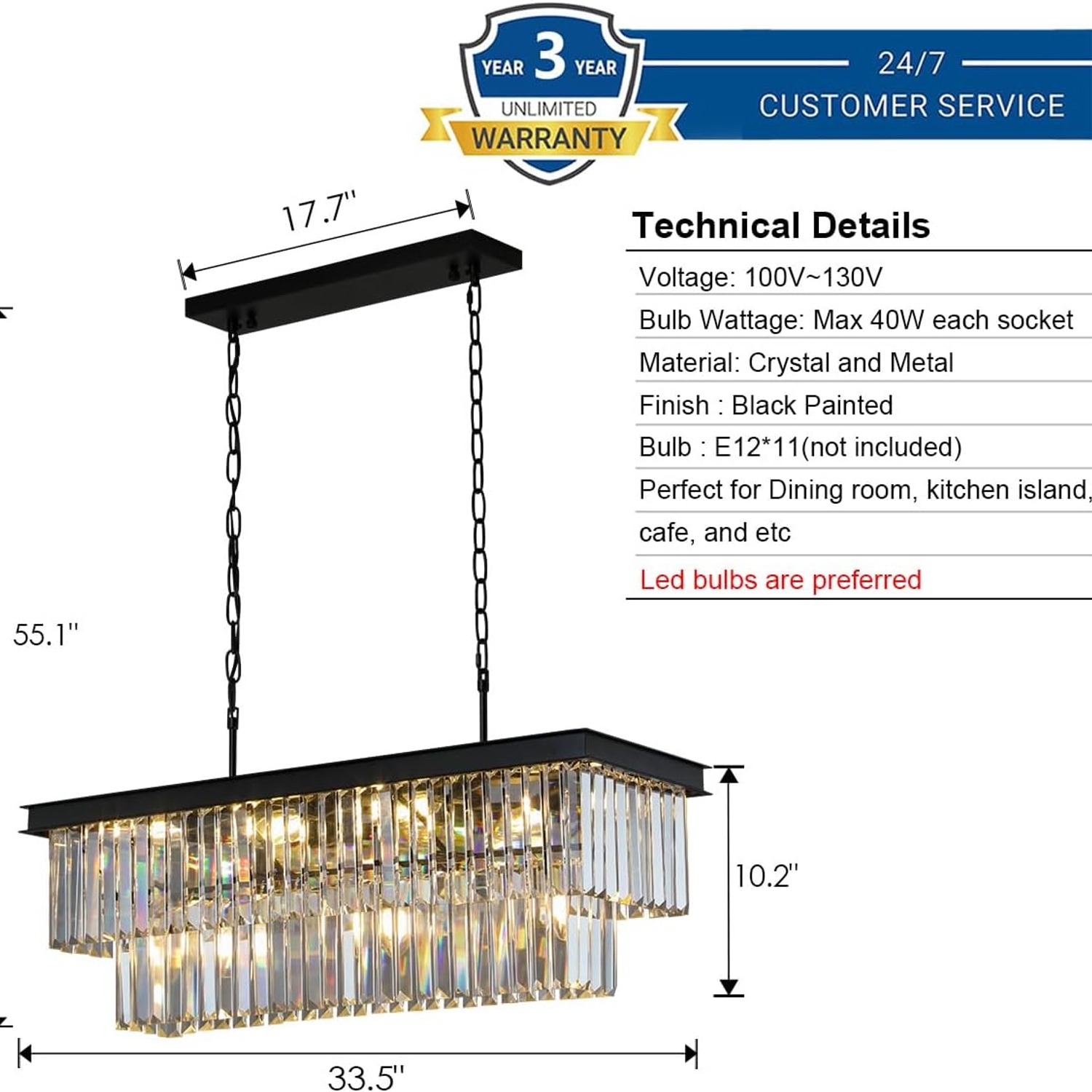
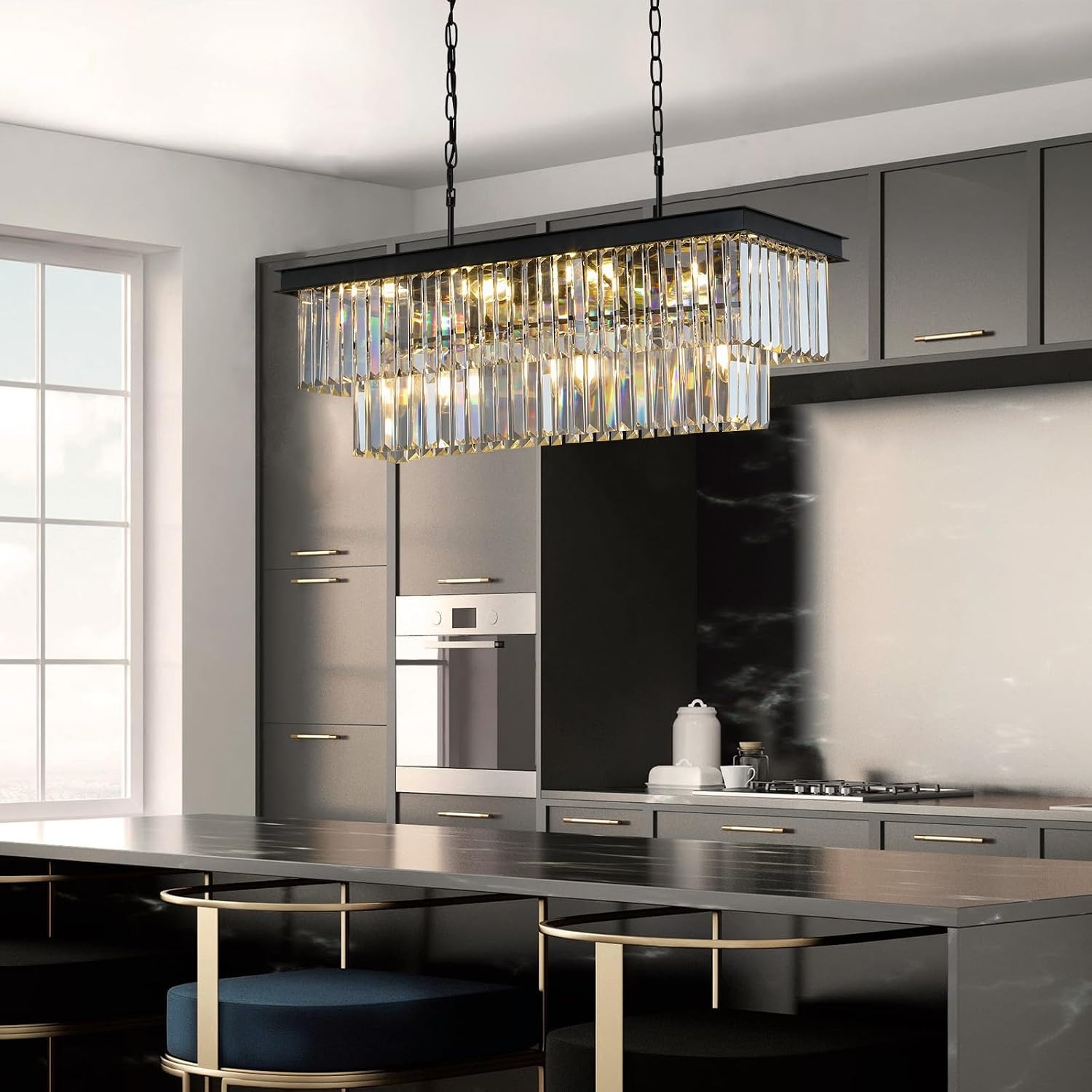
That is the job this fixture is built for. It is 33.5 inches long, 8 inches wide, and carries eleven E12 lamps across a two-tier frame.
How a crystal chandelier actually works
There is nothing complicated going on, but it helps to understand why the crystal matters. K9 is an optical glass with good clarity. When it is cut into facets and polished, light passing through bends at each surface and splits slightly. That is why a crystal fixture throws small bright points around a room while a plain glass shade just glows.
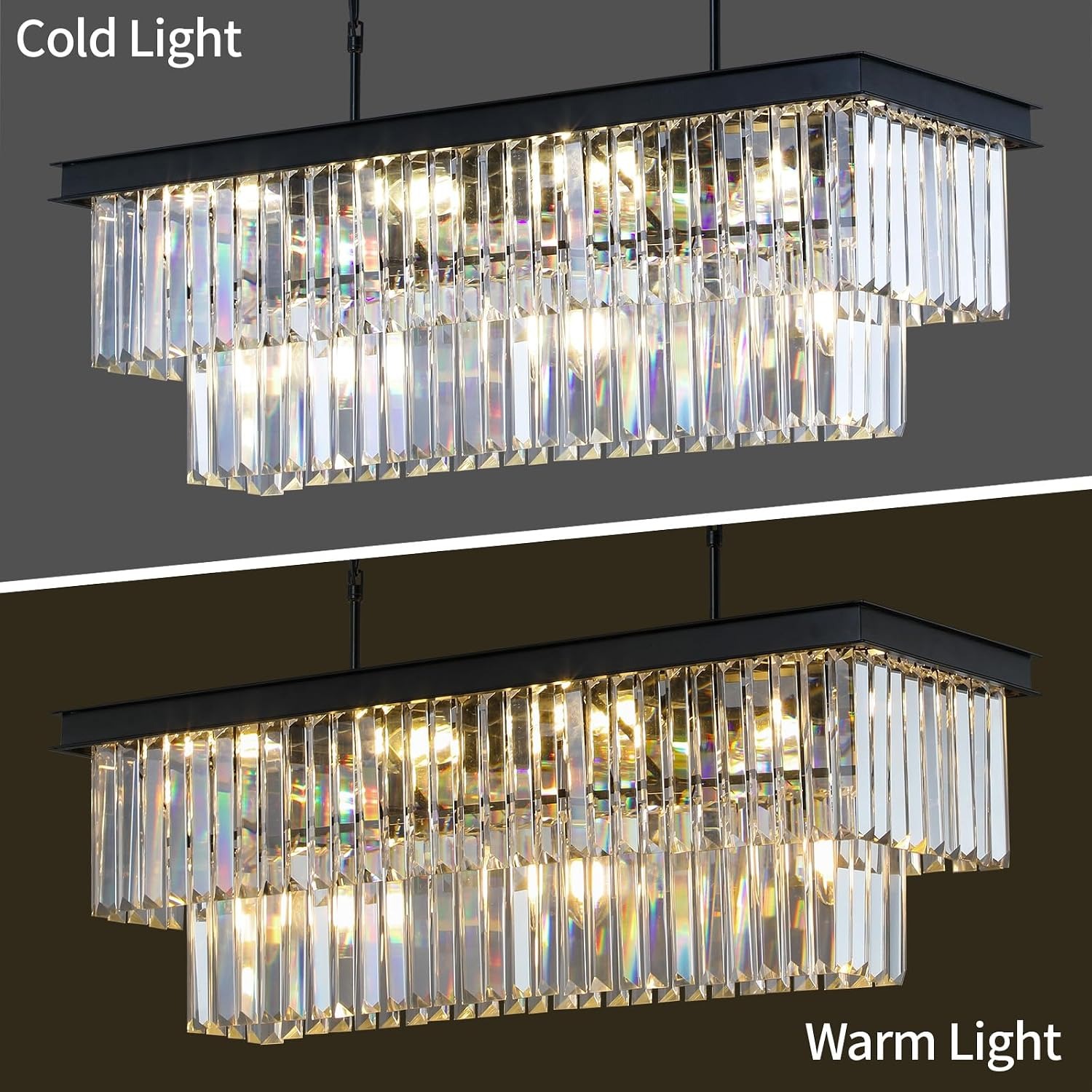
The two-tier layout on this chandelier means crystal sits at two different heights, so the refraction happens on more than one plane. You see more movement in the light as you walk around the table. The black painted metal frame does the opposite job. It absorbs light rather than reflecting it, which makes the crystal read as brighter by contrast.
Eleven sockets sounds like a lot until you remember these are E12 candelabra lamps, not standard bulbs. The fixture is rated at 440 watts total and a maximum of 2000 lumens. If you fit LED candle lamps, the actual power draw will be well under 100 watts for the whole fitting.
Who this suits
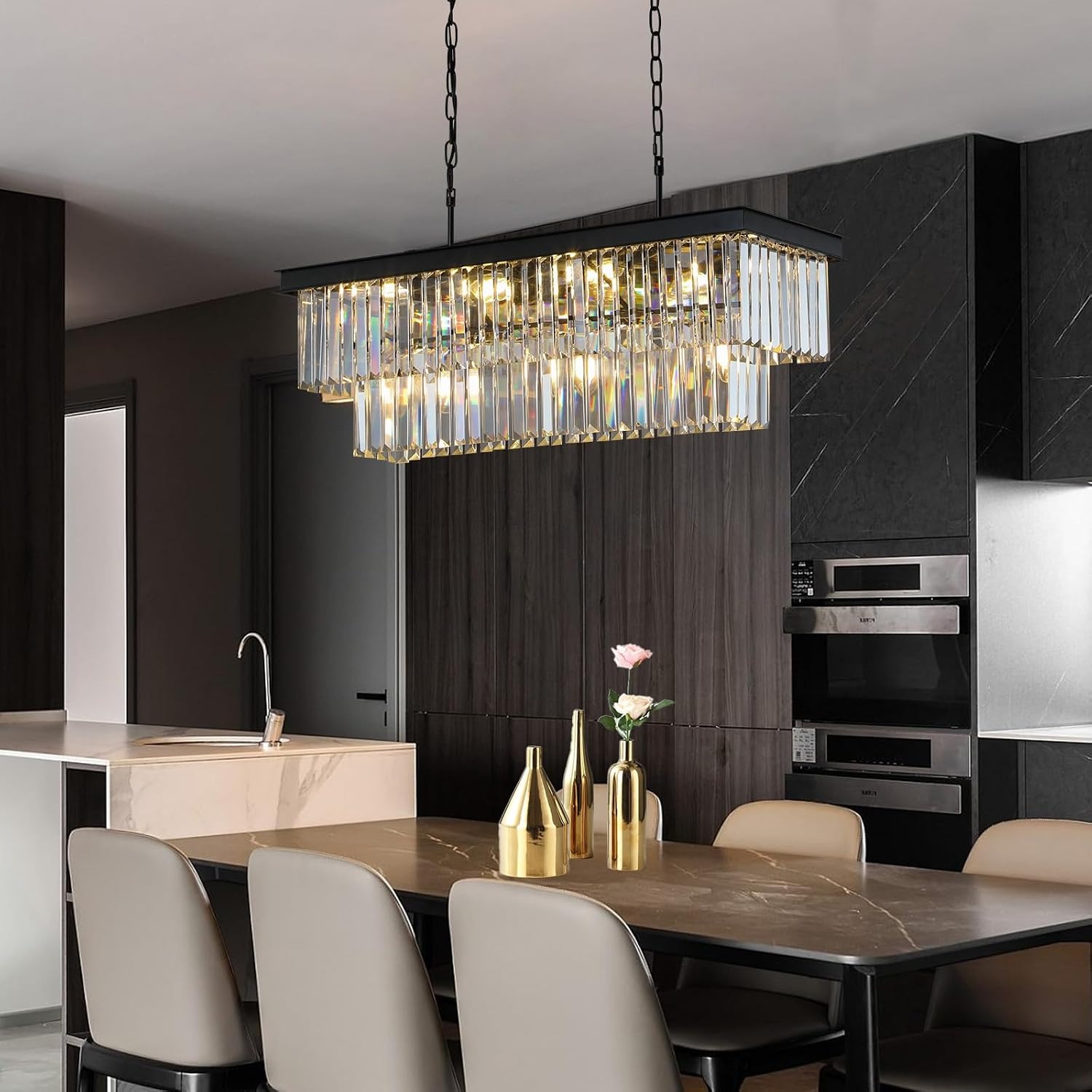
This is a good fit if your room already leans modern or monochrome. Black window frames, dark wood floors, matte black faucets, a charcoal kitchen: all of those pick up the frame and make it look intentional rather than dropped in. It also works as the one dark element in an otherwise pale room, where it acts like a piece of black-framed art hanging over the table.
It is less of a fit if your room is full of warm brass, antique wood and traditional detailing. In that setting a gold or champagne finish usually sits better.
Room size matters too. The recommended area is roughly 15 to 25 square metres. In a space that size the fixture reads as a feature without dominating. In a much larger open plan area, you will want supporting light from downlights, wall lights or lamps, because 2000 lumens will not fill a big room on its own.
Getting the size and drop right
Two numbers decide whether a chandelier looks right: how long it is relative to the table, and how far it hangs below the ceiling.
For length, a common rule is that the fixture should be somewhere between half and two thirds the length of the table. At 33.5 inches, this one sits comfortably over a table in the 1.5 to 1.8 metre range. On a much longer table it starts to look small, and that is usually when people run two fixtures instead of one.
For drop, aim for around 75 to 90 cm between the tabletop and the bottom of the fixture. Lower than that and people start ducking. Higher and the light spreads too thin and the crystal loses its effect. The maximum mounting height here is 55.1 inches, and you shorten it by removing chain links during installation. Hold the fixture up at a couple of different heights before you commit, and check the sightline from a seated position, not standing.
Ceiling height changes the maths. Standard ceilings usually need the chain shortened quite a bit. Tall ceilings can take the full drop and often look better for it.
Choosing lamps
Lamps are not included, which gives you control over how the light feels. There are three decisions worth thinking about.
Colour temperature is the big one. Warm white, around 2700K, gives a relaxed dinner-table feel and flatters skin and food. Neutral white around 3500K to 4000K looks crisper and suits a kitchen island or a home office better than a dining table. The fixture's listed light colour is white; the exact tone comes down to the lamps you choose.
Shape matters more than people expect on an open chandelier. Because the lamps are visible, a plain candle lamp or a small clear globe looks tidier than a chunky utility bulb. Filament-style LED candle lamps are a popular choice here, since the visible filament adds its own warmth.
Dimming is the third. The fixture will dim, but only with dimmable lamps and a matching dimmer switch. Neither is included. If you want dinner-level light and homework-level light from the same fitting, factor the dimmer into your electrician's visit rather than adding it later.
Installation notes
The fixture weighs 28 pounds, about 12.7 kg. That is not extreme for a chandelier, but it is well beyond what a flimsy plasterboard anchor will hold. The mounting point needs to be a joist or a ceiling box rated for the load. If you are replacing an old lightweight pendant, do not assume the existing fitting is adequate.
Everything needed for mounting comes in the box along with an instruction manual. The usual sequence is to fit the mounting bracket, adjust the chain to length, hang the frame, connect the wiring, then attach the crystal pieces last so they are not at risk while you work overhead. Two people make the hanging step much easier.
Mains wiring should be handled by a licensed electrician in most regions. Check the supply voltage too. The listed voltage is 120 volts, so if your home runs on a different supply, confirm compatibility before ordering.
One more thing: this is an indoor fixture and is not water resistant. Dining rooms, living rooms, kitchens, libraries, home offices and bar areas are fine. Bathrooms with steam, covered outdoor areas and anywhere exposed to weather are not.
Keeping it looking good
Crystal shows dust faster than almost any other finish, because dust sits on the facets and kills the refraction. A fixture that looked spectacular in month one can look flat by month six purely from neglect.
The routine is simple. Switch it off, let the lamps cool, then dust the crystal and the frame with a soft dry cloth or a microfibre glove. For fingerprints or cooking film near a kitchen island, dampen the cloth lightly and dry straight after so no water marks dry on. Never spray cleaner directly at the fixture, because liquid should not get near the lamp holders. Skip abrasive pads and solvent cleaners on the painted black metal.
While you are up there, give the chain links and crystal fittings a quick check. A loose crystal is easy to resecure and annoying to replace after it falls.
The short version
If your dining table is lit by one sad fitting in the middle of the ceiling, a rectangular crystal chandelier changes the room more than almost any other single swap. This one gives you eleven E12 lamps across 33.5 inches, a two-tier K9 crystal body, a black painted metal frame and an adjustable chain up to 55.1 inches. Lamps are not included, dimming needs dimmable lamps and a compatible dimmer, and it is strictly an indoor fitting.
Measure your table, work out your drop, choose warm lamps if it is a dining room, and get the mounting done properly. A 2 year manufacturer warranty backs it up.